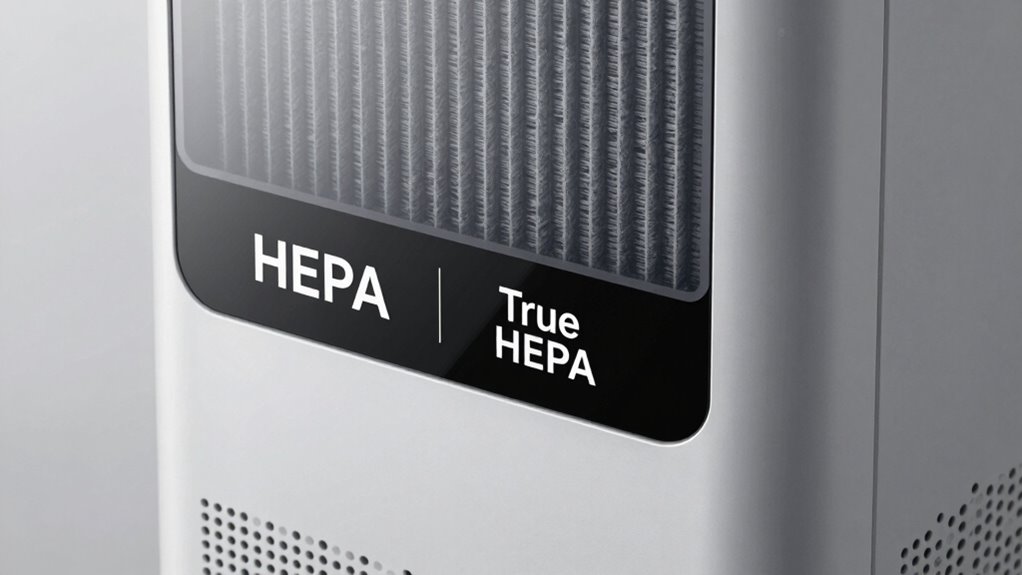
When comparing HEPA and True HEPA filters, it’s important to know not all filters labeled “HEPA” meet the strict standards of removing 99.97% of particles as small as 0.3 microns. Many products use the term loosely or claim “HEPA-like” or “HEPA-type,” which may not deliver the same level of air filtration. To guarantee you get reliable protection, look for filters that specify “True HEPA” and verified standards. Keep exploring to see how to choose the best filter for your needs.
Key Takeaways
- True HEPA filters meet the 99.97% efficiency standard for 0.3-micron particles, unlike some filters labeled “HEPA” that may not.
- “HEPA-like” or “HEPA-type” filters often do not adhere to official standards, potentially misleading consumers.
- Verify certification and specifications to ensure the filter is genuinely True HEPA for optimal air purification.
- Labels claiming “HEPA” without standards can result in lower filtration performance and compromised air quality.
- Choosing certified True HEPA filters guarantees maximum removal of allergens, pollutants, and some microorganisms.
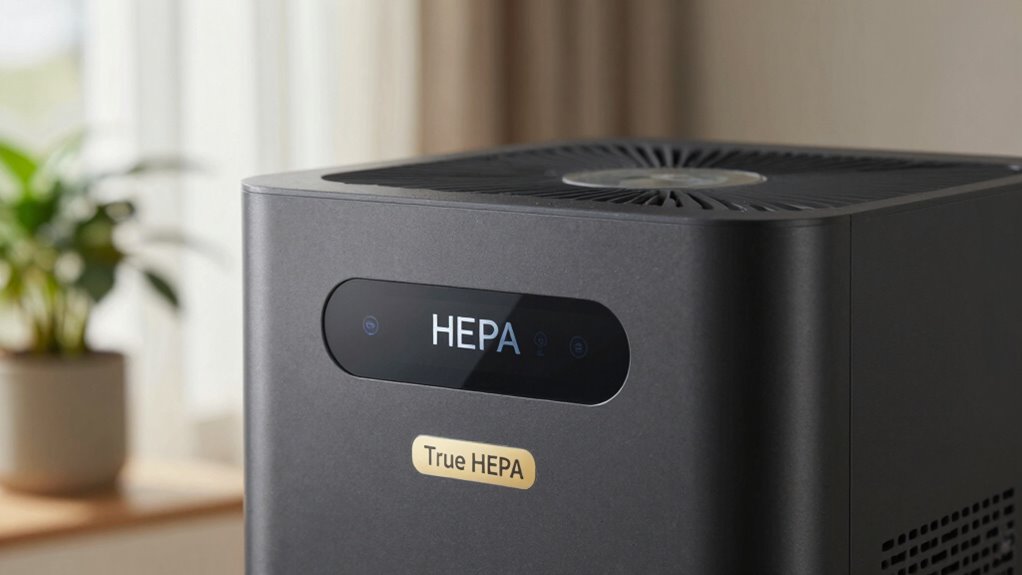
When choosing an air purifier, understanding the difference between HEPA and True HEPA filters is essential. These labels can be confusing, and knowing what they really mean helps you make an informed decision about air filtration. HEPA, which stands for High-Efficiency Particulate Air, is a standard that specifies a filter’s ability to capture tiny particles. In general, HEPA filters are designed to trap at least 99.97% of particles as small as 0.3 microns. But not all filters labeled “HEPA” meet this standard. Some products claim to have HEPA filters but only meet lower efficiency levels, which can compromise your air quality.
Understanding the difference between HEPA and True HEPA filters ensures you choose the most effective air purifier for clean, healthy air.
This is where True HEPA filters come into play. A True HEPA filter strictly adheres to the official standards, ensuring it captures 99.97% of particles down to 0.3 microns. When you see “True HEPA,” you can be confident that the filter’s efficiency has been verified and is reliable for removing dust, pollen, pet dander, mold spores, and even some bacteria and viruses. Conversely, some air purifiers might feature “HEPA-like” or “HEPA-type” filters, which may not meet the same high standards. These alternatives often use less dense materials or different filtration methods that don’t guarantee the same level of air filtration efficiency.
Your choice hinges on understanding these distinctions. If you want maximum protection against airborne allergens and pollutants, opting for an air purifier with a True HEPA filter ensures you’re getting the best filter efficiency. It means you’re investing in a device that consistently removes nearly all microscopic particles, leading to cleaner, healthier air. Properly labeled filters are essential for ensuring filter efficiency and avoiding misleading claims. On the other hand, filters that aren’t True HEPA might still improve air quality but may fall short when it comes to capturing the smallest contaminants. This can be particularly important if you suffer from allergies, asthma, or other respiratory issues.
Always check the specifications and labels carefully. A reputable product will specify that it contains a True HEPA filter, often with certification details or standards met. Remember, some manufacturers may use vague terms or marketing jargon to make their filters seem more effective than they are. By understanding the key difference in air filtration and filter efficiency, you can avoid falling for the “label trap” and choose an air purifier that truly delivers on its promises. Ultimately, investing in a True HEPA filter means you’re prioritizing your health by ensuring your air purifier performs at its highest capacity.

Core 300 Replacement Filter for LEVOIT Core 300, Core 300-P, Core 300S Vortex Air Air Purifier, 3-in-1 H13 Grade True HEPA Filter Replacement 2 Pack, Compare Part No. Core 300-RF (White)
Work Great As Name Brand Filter — Multiple tests in our factory have proven that Colorfullife core 300…
As an affiliate, we earn on qualifying purchases.
As an affiliate, we earn on qualifying purchases.
Frequently Asked Questions
How Do I Verify a Purifier’s True HEPA Rating?
To verify a purifier’s true HEPA rating, check if it meets certification standards like those from the FDA or the European EN 1822. Look for labels that specify “True HEPA” and details on filter lifespan. Research the brand’s claims, and read reviews to confirm performance. A reputable purifier will clearly state its filtering capabilities, ensuring you get genuine HEPA filtration that captures 99.97% of particles.
Are All HEPA Filters Equally Effective?
Not all HEPA filters are created equal; some may be more effective than others. You’ll want to take into account their filter lifespan and how well they impact your air quality. A higher-quality filter traps more particles and lasts longer, making it worth the investment. Don’t judge by labels alone—look for real reviews and certifications to verify your filter actually improves your air quality and fits your needs.
Can a Cheaper HEPA Filter Perform as Well?
A cheaper HEPA filter can perform well, but it might have a shorter filter lifespan, meaning you’ll need to replace it more often. While initial cost savings are appealing, consider cost effectiveness over time—more frequent replacements could add up. Cheaper filters may also lack consistency in filtering efficiency. So, if you want reliable air purification, investing in a higher-quality filter often proves more cost-effective in the long run.
Do HEPA Filters Need Frequent Replacement?
HEPA filters generally need replacement every 6 to 12 months, depending on filter lifespan and maintenance frequency. You should check your manufacturer’s guidelines, as frequent use or high pollution levels may shorten their effectiveness. Regularly inspecting your filter helps guarantee ideal air quality. When it looks dirty or clogged, it’s time to replace it. Proper maintenance keeps your air purifier working efficiently and prolongs the filter’s lifespan.
What Certifications Indicate Genuine HEPA Filters?
You can identify genuine HEPA filters by looking for certification standards like the U.S. Department of Energy (DOE), the European EN 1822, or the HEPA certification label. These standards guarantee the filter material meets strict efficiency criteria, trapping at least 99.97% of particles 0.3 microns in size. Always check the product label or packaging for these certifications to avoid misleading labels and make certain you’re getting authentic HEPA filtration.

H13 True HEPA Replacement Filter for Levoit Vital 100 Air Purifier 2 PACK Vital 100-rf Air Filters 3-in-1 by APPLIANCEMATES
NOTE: It only works for vital 100 for Levoit, not fit for PureZone Air Purifier PEAIRPLG Only, if…
As an affiliate, we earn on qualifying purchases.
As an affiliate, we earn on qualifying purchases.
Conclusion
Understanding the difference between HEPA and True HEPA filters is essential when choosing an air purifier. Did you know that True HEPA filters can remove up to 99.97% of airborne particles as small as 0.3 microns? This means you’re markedly reducing allergens, dust, and pollutants in your home. By reading labels carefully and knowing what to look for, you can make smarter choices and breathe cleaner air every day. Don’t get caught in the label trap—stay informed!

MOOKA Air Purifiers for Home Large Room up to 1076ft², H13 True HEPA Air Filter Cleaner, Odor Eliminator, Remove Smoke Dust Pollen Pet Dander, Night Light, B-D02L White
MOOKA B-D02L AIR PURIFIER FOR LARGE ROOM: With the high-efficiency filtration system, the air purifier covers an area…
As an affiliate, we earn on qualifying purchases.
As an affiliate, we earn on qualifying purchases.
MOOKA Air Purifiers for Home Large Room up to 1076ft², H13 True HEPA Air Filter Cleaner, Odor Eliminator, Remove Smoke Dust Pollen Pet Dander, Night Light, B-D02L White
MOOKA B-D02L AIR PURIFIER FOR LARGE ROOM: With the high-efficiency filtration system, the air purifier covers an area…
As an affiliate, we earn on qualifying purchases.
As an affiliate, we earn on qualifying purchases.