
🔍 Read the full analysis: Steal This: The Twilight Dial Behind “Noctilucent — NLC Watch At 83 Km” on ThorstenMeyerAI.com

Get the latest gadgets delivered free with Prime
- Fast, free delivery on millions of items
- Prime Video, Amazon Music and more included
- Member-only deals all year
TL;DR
“Noctilucent — NLC Watch at 83 km” is a fictional, AI-built exhibition piece, not a real observing service. Its interactive solar-depression dial links changing twilight conditions to the appearance of simulated clouds, bringing a real atmospheric phenomenon into a browser-based design study.
ThorstenMeyerAI.com has presented “Noctilucent — NLC Watch at 83 km,” an AI-built fictional exhibition piece that uses an interactive solar-depression dial to alter a simulated twilight sky. The project draws on real noctilucent-cloud science, but it is not a real company, observing network, or live scientific service.
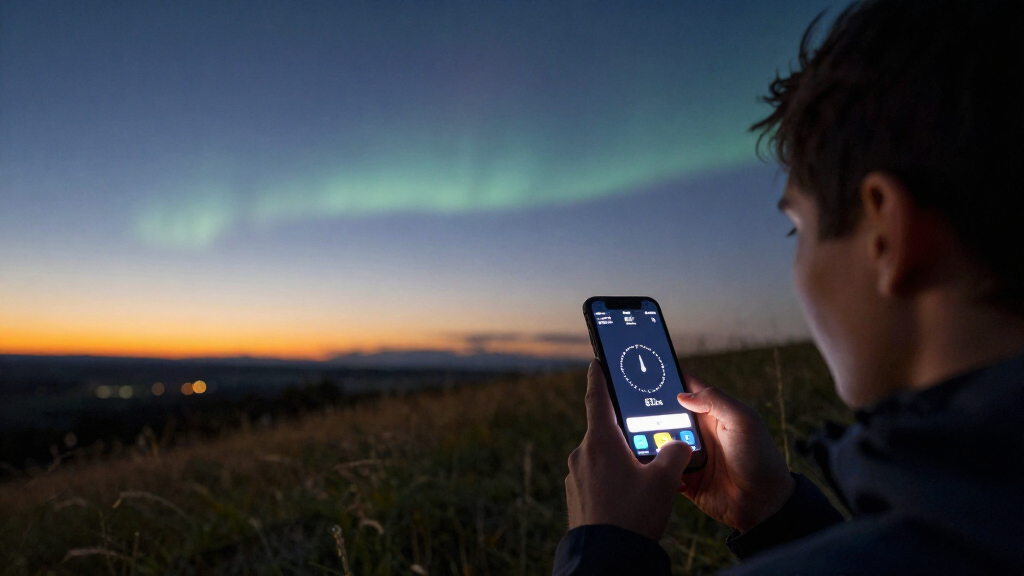
The page’s central control represents the sun’s position below the horizon, spanning six to 16 degrees of solar depression, with a particularly expressive setting near 11 degrees. As visitors move the dial, the experience changes several linked visual elements: sky brightness, shadow depth, cloud glow, ambient color, grain, and the light around the horizon. The same setting also informs diagram details and supporting text, according to the project description.
The sky and cloud imagery are generated in the browser rather than assembled from photographs. A procedural Canvas rendering produces gradients, stars, and layered wave patterns. The cloud forms vary by type: billows have tighter repeating crests, whirls bend into polar-like distortions, and bands move in broader waves. Inline SVG diagrams provide geometric illustrations, while CSS creates details such as instrument edges, grain, and rays.
A later interaction asks visitors to hold a control as simulated ground-level haze fades and a cloud band at 83 kilometres becomes clearer. Releasing the control early lets the sighting fade, making patience part of the designed experience. The source says the interaction supports pointer, keyboard, and touch-like input, and that animation pauses when the page is hidden, with a still state for users who prefer reduced motion.
Design Study / Room 162 of 175
Steal This: The Twilight Dial Behind “Noctilucent — NLC Watch At 83 Km”
A fictional, AI-built exhibition turns solar depression into an interactive design control. Its dial reshapes a simulated twilight sky around a real atmospheric phenomenon: noctilucent clouds can stay sunlit after the ground falls dark.
“A sky that responds to the sun you cannot see.”
Project description / ThorstenMeyerAI.com01 / The interface idea
Make one variable shape the whole experience
The dial is more than a number display. Moving it changes linked visual conditions across the page, connecting the controls, diagrams, cloud illustrations, and explanatory copy. The result is a browser-based science communication study, not a live scientific instrument.
02 / Built in the browser
Procedural sky, designed interaction
The project describes a visual system generated in the browser rather than assembled from photographs. The control’s state also informs the surrounding diagrams and supporting text.
Layered twilight
Procedural gradients, stars, and wave patterns create the simulated sky and cloud field.
Three visual rhythms
Billows use tighter crests, whirls bend into polar-like distortions, and bands travel in broader waves.
Diagrams and motion
Inline SVG supplies geometric illustrations; CSS adds instrument edges, grain, and rays. The source says animation pauses when the page is hidden and offers a still state for reduced motion.
03 / The designed reveal
From dark ground to a lit cloud band
A later interaction asks visitors to hold a control while simulated ground haze fades and the cloud band at 83 kilometres becomes clearer. Releasing early lets the sighting fade, making patience part of the experience.
04 / Subject and fiction
Real clouds. Fictional observers.
Noctilucent clouds are real, high-altitude ice clouds that may remain sunlit after an observer below is already in darkness. The exhibition uses that counterintuitive contrast as its central idea.
Atmospheric phenomenon
Noctilucent clouds
Real high-altitude ice clouds. In the exhibition, their illustrated band sits at 83 kilometres above a darkened ground.
Creative framing
NLC Watch
A fictional watch, field-journal frame, proposed summer-solstice calendar, and invented station logs inspired by places near Kiruna and the Shetland Islands.
05 / Evidence boundary
A design demonstration, not an observing report
The source describes the intended experience and implementation. It does not report scientific measurements, field observations, visitor learning outcomes, or independent testing.
No data feed, real-time cloud report, observing network, or scientific service is described.
No audience numbers, learning results, performance benchmarks, or external accessibility audit are provided.
The exact relationship between the visual simulation and atmospheric calculations is not stated.
06 / Quick answers
What the project does—and does not—claim
Is NLC Watch a real service?
No. The source calls it a fictional, AI-built exhibition piece, not a company, observing network, or live scientific service.
What does the dial change?
Across six to 16 degrees below the horizon, it links changes in sky light, shadow depth, cloud glow, ambient color, grain, and horizon flare.
Are noctilucent clouds real?
Yes. The clouds are real; the named watch and its field logs are fictional.
What does 83 km mean here?
It is the altitude used for the illustrated cloud band in the concept, not a measurement collected by the fictional watch.
Turning Twilight Into a Working Control
The project’s design proposition is that a scientific variable can shape an entire interface rather than appear only as a number or label. Here, changing the sun’s position changes the visual conditions across the page, connecting the controls, diagrams, cloud illustrations, and explanatory copy. That makes the exhibition a demonstration of interactive science communication, not simply a depiction of a night sky.
The subject also offers a clear visual explanation of a counterintuitive effect: clouds can remain illuminated after the ground is dark. The experience is designed to let visitors explore that contrast directly. Its practical significance, however, should not be overstated: the source describes a designed simulation and does not report scientific measurements, field observations, or testing of whether visitors learned more from the interaction.
For readers interested in web design, the implementation notes offer a second point of interest. The project describes a browser-generated visual system without image assets, with attention to reduced motion and pausing animation when a document is hidden. Those are stated design choices; the source does not provide independent performance measurements or an external accessibility audit.
As an affiliate, we earn on qualifying purchases.
Real Clouds, Fictional Observers
Noctilucent clouds are real, high-altitude ice clouds that can remain sunlit when the observer below is already in darkness. The project places its illustrated cloud band at 83 kilometres and presents the contrast between the dark ground and still-lit upper atmosphere as the exhibition’s central idea. The science is the subject; the named watch and its field-journal framing are fictional.
The page’s proposed observing calendar refers to summer solstice periods and latitudes of 55 to 65 degrees. The construction brief also calls for invented station logs inspired by locations near Kiruna and the Shetland Islands. These details belong to the creative brief and should not be mistaken for records from actual observing stations. The source describes the experience as moving from the horizon to cloud forms, ice crystals, seasonal observation, and a paper-like field log.
The project is identified as room 162 of 175 on ThorstenMeyerAI.com. Its accompanying construction guide describes a three-pass process: building the working page and critiquing it, applying an external critique to find and fix problems, and then conducting an art-direction review. The source outlines that process but does not provide independent documentation or verification of each review.
““A sky that responds to the sun you cannot see.””
— ThorstenMeyerAI.com project description
No Live Observations or Testing Reported
The source does not establish whether the experience has undergone independent review, how accurately its visual model represents atmospheric lighting, or whether its controls have been tested with visitors. It gives no audience numbers, learning outcomes, performance benchmarks, or independent accessibility findings. Its responsive behavior and animation safeguards are described as project features, not independently verified results.
The source material also does not state a publication date or provide a scientific service, data feed, or real-time cloud report. The 83-kilometre altitude and observation details appear within the exhibition concept; they do not represent a measurement made by the fictional watch. The exact relationship between the visual simulation and scientific calculations is not specified.
The Design Guide Is the Next Step
ThorstenMeyerAI.com directs readers to the room’s live page and an accompanying construction guide, which is described as covering the lighting model, procedural graphics, and visibility-aware animation. The source does not announce a launch date, future update, or real observing program. Readers can explore the exhibition as a design demonstration, while treating any field-journal framing as fiction rather than a source of live sky conditions.
Key Questions
Is NLC Watch a real cloud-monitoring service?
No. The source identifies it as a fictional, AI-built exhibition piece, not a real company, observing network, or live scientific service.
What does the solar-depression dial change?
The dial covers a range from six to 16 degrees below the horizon. Moving it changes linked simulated effects, including sky light, shadow depth, cloud glow, ambient color, grain, and horizon flare.
Are noctilucent clouds real?
Yes. The project uses real noctilucent clouds as its subject. These high-altitude ice clouds can remain sunlit after the ground below is dark. The fictional watch and its field logs are not real observations.
Does the page show live atmospheric data?
The source describes a browser-generated visual experience, not a live data service. It does not report a live feed or real-time observations.
What is the 83 km figure?
83 kilometres is the altitude used for the illustrated cloud band in the exhibition’s concept. The source does not present it as a measurement collected by the fictional watch.
Source: ThorstenMeyerAI.com
Halloween Picks
halloween
As an affiliate, we earn on qualifying purchases.