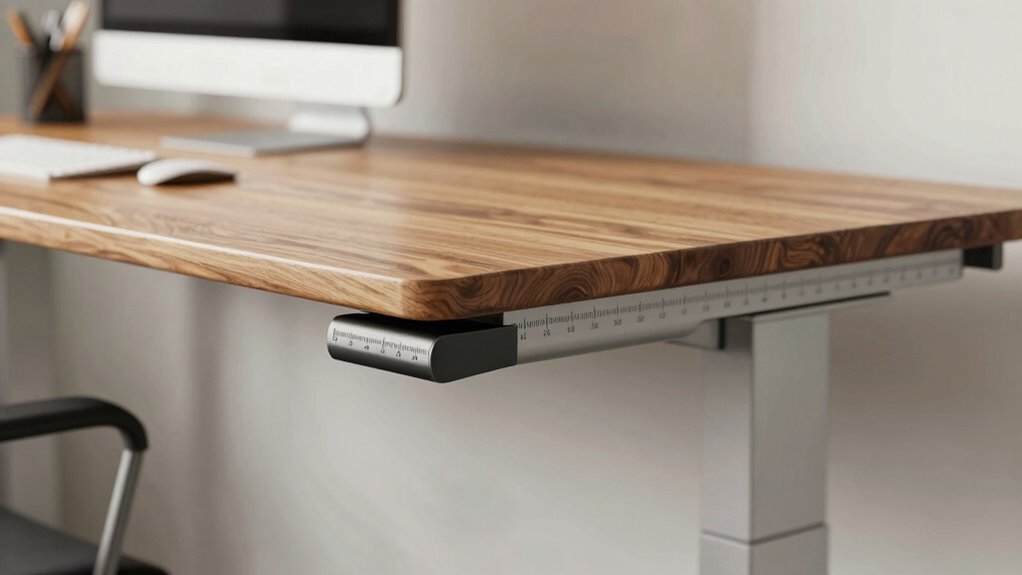
Many people wrongly assume their standing desk height should match their eye level or be as tall as their elbows. Instead, the correct measurement is to set the desk so your elbows rest at about a 90-degree angle, with forearms parallel to the floor. This positioning helps prevent strain and promotes proper posture. To achieve this, you might need to adjust your desk or use ergonomic accessories. Keep going to discover how to fine-tune your setup for maximum comfort.
Key Takeaways
- Many people set their standing desk height based on overall height rather than elbow height for optimal ergonomics.
- Incorrect measurement often leads to wrists bending or shoulders hunching, causing discomfort and strain.
- The most accurate method is measuring from the floor to your elbow’s natural bend while standing upright.
- Relying solely on desk height or visual cues can result in misalignment and long-term musculoskeletal issues.
- Using adjustable desks with precise height settings helps accommodate individual body measurements for better posture.
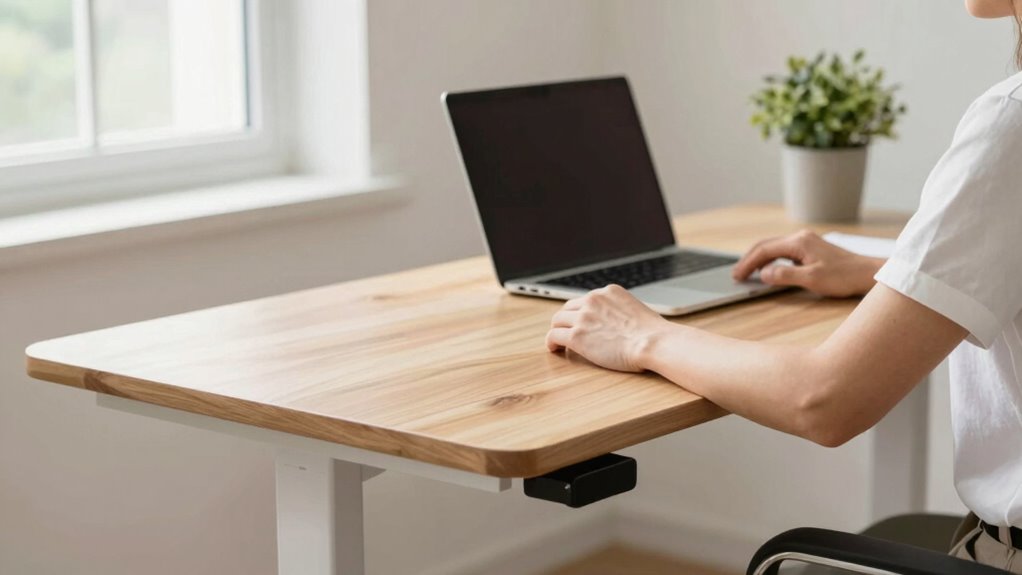
Finding the right standing desk height is essential for maintaining comfort and preventing strain during your workday. When your desk isn’t properly set, it can lead to neck pain, shoulder tension, and even long-term musculoskeletal issues. Many people overlook the importance of precise desk height adjustment, assuming that a one-size-fits-all approach works. But in reality, your ideal standing desk height depends on your body dimensions and posture. To get it right, you need to pay attention to specific measurements and consider ergonomic accessories that support proper alignment.
Proper desk height prevents strain, promotes comfort, and supports healthy posture during your workday.
First, understand that the correct desk height should allow your elbows to rest comfortably at about a 90-degree angle when your arms are by your sides. Your wrists should be straight and in line with your forearms, avoiding any bending that could cause repetitive strain injuries. To achieve this, you might need to adjust your desk multiple times, especially if your workstation features a flexible height adjustment mechanism. The key is to find a position where your shoulders relax, your back remains straight, and you’re not leaning forward or hunching over.
Incorporating ergonomic accessories can make a significant difference in achieving and maintaining the proper desk height. For example, a keyboard tray or adjustable monitor stand helps align your screen and keyboard at eye level and ideal arm height. These accessories allow you to fine-tune your setup without constantly readjusting the desk itself, which can be cumbersome or impossible with fixed-height desks. Using an anti-fatigue mat can also improve comfort if you’re standing for extended periods, helping to reduce pressure on your legs and lower back. Additionally, correct desk height can help prevent fatigue and discomfort over long periods of standing or sitting.
Desk height adjustment is a vital feature to look for when choosing or modifying your standing desk. Many modern desks come with electronic or manual adjustment options that enable quick and precise height changes. It’s best to set your desk at a height where your forearms are parallel to the floor, and your wrists are straight, regardless of whether you’re typing or resting. Remember, the goal is to minimize strain and encourage proper posture.
Getting your standing desk height right isn’t just about the initial setup; it’s about ongoing adjustments as your body or work tasks change. Regularly check your posture, and don’t hesitate to tweak your desk or ergonomic accessories to stay comfortable and healthy. Proper desk height adjustment is a simple yet powerful step toward a more productive and pain-free workday.
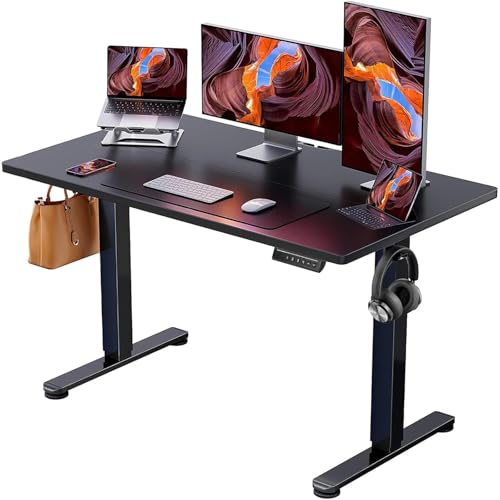
ErGear Height Adjustable Electric Standing Desk, 48 x 24 Inches Sit Stand up Desk, Memory Computer Home Office Desk, Black
Electric Height Adjustable Standing Desk for Comfortable Work – Switch effortlessly between sitting and standing with this electric…
As an affiliate, we earn on qualifying purchases.
As an affiliate, we earn on qualifying purchases.
Frequently Asked Questions
How Often Should I Adjust My Standing Desk Height?
You should adjust your standing desk height regularly, ideally every 30 to 60 minutes, to prevent strain and promote comfort. Use ergonomic accessories like adjustable monitor arms and keyboard stands for proper desk customization. Listen to your body—if you feel discomfort or fatigue, it’s time to change the height. Consistent adjustments help maintain good posture, reduce strain, and keep you comfortable throughout your workday.
Does Desk Height Affect Long-Term Posture?
Yes, desk height substantially impacts your long-term posture. Research shows that proper ergonomic chairs and correct keyboard positioning reduce strain and prevent musculoskeletal issues. If your desk is too high or low, it forces you into awkward positions, leading to discomfort over time. Ensuring your desk aligns with your body’s natural angles helps maintain good posture, minimizes fatigue, and supports overall spinal health.
Can a Desk Be Too High or Too Low?
Yes, your desk can be too high or too low, affecting your comfort and posture. To prevent this, use ergonomic accessories like adjustable monitor arms and keyboard trays for proper desk customization. Ensuring your desk height allows your elbows to stay at a 90-degree angle and your screen at eye level helps reduce strain. Properly customized workspace promotes better long-term health and productivity.
What’s the Best Way to Measure My Ideal Standing Desk Height?
Did you know that improper desk height is a common cause of discomfort? To find your ideal standing desk height, stand with your elbows bent at 90° and your wrists straight, then adjust until your forearms are parallel to the floor. Use ergonomic accessories like a keyboard tray if needed. Refer to desk height charts for guidance, but always customize based on your comfort to prevent strain.
Should I Use a Footrest With My Standing Desk?
Using a footrest with your standing desk can be a great ergonomic accessory. It helps reduce pressure on your legs and lower back, promoting better posture and comfort during long standing periods. The footrest benefits include improved circulation and less fatigue. Make sure your footrest is adjustable and positioned correctly to support your feet comfortably, allowing you to switch positions and avoid strain.
ergonomic keyboard tray
As an affiliate, we earn on qualifying purchases.
As an affiliate, we earn on qualifying purchases.
Conclusion
So, after all that, you’d think nailing the perfect standing desk height would be simple, right? Turns out, most people get it wrong, even when they think they know better. Ironically, it’s not about the fancy gadgets or complicated rules, but just a few careful measurements. So, next time you adjust your desk, remember: the key isn’t just to stand tall, but to stand correctly—because a little awareness goes a long way.
monitor stand for ergonomic setup
As an affiliate, we earn on qualifying purchases.
As an affiliate, we earn on qualifying purchases.
anti-fatigue standing mat
As an affiliate, we earn on qualifying purchases.
As an affiliate, we earn on qualifying purchases.