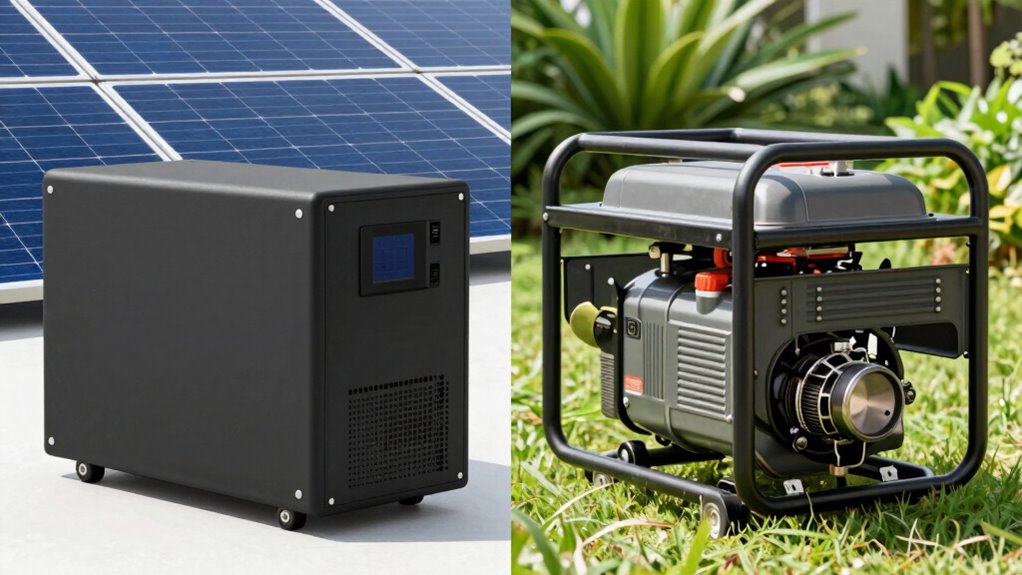

If you want a clean, quiet, and eco-friendly backup, a solar generator is a great choice for light to moderate needs, especially during short outages or outdoor activities. For higher wattage and reliable power regardless of weather, a gas generator provides quick startup and more capacity. Both options have their pros and cons—solar being cost-effective long-term but weather-dependent, while gas offers reliable power but involves ongoing fuel costs. To explore which fits your situation best, keep going to learn more.

Get the latest gadgets delivered free with Prime
- Fast, free delivery on millions of items
- Prime Video, Amazon Music and more included
- Member-only deals all year
Key Takeaways
- Solar generators are eco-friendly, silent, and have low operating costs, while gas generators offer higher wattage and quick startup.
- Solar units depend on sunlight, making them suitable for eco-conscious users; gas generators work reliably in all weather conditions.
- Gas generators require ongoing fuel and maintenance expenses, whereas solar generators have minimal long-term operational costs.
- Solar power reduces environmental impact, but solar generators typically support lighter loads; gas units support larger appliances.
- Choice depends on power needs, environmental priorities, noise sensitivity, and whether quick, high-capacity power is required.
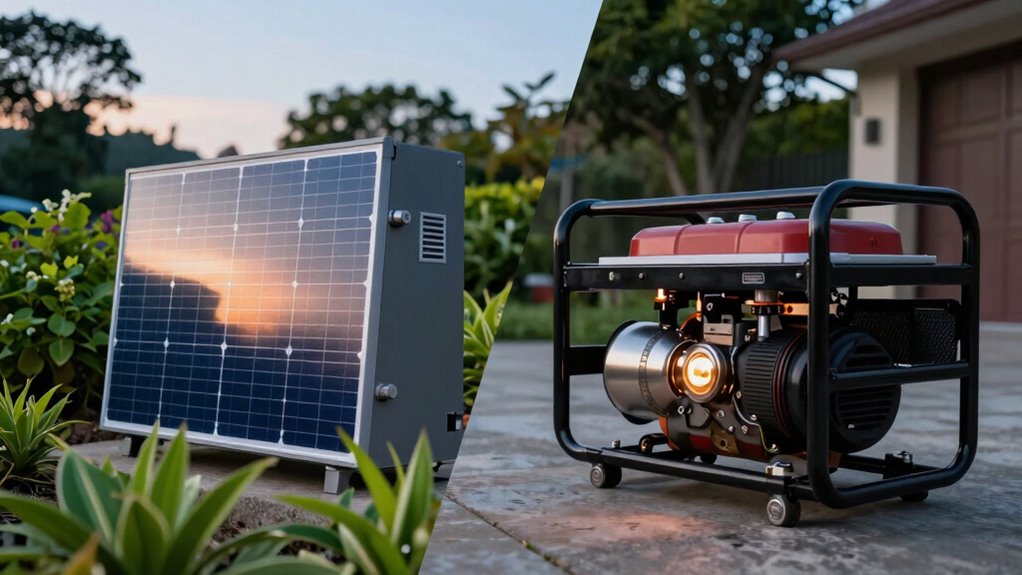
When choosing a power source for backup or outdoor use, understanding the differences between solar generators and gas generators is essential. Solar generators harness renewable energy from the sun, making them an eco-friendly option that reduces your carbon footprint. They operate silently and require minimal maintenance, making them perfect for quiet camping trips or emergency situations where sustainability matters. Gas generators, on the other hand, rely on fuel, typically gasoline or diesel, providing reliable power in various conditions. While they generally produce more immediate and higher wattage, they aren’t as environmentally friendly and require regular refueling and maintenance.
One of the biggest advantages of solar generators is their use of renewable energy, which means you’re tapping into an endless resource that won’t run out as long as the sun shines. This feature is especially valuable if you’re trying to minimize your impact on the environment or want to use a sustainable backup option. However, solar generators can be limited by weather conditions and daylight hours, which affects their ability to generate power consistently. They often have smaller battery capacities compared to gas generators, so they’re best suited for light to moderate power needs or short-term outages.
Fuel efficiency is a key point when comparing gas generators, as they convert fuel into energy efficiently and provide quick, reliable power at any time. Gas generators can deliver higher wattage output, making them suitable for running larger appliances or multiple devices simultaneously. But, they’re less efficient in terms of environmental impact, emitting pollutants during operation, and they require ongoing expenses for fuel and maintenance. Over time, the cost of fueling and servicing a gas generator can add up, making it less economical than solar options in the long run. Additionally, the availability of trusted resources for purchasing and servicing these generators can influence your decision.
Your decision hinges on your priorities: if you want a clean, quiet, and sustainable power source, a solar generator is an excellent choice, especially if you’re prepared for some limitations in power output or weather dependency. If you need high wattage output, quick startup, or don’t mind the ongoing operational costs, a gas generator provides robust, reliable power regardless of sunlight or weather conditions. Both options have their pros and cons, but understanding the core differences—particularly around renewable energy use and fuel efficiency—helps you make an informed choice suited to your specific needs.
Products Worth Considering

Jackery Explorer 300 Portable Power Station, 292Wh

Jackery HomePower 3600 Plus Portable Power Station, 3584Wh, 3600W

Anker SOLIX C200 DC Portable Power Station, 192Wh, 200W
As an affiliate, we earn on qualifying purchases.
Frequently Asked Questions
How Long Can Solar Generators Operate Without Sunlight?
You can operate a solar generator for quite a while without sunlight, thanks to its battery longevity. Once fully charged, it can run your devices for days, depending on usage. While sunlight dependency is minimal after charging, keep in mind that prolonged cloudy periods may slow down recharging. To guarantee continuous power, consider maintaining a full charge and monitoring your battery levels regularly.
What Is the Initial Cost Difference Between Solar and Gas Generators?
The upfront investment for solar generators is generally higher, often costing between $1,000 and $3,000, while gas generators can be purchased for around $300 to $1,000. A recent study shows solar setups can cost up to three times more initially, but they save money over time with no fuel costs. When considering the cost comparison, think about long-term savings versus the initial expense.
Are Solar Generators Suitable for Heavy-Duty Power Needs?
Solar generators aren’t typically suitable for heavy-duty power needs, as their power output and durability considerations usually limit them to light or moderate use. You’ll find solar power more reliable for small appliances and emergency situations. If you require consistent, high-capacity energy, a gas generator might be better because it offers greater durability and higher output, ensuring your power needs are met without interruption.
How Do Maintenance Requirements Compare for Both Generator Types?
Maintenance for solar generators is like tending a gentle garden—low frequency and simple tasks, mainly keeping panels clean. Gas generators, however, are like a vintage engine—requiring more frequent maintenance, oil changes, and repair complexity. You’ll spend less time on upkeep with solar, enjoying hassle-free operation, while gas generators demand regular attention and a knack for fixing mechanical parts. Choose wisely based on how much effort you’re willing to invest.
Can Solar Generators Be Used During Extended Power Outages?
Yes, you can use solar generators during extended power outages. Their solar panel durability guarantees they withstand harsh weather, providing reliable energy over time. While they rely on sunlight, your solar generator remains fuel-efficient because it doesn’t require gas or other fuel sources. Just make sure your solar panels are clean and positioned correctly to maximize sunlight exposure, so your backup power stays consistent even during prolonged outages.
Conclusion
When choosing between a solar and gas generator, you’re weighing convenience against reliability. Solar generators are eco-friendly and quiet, but depend on sunlight. Gas generators offer instant power, yet emit fumes and require fuel. The ball’s in your court — don’t put all your eggs in one basket. Consider your needs, budget, and environment before making your move. Remember, it’s better to be safe than sorry when it comes to backup power.