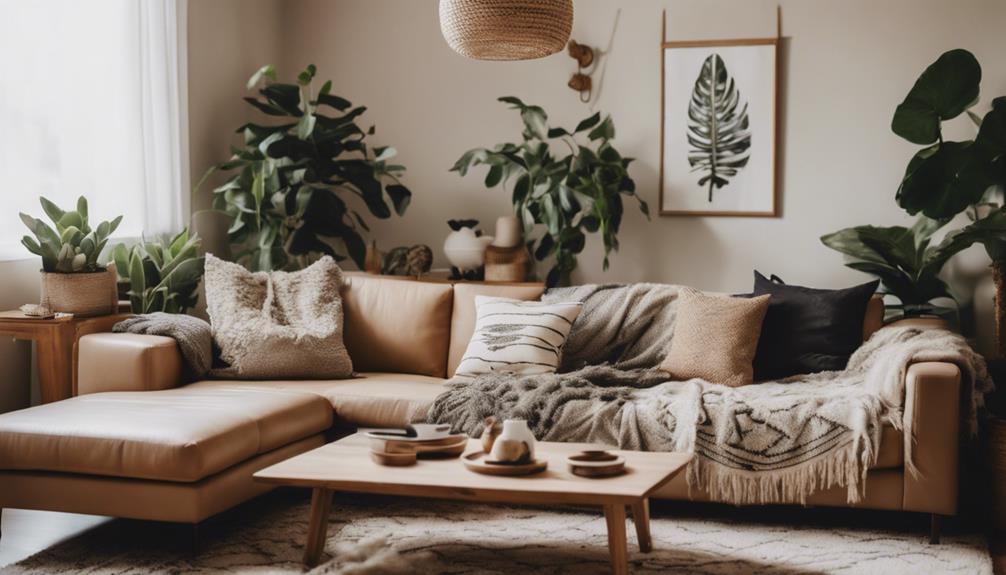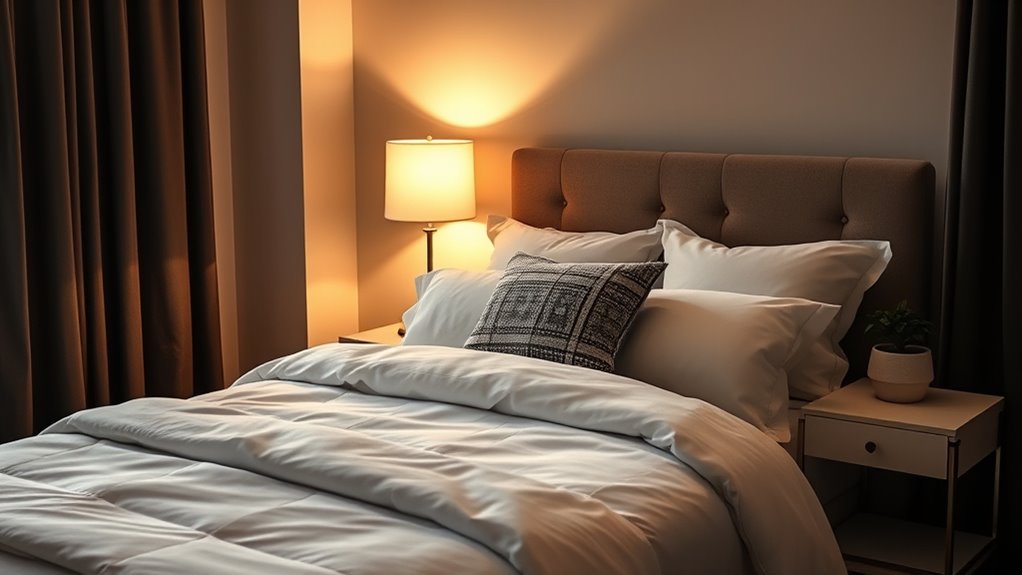

To create a sleep sanctuary at home, start by optimizing your environment—keep your room cool, dark, and quiet using blackout curtains, sound machines, and air purifiers. Invest in a supportive mattress and comfortable bedding, and establish a relaxing bedtime routine with calming activities like meditation or herbal teas. Avoid screens before bed and create a dedicated space solely for rest. Keep exploring ways to enhance your sleep setup for better, more restful nights.

Get the latest gadgets delivered free — and shop member deals
- Fast, free delivery on millions of items
- Access to Prime Big Deal Days deals on October 6–7
- Prime Video, Amazon Music and more included
Key Takeaways
- Maintain a cool, dark, and quiet environment using blackout curtains, soundproofing, and climate control devices.
- Use comfortable, supportive bedding and rotate or replace mattresses every 7–10 years.
- Establish calming bedtime routines like meditation or herbal teas to signal your body it’s time to sleep.
- Limit screen time before bed and keep electronic devices out of the bedroom to reduce blue light exposure.
- Incorporate air purifiers and maintain optimal room temperature to enhance air quality and comfort.

Getting quality sleep at home is achievable by optimizing your environment and routines. Your bedroom should be a sanctuary dedicated to rest, and small changes can make a significant difference. Start by focusing on your sleep environment: setting the right temperature is crucial. Experts recommend keeping your room between 60 and 67°F for optimal sleep quality. Cooler temperatures tend to be better than warmer ones, as they support your body’s natural thermoregulation. Investing in high-tech bedding, like cooling pillows, mattresses, or thermoregulating fabrics, can help maintain a comfortable temperature throughout the night. Using smart climate devices or thermostats allows you to easily control the room’s temperature, creating an ideal environment that promotes restful sleep. Air purifiers also play a vital role, reducing allergens and keeping the air clean, which can prevent disruptions caused by respiratory issues.
Optimize your sleep by maintaining a cool, clean, and comfortable bedroom environment.
Light management is equally important. Over half of U.S. teens with bedroom TVs or smartphones report sleep difficulties, primarily due to blue light exposure, which delays melatonin production and prolongs sleep onset. To combat this, blackout curtains or sleep masks are effective tools to block out external light and achieve total darkness. Limiting screen time before bed is widely recommended, as the blue light emitted from digital devices can interfere with your circadian rhythm. Removing electronic devices from the bedroom altogether helps foster a sleep-friendly environment, encouraging deeper and more restorative rest. Research indicates that reducing blue light exposure before sleep can significantly improve sleep quality and duration.
Controlling noise is another key element. Sound machines or soft wax earplugs can effectively block disruptive sounds, creating a peaceful atmosphere. If you live in a noisy area, consider soundproofing measures or maintaining a consistent background noise, like white noise, which masks sudden sounds that might wake you. Maintaining a quiet home environment supports a stable sleep cycle and minimizes interruptions.
Upgrading your bed and bedding can greatly improve sleep quality. Supportive mattresses and pillows reduce discomfort, helping you stay asleep longer. Regularly replacing your mattress every 7–10 years prevents degradation, and allergen-resistant covers can reduce allergy symptoms that disturb sleep. Your individual temperature needs should guide your choice of mattress materials—cooling or warming—to ensure maximum comfort.
Finally, establishing a calming bedtime routine is essential. Incorporate relaxation practices such as meditation or herbal remedies, which have shown to promote sleep. Meditation practices, in particular, can calm your mind and reduce stress, easing the transition into sleep. Herbal remedies like chamomile or valerian root may also support relaxation and sleep quality. Avoid caffeine, alcohol, and heavy meals close to bedtime, and if sleep eludes you, get out of bed and do a relaxing activity until you feel sleepy again. By combining these environmental adjustments with calming routines, you can create a sleep sanctuary that helps you wake refreshed and ready for the day.
As an affiliate, we earn on qualifying purchases.
Frequently Asked Questions
How Does Room Temperature Affect Sleep Quality?
Your room temperature directly impacts your sleep quality by influencing thermoregulation challenges. Too hot or cold, and your body struggles to maintain the ideal core temperature, disrupting sleep stages. Don’t buy bedroom temperature myths that colder is always better; personal comfort varies. Aim for a cool, comfortable environment between 60°F and 68°F, which supports natural thermoregulation, enhances sleep, and reduces wakefulness, helping you wake refreshed.
What Are the Best Plants to Improve Bedroom Air Quality?
They say, “A breath of fresh air is worth more than gold,” and your bedroom greenery can prove it. Air purifying plants like the Snake Plant, Peace Lily, and Spider Plant are top choices to improve bedroom air quality. These air purifying plants remove toxins like formaldehyde and benzene, making your space healthier. Incorporate these bedroom greenery options to breathe easier and enjoy better sleep every night.
Can Noise Machines Really Enhance Sleep?
Yes, noise machines with white noise can really enhance your sleep by providing effective sound masking. They create a consistent auditory background that blocks out disruptive external sounds, helping you fall asleep faster and stay asleep longer. Just make sure you set the volume to a safe level and place it away from your head. Using sound masking during sleep onset can improve sleep quality, especially if you’re sensitive to noise or live in a noisy environment.
How Often Should I Replace My Mattress?
Your mattress is like a trusty partner that gradually wears out; experts recommend replacing it every 8 to 10 years. The bedding replacement schedule depends on mattress lifespan, sleep habits, and mattress type. If you notice sagging, discomfort, or decreased support, it’s time for a new one. Regular maintenance can prolong its life, but listening to your body helps ensure you get restful sleep and avoid long-term discomfort.
Are There Specific Lighting Colors That Promote Better Sleep?
To promote better sleep, avoid blue light in your bedroom, as it suppresses melatonin and delays sleep onset. Instead, opt for warm tones like amber, orange, or red lighting, which activate the parasympathetic nervous system and help you relax. These warmer colors minimize circadian disruption, making it easier for you to fall asleep quickly and enjoy restorative rest. Remember, controlling light wavelength and tone is key to improving your sleep quality.
Conclusion
Creating your sleep sanctuary transforms nights from restless to restorative. Imagine waking refreshed, ready to conquer the day, yet still haunted by the thought of missed sleep. Your perfect haven offers peace, but without it, stress and exhaustion linger like shadows. Embrace the power of a dedicated sleep space—you hold the key to better rest and brighter mornings. Don’t let chaos steal your sleep; build your sanctuary and reclaim the rest you deserve.
Fall Picks
fall essentials
As an affiliate, we earn on qualifying purchases.