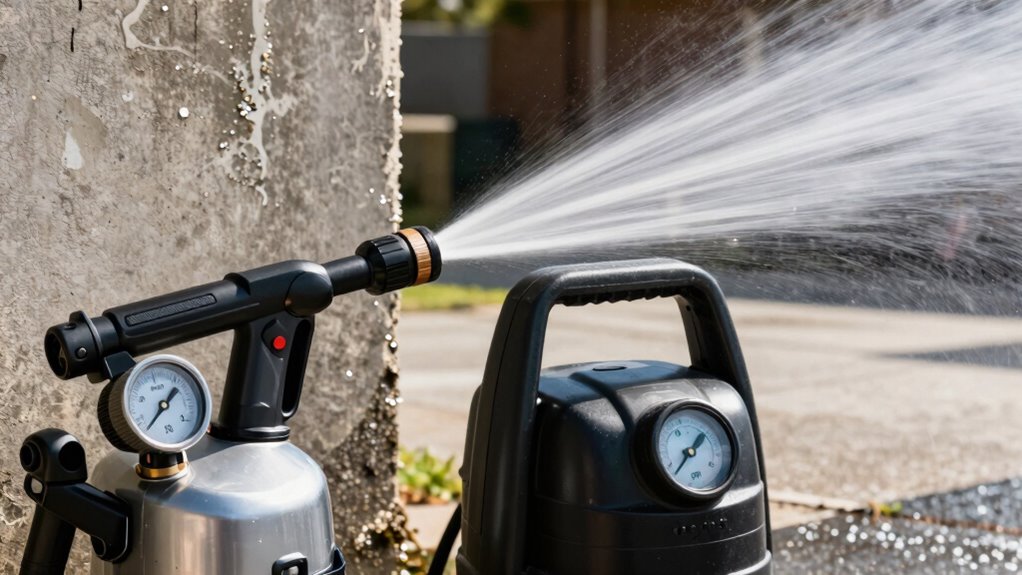

When choosing a pressure washer, understanding PSI and GPM is key to effective cleaning without damage. PSI measures the water pressure, while GPM indicates flow rate. Too high PSI with low GPM can harm surfaces, while a good balance of both delivers tough cleaning power safely. Matching these specs to your specific task ensures best results. Want to know how to pick the right settings and accessories? Keep exploring to master the details.
Key Takeaways
- PSI (pounds per square inch) measures water pressure, impacting the force behind cleaning; GPM (gallons per minute) indicates water flow volume, affecting cleaning speed.
- Effective cleaning depends on balancing PSI and GPM to match the surface and stain type, preventing damage and ensuring efficiency.
- High PSI with low GPM can cause surface damage, while high GPM with lower PSI may be less effective on stubborn grime.
- For deep cleaning, higher GPM helps remove dirt faster; for delicate surfaces, lower PSI with moderate GPM is safer.
- The combination of PSI and GPM determines the overall cleaning power, making both specs crucial for optimal pressure washing results.
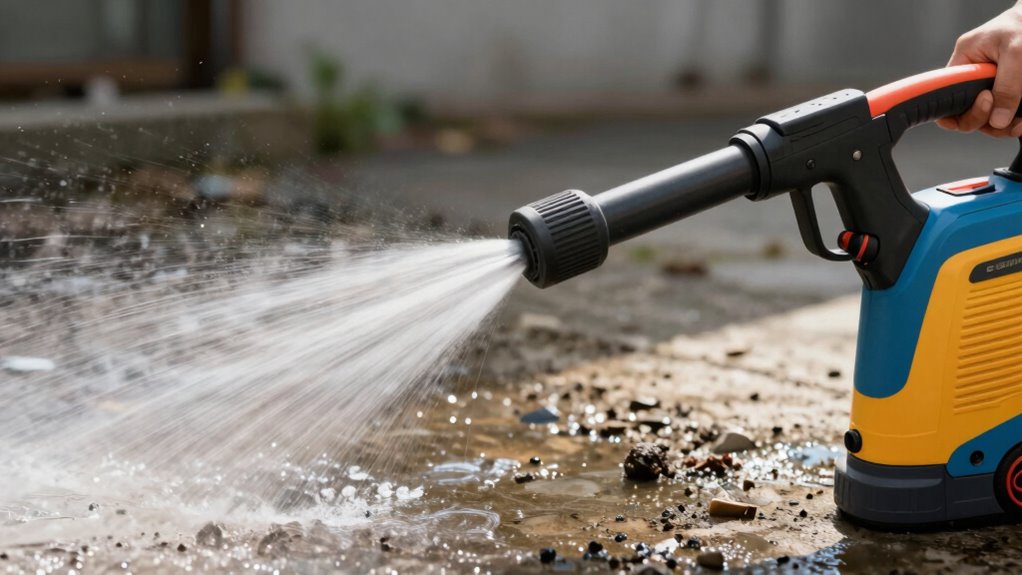
Have you ever wondered how to effortlessly clean driveways, decks, or siding? The secret lies in understanding the right pressure washer setup for each job. One key aspect is choosing the correct detergent and nozzle types. These elements make all the difference in how effectively you can remove dirt, grime, and stains. When selecting a detergent, it’s essential to pick one suited for the surface you’re cleaning. For example, biodegradable, low-foaming detergents work well for delicate siding, while stronger degreasers are better for concrete driveways. Using the right detergent not only boosts cleaning power but also prevents surface damage.
Next, nozzle types are vital because they determine the spray pattern and pressure. Nozzles come in different colors, each indicating a specific spray angle—typically from 0 to 65 degrees. A zero-degree nozzle produces a pinpoint jet that’s powerful but can damage softer surfaces if used improperly. Wider-angle nozzles, such as 25 or 40 degrees, disperse water more broadly and are safer for siding and decks. By selecting the correct nozzle, you control the pressure and spray pattern, making your cleaning more efficient and safe. For instance, a 15-degree nozzle offers a good balance of power for stubborn stains on concrete, while a 40-degree nozzle is gentler, ideal for washing cars or delicate siding.
Understanding the interplay between detergent selection and nozzle types helps you optimize your pressure washer’s performance. Using the right nozzle with a compatible detergent ensures you don’t waste water or energy, and it reduces the risk of surface damage. For tough grime, combining a strong detergent with a focused, high-pressure nozzle can blast away dirt effectively. Conversely, for more delicate surfaces, opt for milder detergents and wider spray angles to avoid etching or gouging. It’s also wise to pay attention to the pressure setting—measured in PSI—and flow rate, in GPM. High PSI with low GPM can be too aggressive, whereas a balanced approach ensures thorough cleaning without harm. Additionally, understanding pressure and flow rates helps you select the optimal settings for each task, ensuring efficiency and safety.
In the end, mastering detergent selection and nozzle types allows you to tailor each cleaning task precisely. It’s about matching the right tools to the surface and stain type for maximum efficiency. When you understand these fundamentals, pressure washing becomes safer, quicker, and more effective—transforming tough cleaning jobs into quick, satisfying tasks.

Yeryork 5000 Max Adjustable PSI Pressure Washer,2.5 Max GPM Power Washer with 33 FT Retractable Hose Reel, Stainless Steel Lance, 500ml Foam Cannon, 4-Nozzle Set, Washer for Cars, Fences, Patios
[Powerful & Adjustable PSI Cleaning Performance] Driven by a 1900W motor, it delivers up to MAX PSI at…
As an affiliate, we earn on qualifying purchases.
As an affiliate, we earn on qualifying purchases.
Frequently Asked Questions
How Do I Choose the Right Pressure Washer for My Needs?
To choose the right pressure washer, you need to ensure choosing specs based on your cleaning tasks and surface sensitivity. If you’re cleaning delicate surfaces, opt for lower PSI to prevent damage, while tougher jobs need higher PSI and GPM for efficiency. Think about the surface you’ll clean most often, balancing pressure and flow rate to get the best results without harming surfaces. This approach ensures you pick a washer suited to your needs.
Can Pressure Washers Damage Delicate Surfaces?
Like a knight with a laser sword, you can damage delicate surfaces if you’re not careful. Pressure washers can cause surface damage if you use too high PSI or GPM settings. Always follow safety precautions, such as testing on a small area first and using the appropriate nozzle. This way, you protect your surfaces from harm while enjoying a thorough clean. Be cautious—you don’t want a battle you can’t win!
What’s the Difference Between Hot and Cold Water Pressure Washers?
Hot water pressure washers use heated water, offering advantages like better grease and oil removal, making them ideal for tough cleaning jobs. Cold water pressure washers, on the other hand, have limitations in breaking down stubborn grime but are typically more affordable and easier to maintain. You should choose hot water models when cleaning greasy or oily surfaces, while cold water washers work well for general outdoor cleaning tasks.
How Often Should I Maintain My Pressure Washer?
You should maintain your pressure washer after every use by inspecting for leaks, cleaning filters, and checking hoses. Follow a regular maintenance schedule, like changing oil and replacing worn parts every 50 hours of use or seasonally. Troubleshooting tips include examining nozzles for clogs and ensuring proper water flow. Proper maintenance keeps your washer running efficiently and extends its lifespan, saving you time and money in the long run.
Are Electric or Gas Pressure Washers More Powerful?
Electric pressure washers tend to be less powerful than gas models, delivering about 1,500 to 2,000 PSI, while gas units can reach over 4,000 PSI. If you need more cleaning power, especially for tough surfaces, gas is usually better. However, electric washers are safer for delicate surfaces and easier to handle. Think about surface safety and your cleaning needs when choosing between electric and gas pressure washers.
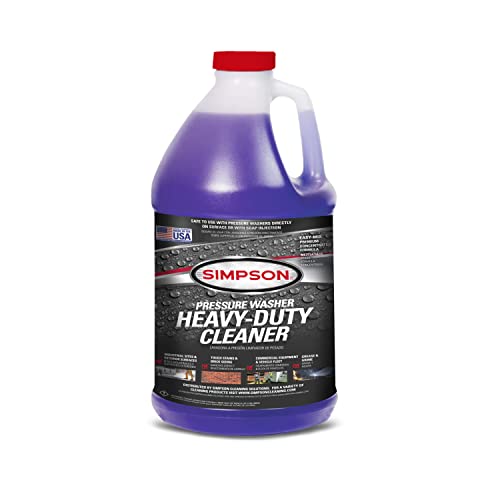
Simpson Cleaning 88282 Cleaner, Concentrated Soap Solution for Pressure Washers and Spray Bottles, Use on Concrete, Vinyl Siding, Appliances, Windows, Cars, Fences, Decks, Purple, 1 Gallon
Heavy Duty Cleaner: Formulated to be used on industrial sites, commercial equipment, construction machinery, fleet vehicles and more;…
As an affiliate, we earn on qualifying purchases.
As an affiliate, we earn on qualifying purchases.
Conclusion
Don’t get caught up in just the PSI or GPM numbers—they both matter for effective cleaning. While higher PSI helps tackle stubborn grime, a solid GPM ensures your water flow keeps things moving. Some worry increased GPM wastes water, but choosing the right balance saves you time and effort. Remember, understanding how PSI and GPM work together means you’ll select a pressure washer that truly gets the job done without squandering resources.

Twinkle Star Pressure Washer Nozzle Tips Multiple Degrees, 1/4 INCH (2.5 GPM)
Complete set– Twinkle Star Pressure Washer Tips contains 1 Black Brass soap nozzle,1 Red Stainless Steel Nozzle Tip…
As an affiliate, we earn on qualifying purchases.
As an affiliate, we earn on qualifying purchases.
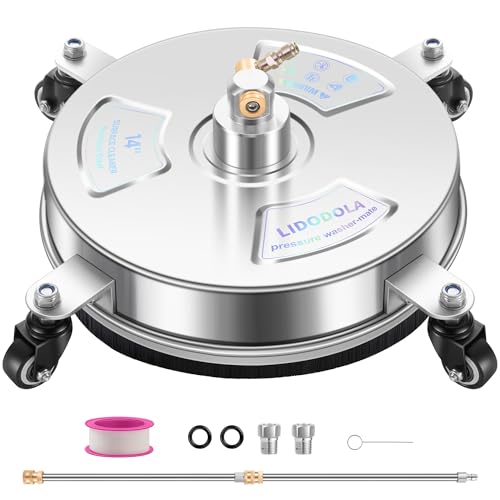
14" Pressure Washer Surface Cleaner with 4 Wheels – Stainless Steel Surface Cleaner for Pressure Washer Attachment for Concrete, Patio, Sidewalk, Deck and Driveways – PWS14
PROFESSIONAL CLEANING – The Lidodola surface cleaner achieves high-performance cleaning across a 14" wide area with dual spinning…
As an affiliate, we earn on qualifying purchases.
As an affiliate, we earn on qualifying purchases.