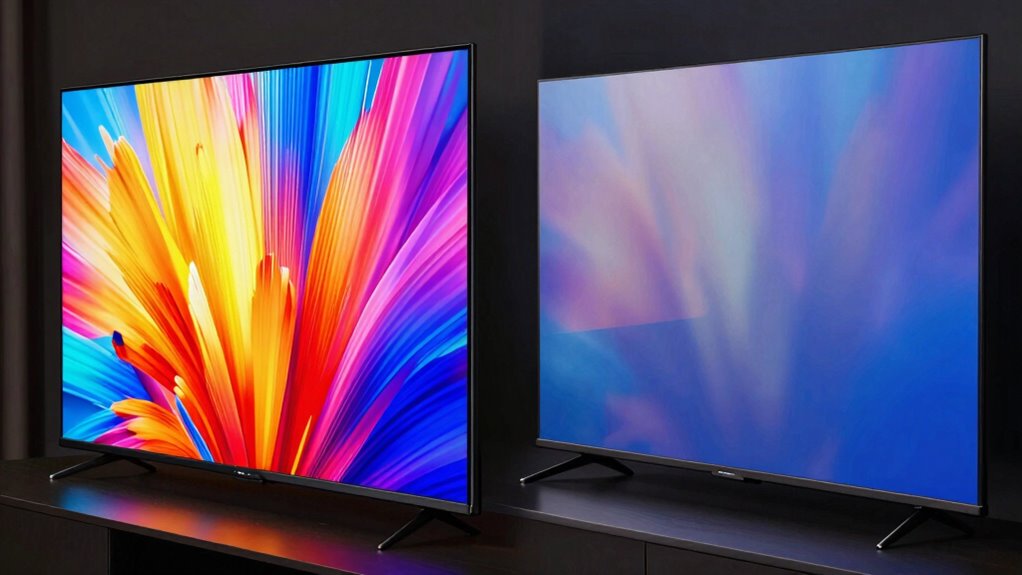

The so-called “brightness wars” mean manufacturers push high luminance levels to make screens look impressive, but brightness alone isn’t everything. A great picture depends on contrast, especially with OLEDs that achieve perfect blacks. Proper calibration of HDR settings enhances detail in bright and dark areas. So, a TV with eye-popping brightness may not deliver the best overall picture if contrast and calibration are overlooked. Keep exploring to discover how to make the most of your premium screen choices.

Get the latest gadgets delivered free with Prime
- Fast, free delivery on millions of items
- Prime Video, Amazon Music and more included
- Member-only deals all year
Key Takeaways
- High brightness levels are common in premium TVs but don’t guarantee better picture quality without good contrast and calibration.
- OLED screens offer exceptional contrast with perfect black levels, making contrast more critical than brightness alone.
- Proper HDR calibration unlocks full contrast and color range, which is vital for vivid, realistic images.
- Brightness measurements can be misleading if contrast, calibration, and display technology are not considered.
- Tailoring calibration to your TV’s technology ensures optimal performance, regardless of brightness specs.

As TV manufacturers compete to deliver the brightest screens, the so-called “brightness wars” have intensified, pushing the boundaries of display technology. While brightness is a key factor, it’s not the only thing that determines picture quality. You’ll find that OLED contrast plays a significant role in creating stunning visuals, especially when paired with proper HDR calibration. Brightness might catch your eye first, but contrast and image processing are what truly bring a TV to life.
When evaluating premium screens, don’t get caught up solely in the numbers for peak brightness. Many high-end models boast impressive luminance levels, but if the contrast isn’t equally strong, the picture can look flat or washed out. OLED screens excel here because they can turn individual pixels on and off completely, delivering perfect blacks and vibrant colors. This contrast mastery makes OLEDs stand out, especially in dark room viewing, where their ability to produce deep blacks enhances overall picture depth.
HDR calibration is another critical aspect to consider. It’s not enough to see a TV with high HDR ratings; you need to ensure it’s properly calibrated. HDR, or High Dynamic Range, expands the contrast and color range, giving you more realistic and immersive images. If a TV isn’t calibrated correctly, the extra contrast and brightness can look unnatural or overly processed. Many manufacturers ship their TVs with default settings that don’t optimize these capabilities. You might need to fine-tune the HDR settings to unlock the full potential of your display, ensuring the contrast, highlights, and shadows work harmoniously. Additionally, understanding the importance of display technology can help you choose a screen that balances brightness, contrast, and overall picture quality for the best viewing experience. Proper calibration techniques can also enhance image accuracy, making a noticeable difference in picture quality.
You should also look into how the TV handles various HDR formats, like Dolby Vision or HDR10+. These formats rely heavily on contrast and calibration to deliver the intended experience. Proper HDR calibration enhances details in bright highlights and shadows, making scenes pop without losing fidelity. It’s worth investing time in adjusting these settings once you purchase your TV, either manually or with professional calibration tools, to maximize your viewing experience. Moreover, a good grasp of picture quality factors can help you make more informed decisions when comparing models and features. Keep in mind that calibration techniques can vary depending on the display technology, so understanding the specific needs of OLED versus LCD screens can aid in your setup process.
As an affiliate, we earn on qualifying purchases.
Frequently Asked Questions
How Does Brightness Affect Picture Quality in Different Viewing Environments?
Brightness greatly influences picture quality depending on your environment. In bright rooms, higher brightness levels enhance visibility, but may reduce color accuracy and cause glare. In darker spaces, lower brightness preserves contrast and detail. It also affects viewing angles; brighter screens often maintain color accuracy across angles better. Adjusting brightness to suit your environment ensures ideal picture quality, balancing vividness, contrast, and accurate colors for the best viewing experience.
Are Higher Brightness Levels Necessary for HDR Content?
Think of HDR content like a vibrant renaissance painting—higher brightness levels are essential to truly appreciate its depth and color accuracy. Bright screens deliver the punch needed for stunning highlights, but they also increase power consumption and can impact color accuracy if not calibrated properly. You don’t always need maximum brightness for HDR, but a capable screen helps you enjoy the full dynamic range without sacrificing image quality.
Which Brands Offer the Best Brightness Performance for the Price?
You’ll find that brands like Samsung, LG, and Vizio offer the best brightness performance for the price. Samsung’s QLED TVs excel in high brightness and color accuracy, making them great for HDR content, but they can have higher energy consumption. LG’s OLEDs provide excellent contrast and color accuracy with lower energy use, while Vizio offers competitive brightness at a more affordable price point. Consider your priorities—brightness, energy efficiency, or color fidelity—when choosing.
How Does Screen Size Influence Perceived Brightness?
Think of screen size as a spotlight—larger screens can make brightness seem more impressive, but perceived brightness depends heavily on screen calibration and ambient lighting. When you’re in a bright room, a bigger screen might seem dimmer because the surroundings wash out the image. To get the best experience, keep your calibration spot-on and adjust your ambient lighting to match your screen size, ensuring your TV shines at its brightest.
Can Excessive Brightness Damage the TV Over Time?
Excessive brightness can potentially damage your TV over time, especially if it causes uneven screen uniformity or strains components. High brightness settings increase power consumption, which can lead to overheating and wear on the backlight or other parts. To protect your TV, avoid setting the brightness too high regularly, and guarantee your device has proper ventilation. Adjusting brightness levels responsibly helps maintain your TV’s longevity and performance.
Conclusion
So, before you splurge on that “brighter-than-the-sun” TV, remember: it’s all a shiny illusion. Brightness wars only feed our obsession with pixels that punch harder, while subtle shadows quietly slip away. In the end, you’re not just buying a screen—you’re investing in a spectacle of marketing hype. So go ahead, pick your poison, but don’t be surprised if your new TV’s brilliance outshines your good judgment.
Halloween Picks
halloween
As an affiliate, we earn on qualifying purchases.