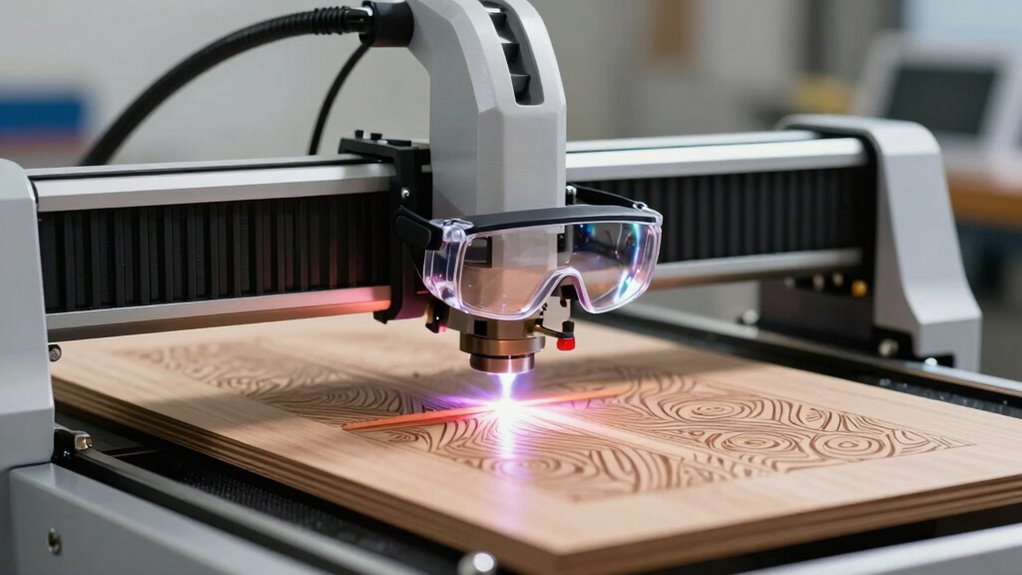

You must prioritize safety when using a laser engraver to prevent health risks and accidents. Always work in a well-ventilated area, use proper fume extraction, and review material safety data sheets before starting. Wear appropriate eye protection, keep a fire extinguisher nearby, and never leave the machine unattended. Follow safety protocols consistently, understand emergency procedures, and avoid reflective surfaces that could redirect the laser. Keep exploring these safety tips to guarantee a secure and effective engraving experience.

Get the latest gadgets delivered free with Prime
- Fast, free delivery on millions of items
- Prime Video, Amazon Music and more included
- Member-only deals all year
Key Takeaways
- Proper ventilation and exhaust systems are essential to remove toxic fumes and ensure a safe workspace.
- Always wear appropriate laser safety glasses to prevent eye damage from direct or reflected laser beams.
- Never leave the laser engraver unattended during operation to prevent fire hazards or accidents.
- Review material safety data sheets (SDS) to understand hazards and handle materials safely.
- Maintain ongoing safety awareness, including emergency procedures and correct handling of equipment and materials.
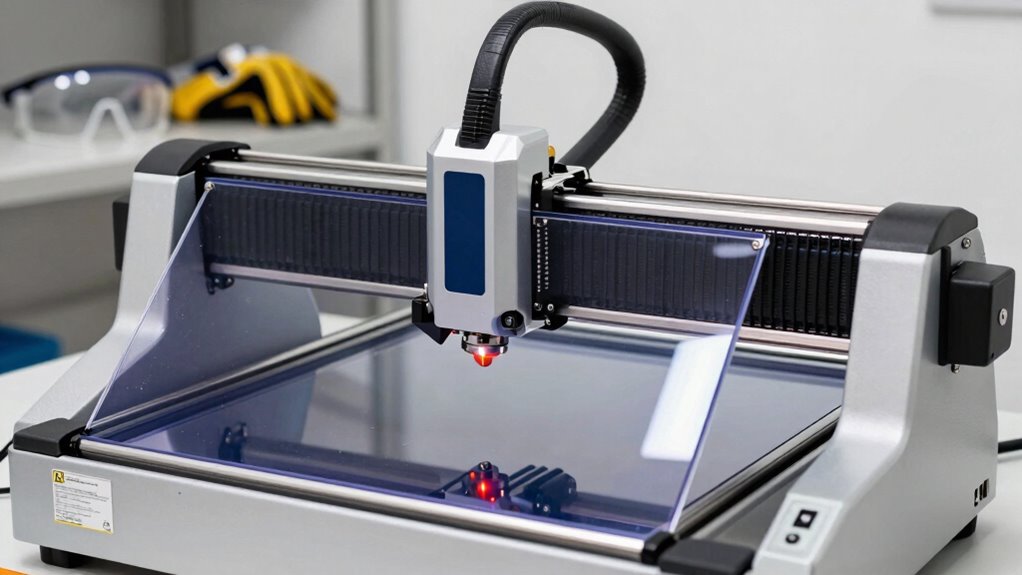
Laser engravers are powerful tools that can create detailed designs quickly, but they also pose significant safety risks if not handled properly. When operating a laser engraver, understanding laser material hazards is vital. Many materials used in engraving, such as plastics, woods, or metals, can release harmful fumes or tiny particles when heated by the laser. Breathing in these fumes can cause respiratory issues, allergic reactions, or long-term health problems. Some materials even produce toxic gases or carcinogens, making proper ventilation necessary. You should always know the material’s safety data sheet (SDS) before engraving and confirm your workspace has adequate exhaust systems to remove hazardous fumes effectively. Failing to do so increases the risk of inhaling harmful substances, which can have serious health consequences.
Understanding material hazards and ensuring proper ventilation are essential for safe laser engraving practices.
Equally important is eye protection essentials. The laser beam itself, along with reflected or scattered light, can cause severe eye damage if you’re exposed without proper safeguards. Direct exposure to the laser beam can lead to burns or permanent vision loss, so never operate the engraver without wearing appropriate laser safety glasses. These glasses are designed to filter or block specific wavelengths of laser light, depending on your machine’s laser type. Keep in mind that even small reflections from shiny surfaces can pose a risk, so always consider the environment around your workspace. Never look directly at the laser beam, and avoid working in a cluttered or reflective area that might redirect the laser unexpectedly. Additionally, being aware of laser material hazards and their potential risks helps you take more effective precautions. Knowing the material safety data sheet (SDS) for each material is essential for safe engraving practices. Incorporating proper ventilation systems further reduces health risks associated with fumes and particles produced during engraving.
In addition to eye protection, other safety measures include keeping a fire extinguisher nearby, as some materials or engravings can ignite if overheated. Never leave the laser engraver unattended during operation, and always double-check your settings and material placement before starting a job. Proper training is essential; understand your machine’s safety features, emergency shut-off procedures, and maintenance routines. Wear protective gloves when handling engraved pieces or cleaning the machine, but avoid loose clothing or jewelry that could catch in moving parts.
Ultimately, safety isn’t a one-time checklist but an ongoing habit. Staying aware of laser material hazards, consistently using eye protection essentials, and following best practices ensures you can enjoy the benefits of laser engraving without risking your health or safety. Remember, taking precautions isn’t just about compliance — it’s about protecting yourself every time you work with this powerful technology.
Products Worth Considering

Sony WH-1000XM4C Wireless Noise-Cancelling Headphones, Black

Bose QuietComfort Headphones (2nd Gen), Wireless Noise-Cancelling Over-Ear Headphones, Eucalyptus Green

Jackery Solar Generator 1000 V2 with 200W Solar Panel
As an affiliate, we earn on qualifying purchases.
Frequently Asked Questions
What Safety Gear Is Essential When Operating a Laser Engraver?
When operating a laser engraver, you need protective eyewear to shield your eyes from harmful laser rays and potential debris. Additionally, guarantee proper ventilation systems are in place to remove smoke, fumes, and particulate matter generated during engraving. These safety measures help prevent injuries and health issues. Always wear your protective gear, keep ventilation systems functioning well, and follow safety protocols to keep yourself safe during laser engraving sessions.
How Often Should Laser Engraver Safety Features Be Inspected?
You should inspect your laser engraver’s safety features weekly to guarantee laser safety and proper operation. Regular equipment maintenance helps catch any issues early, preventing accidents. Check emergency stops, safety interlocks, and ventilation systems for proper function. Keeping up with these inspections minimizes risks, protects your workspace, and ensures your laser engraver operates safely and efficiently. Consistent safety checks are essential for ongoing safe use.
Can Laser Engravers Be Used in a Home Environment Safely?
Yes, you can use laser engravers safely at home if you follow proper safety measures. Keep fire hazards in mind by never leaving the machine unattended during operation. Make certain adequate ventilation requirements are met to prevent harmful fumes from building up. Install a suitable exhaust system and work in a well-ventilated area. Regularly inspect safety features and stay vigilant to minimize risks and enjoy your creative projects safely.
What Are the Common Signs of Laser Engraver Malfunction?
When your laser beam flickers or drifts off course, it’s a red flag that something’s amiss. Unusual sounds or excessive smoke escaping the ventilation system signal a malfunction brewing. Watch for overheating, inconsistent cuts, or the laser refusing to operate—these are your alarm bells. A well-functioning laser engraver keeps its laser beam steady and ventilation system humming smoothly, ensuring safety and precision in every project you craft.
Is There a Recommended Safety Training for New Laser Engraver Users?
Yes, as a new laser engraver user, you should pursue laser safety certifications to guarantee proper handling and understanding of safety protocols. Additionally, you need to familiarize yourself with emergency response protocols, so you’re prepared in case of accidents. These certifications and protocols help you operate safely, minimize risks, and respond effectively to any issues, making your workspace safer for everyone involved.
Conclusion
Remember, safety isn’t just a suggestion—it’s essential. Did you know that improper use of laser engravers can cause serious injuries or fires? Nearly 70% of laser-related accidents involve eye or skin exposure, emphasizing the need for proper precautions. By following safety guidelines, wearing protective gear, and staying alert, you can enjoy your laser engraver confidently and safely. Don’t take chances—prioritize safety to protect yourself and your workspace every time you engrave.