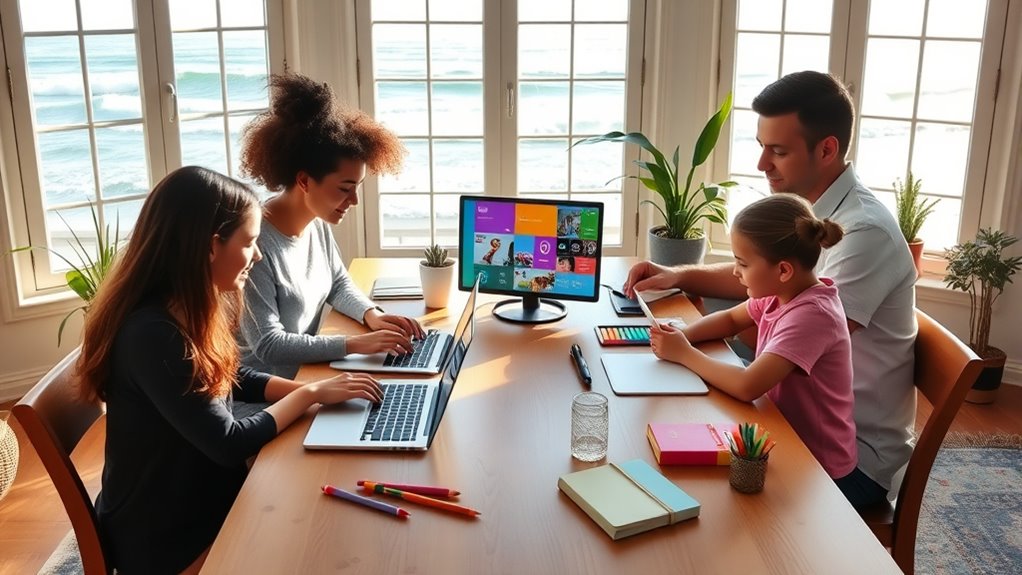

As a family digital nomad, you can combine remote work with flexible education options like worldschooling or online programs, allowing your children to learn while exploring new places. You’ll need to stay organized using digital tools and find suitable environments with reliable internet. Many destinations now offer supportive communities and legal visas that make this lifestyle easier. If you keep exploring, you’ll discover how to make remote schooling smooth and enriching for your family.
Key Takeaways
- Utilize flexible curricula and online resources to ensure consistent, quality education while traveling.
- Incorporate experiential learning through local cultural activities, museums, and language classes.
- Leverage remote schooling platforms and tools supported by pandemic adaptations for continuous learning.
- Plan educational schedules around travel itineraries to balance academic progress and exploration.
- Engage with local communities and support networks to enrich children’s cultural immersion and learning experiences.
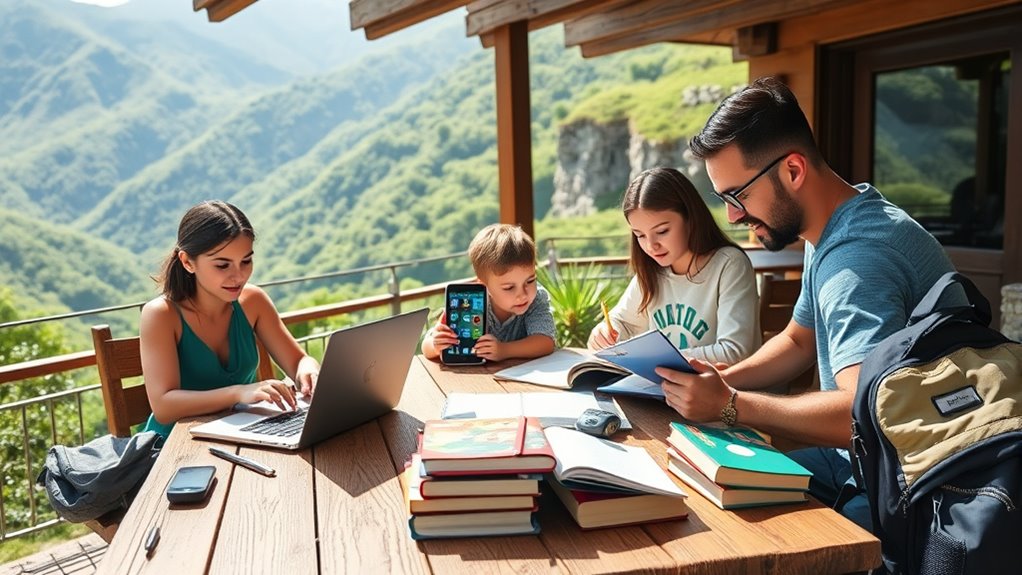
Ever wondered how families are redefining work and travel in the digital age? As a parent or caregiver, you’re part of a growing movement that’s reshaping what it means to balance work, family, and adventure. Family digital nomadism is gaining momentum, allowing you to blend career pursuits with immersive cultural experiences. This lifestyle demands a new approach to work life balance—one that’s flexible enough to accommodate your kids’ remote schooling while still giving you time to explore new environments. It’s not just about working from exotic locations; it’s about creating a sustainable routine that prioritizes both professional responsibilities and family well-being.
Cultural adaptation becomes a key skill when you’re constantly on the move. Your children learn firsthand about diverse customs, languages, and traditions, which enrich their education beyond textbooks. As you settle into different communities, you develop a deeper understanding of local cultures, which helps your family integrate smoothly. You’ll find that participating in local events or traditions builds stronger bonds with the communities you visit, making your experience more meaningful. This cultural immersion fosters resilience and adaptability in your children, key traits for a successful nomadic life. The estimated global digital nomad population ranges from 40 to 80 million, and many families are now part of this vibrant community, finding support and inspiration in shared experiences.
Remote schooling plays a vital role in making family nomadism feasible. Thanks to the rise of “worldschooling”—an educational approach that uses the world as a classroom—you can craft a personalized learning experience that’s as flexible as your travel schedule. The pandemic accelerated the development of remote education tools, making it easier than ever to keep your kids engaged and on track academically, regardless of where you are. Many families now choose to combine traditional schooling with experiential learning, visiting museums, historical sites, or engaging in local language classes during their travels. Additionally, specialized educational resources and flexible curricula ensure that your children can enjoy a high-quality education while exploring new environments.
The modern remote work landscape supports your family’s nomadic lifestyle more than ever before. Companies are adopting flexible policies, and digital nomad visas are making it easier to stay legally in foreign countries for extended periods. This legal framework guarantees you can focus on your work and family without constant visa concerns. Meanwhile, emerging destinations like Colombia, Kenya, and the Philippines attract nomads seeking affordable living costs, reliable internet, and welcoming communities. This global trend offers your family a chance to experience different ways of life while maintaining your careers.
In this evolving landscape, your family’s journey combines work life balance, cultural adaptation, and educational innovation. You’re not just traveling; you’re creating a dynamic, enriching environment for your children to grow and learn. Family digital nomadism isn’t just a trend—it’s a pathway to a life where work and adventure coexist, shaping resilient, culturally aware individuals ready to thrive in a connected world.
portable WiFi hotspot for travel
As an affiliate, we earn on qualifying purchases.
As an affiliate, we earn on qualifying purchases.
Frequently Asked Questions
How Do Families Find Reliable Internet in Remote Locations?
You find dependable internet in remote locations by exploring various internet options and connectivity solutions. Satellite internet offers wide coverage, while fixed wireless can provide faster speeds if towers are nearby. Combining hybrid solutions, like smart modems that switch between satellite and wireless, enhances reliability. Additionally, look into government programs for subsidies and consider dedicated lines or unlimited data plans to guarantee steady, dependable access for remote schooling needs.
What Are the Best Countries for Family Digital Nomads?
You should consider countries like Slovenia, Portugal, and Spain, which offer reliable internet essential for remote learning and smooth cultural adaptation. Slovenia’s safety and green spaces create a family-friendly environment, while Portugal’s flexible visas and international schools support long-term stays. Spain’s strong infrastructure and diverse cultural scene help your family feel connected and engaged, making these nations ideal for balancing remote work, education, and cultural integration.
How Do Families Handle Time Zone Differences for Schooling?
You juggle time zone coordination and flexible scheduling, turning chaos into harmony. By syncing shared digital calendars and using time zone converter apps, you guarantee your kids attend live classes and catch up asynchronously. You adapt locations seasonally, prioritize key sessions, and leverage cloud platforms. High-speed internet and alert notifications keep you on track, making remote schooling smooth despite the challenges of different time zones.
What Legal Considerations Exist for Minors Working and Studying Abroad?
You need to carefully follow child labor laws and visa requirements when minors work and study abroad. Make sure the work is authorized under local regulations, including age restrictions and work hours. Obtain necessary work permits or employment authorization, and ensure your child’s activities adhere to visa conditions. Staying informed about these legal considerations helps protect your child’s safety and legal status, preventing issues like fines, deportation, or loss of work privileges.
How Do Families Maintain Routines and Stability During Travel?
Think of your family routines as a well-tuned compass guiding your adventures. You keep a steady course with family meal planning, ensuring nourishment and togetherness, while outdoor activities serve as invigorating breathers that anchor your days. By establishing consistent schedules, even amid travel’s chaos, you create a safe harbor of stability. Flexibility and shared experiences weave your family’s story, making every new place feel like home.
digital nomad family backpack
As an affiliate, we earn on qualifying purchases.
As an affiliate, we earn on qualifying purchases.
Conclusion
As you pack up your laptop and children’s backpacks, you realize your journey isn’t just about new places, but about creating a life filled with adventure and connection. The world becomes your classroom, and every sunrise paints a new chapter of growth and discovery. Though challenges arise, the shared laughter and breathtaking sunsets remind you that this nomadic path is a vibrant canvas, where family bonds strengthen amidst the ever-changing horizon.
online learning tablet for kids
As an affiliate, we earn on qualifying purchases.
As an affiliate, we earn on qualifying purchases.
worldschooling educational resources
As an affiliate, we earn on qualifying purchases.
As an affiliate, we earn on qualifying purchases.