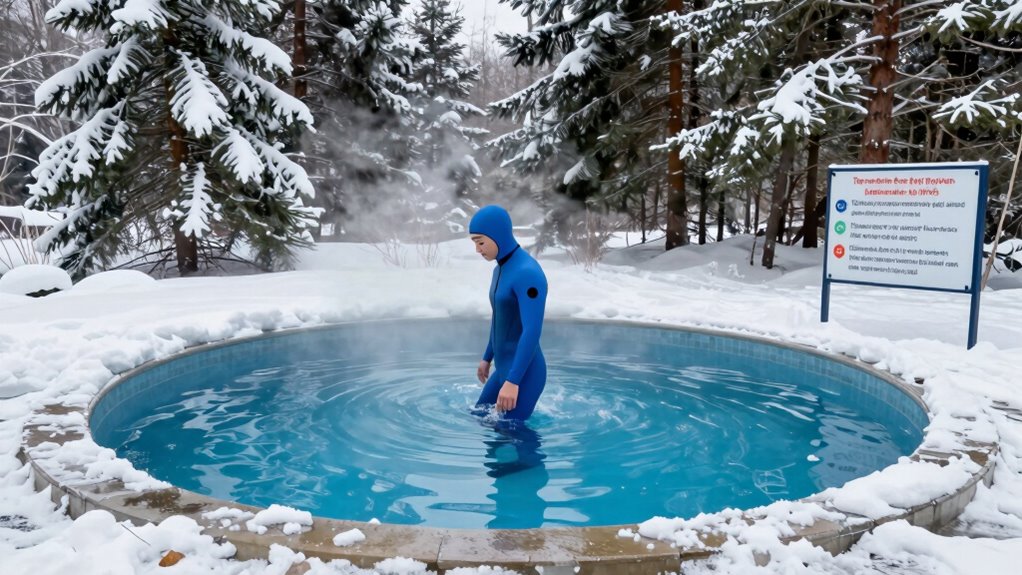

To stay safe during a cold plunge, keep the water temperature between 50°F and 59°F (10°C to 15°C) and limit your time to just a few minutes, watching for signs like numbness or dizziness. Avoid plunging if you have cardiovascular, respiratory, or immune issues, or are pregnant or elderly. Listening to your body is key—if symptoms worsen, exit immediately. Continuing further will help you better understand how to enjoy cold plunges safely.
Key Takeaways
- Keep water temperature between 50°F and 59°F (10°C to 15°C) for safe cold plunging.
- Limit immersion to a few minutes, especially below 50°F (10°C), to prevent hypothermia.
- Gradually enter the water to reduce cold shock and allow your body to adjust.
- Avoid cold plunging if you have cardiovascular, respiratory, or immune system issues.
- Monitor for symptoms like numbness or disorientation and exit immediately if they occur.
Taking a cold plunge can be invigorating, but it’s essential to prioritize safety to avoid potential health risks. When you dive into cold water, your body reacts immediately through a phenomenon known as cold shock. This response triggers rapid, uncontrollable breathing, increased heart rate, and a surge of adrenaline. If you’re not prepared, this sudden onset of cold shock can be dangerous, especially if you panic or struggle to breathe properly. To stay safe, it’s crucial to enter the water gradually, allowing your body time to adjust rather than jumping straight in. Always be aware of your limits and avoid pushing yourself too far, especially if you’re new to cold plunges.
Entering cold water gradually helps prevent cold shock and keeps you safe.
Hypothermia risks are another critical concern. When your body is exposed to cold water for too long, your core temperature can drop dangerously low, leading to hypothermia. Symptoms include shivering, confusion, numbness, and fatigue, which can impair your ability to respond and increase the danger of drowning or other injuries. To mitigate these risks, limit your time in cold water — generally no more than a few minutes, especially if the temperature is below 50°F (10°C). Keep an eye on your body’s signals; if you start shivering excessively, feel numb, or notice any disorientation, it’s time to exit the water immediately. Understanding temperature ranges and how they affect your safety can help you make better decisions during your plunge.
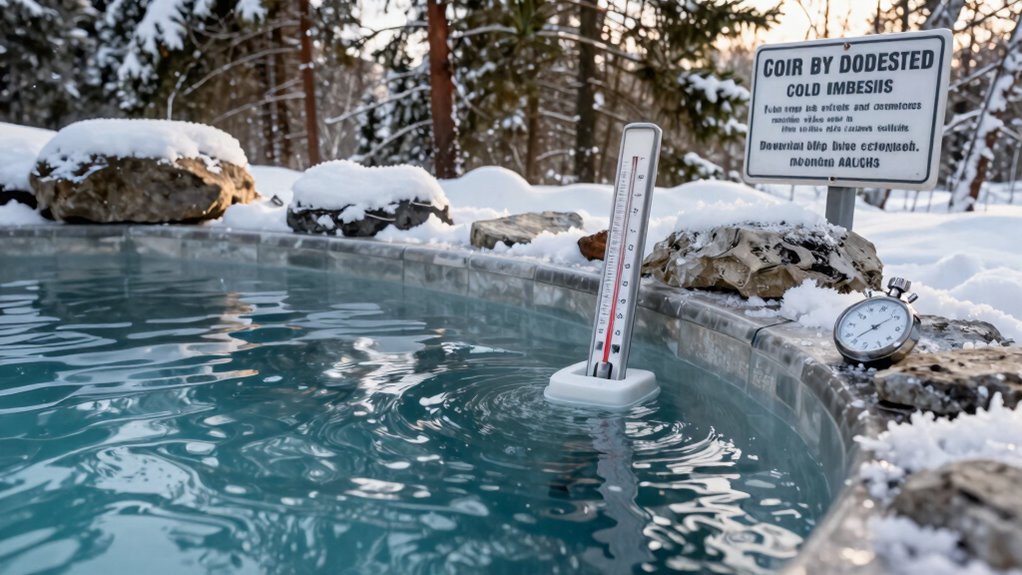
Temperature plays a vital role in cold plunge safety. Water that’s too cold can trigger severe cold shock and hypothermia risks, while water that’s too warm may not provide the desired benefits. Ideally, aim for water temperatures between 50°F and 59°F (10°C to 15°C) for safe, effective cold plunges. If you’re using ice-cold water, make sure to monitor the temperature closely and prepare to exit sooner rather than later. Using a thermometer can help you maintain a safe range. Remember, everyone’s tolerance varies, so pay close attention to how your body responds during each session.
Certain groups should avoid cold plunging altogether. People with cardiovascular issues, hypertension, or respiratory problems should consult a healthcare professional before attempting cold water immersion. Pregnant women, the elderly, and those with compromised immune systems are also at higher risk and should avoid cold plunges unless cleared by a doctor. Always listen to your body and seek medical advice if you’re unsure. Cold plunging can be beneficial when done responsibly, but ignoring safety guidelines can lead to serious health consequences. Prioritize gradual exposure, monitor your body closely, and know when to step back — that’s the best way to enjoy the benefits safely.

Silicone Cover Ice Bath Thermometer with Timer, Waterproof Floating Water Thermometer for Cold Plunge, Works with Ice Bath Tub Hot Tub Accurate Recovery(Black)
ICE BATH THERMOMETER WITH TIMER: Elevate your cold plunge tub experience with real-time temperature readings and accurate time…
As an affiliate, we earn on qualifying purchases.
As an affiliate, we earn on qualifying purchases.
Frequently Asked Questions
Can Cold Plunges Help Improve Mental Health?
Cold plunges can boost your mental health by promoting stress reduction and enhancing your mood. When you immerse yourself, it encourages mindfulness meditation, helping you stay present and focused. The cold shock can trigger endorphin release, reducing anxiety and depression symptoms. Regular cold plunges may improve resilience to stress, making it easier for you to handle daily challenges and feel more balanced emotionally.
What Are the Long-Term Benefits of Regular Cold Plunging?
Regular cold plunging can boost your long-term circulatory health by strengthening blood vessels and improving circulation. It also aids in metabolic regulation, helping your body manage weight and energy levels more effectively. Over time, you may notice increased resilience, better recovery after workouts, and enhanced overall wellness. Consistent cold exposure encourages your body’s adaptive responses, leading to sustained health benefits that support your physical and mental well-being.
How Does Cold Plunge Therapy Compare to Other Recovery Methods?
Think of cold plunge therapy as a revitalizing splash in your recovery pool—it’s quick, invigorating, and effective. Compared to other methods like massage or compression, hydrotherapy offers faster inflammation reduction and muscle soreness relief. Studies show cold plunges boost recovery efficacy by constricting blood vessels and flushing out toxins. While other methods target specific needs, cold plunges provide an efficient, invigorating way to accelerate your recovery process.
Are There Any Specific Clothing Recommendations for Cold Plunges?
For cold plunges, follow clothing guidelines that prioritize minimal, moisture-wicking apparel to help regulate your body temperature. You might consider wearing a swimsuit or snug-fitting gear that stays in place during immersion. Protective gear like neoprene gloves or booties can keep extremities warm. Avoid heavy clothing, as it can trap cold water and increase your risk of hypothermia. Keep it simple, functional, and focused on comfort and safety.
Can Cold Plunges Be Combined With Other Wellness Practices?
Yes, you can combine cold plunges with other wellness practices like yoga or meditation. To maximize benefits, focus on temperature regulation and hydration strategies before and after each session. For instance, stay well-hydrated to support recovery, and practice breathing exercises to enhance relaxation. Just guarantee your body adjusts gradually, and avoid overdoing it, especially if you’re new to these combined practices, to prevent any adverse effects.

The Pod Company Ice Pod Pro Cold Plunge Tub, 110 Gallon (420L) Inflatable Ice Bath for Adults, Fits Up to 6'7", Insulated, Chiller Compatible, BPA-Free, UV-Resistant Nylon, Dual Drain Hoses
NEXT-LEVEL COLD PLUNGING – The Ice Pod Pro delivers a premium at-home cold therapy experience with upgraded materials,…
As an affiliate, we earn on qualifying purchases.
As an affiliate, we earn on qualifying purchases.
Conclusion
Think of a cold plunge like a delicate dance—you need to know when to step in and when to step back. By understanding the right temperatures, time limits, and who should avoid it, you keep your health in harmony rather than chaos. Respect your body’s signals and don’t push past your limits. When approached with caution and knowledge, a cold plunge becomes a invigorating rhythm that energizes rather than endangers your well-being.

Cold Plunge Test Strips, 4-in-1 Water Quality Testing Kit, pH, Alkalinity, Hardness, Hydrogen Peroxide. Evaluate Your Cold Plunge Water Quality with A Single Strip. Smart QR Calculator to Help You
4-IN-1 TESTING: Measures pH levels, total alkalinity, water hardness, and hydrogen peroxide (0ppm to 100ppm) concentration in your…
As an affiliate, we earn on qualifying purchases.
As an affiliate, we earn on qualifying purchases.
cold plunge timer
As an affiliate, we earn on qualifying purchases.
As an affiliate, we earn on qualifying purchases.