
By choosing upcycled and recycled decor, you support circular economy principles that keep resources in use longer, cut waste, and promote sustainability. You’ll see how industries share by-products to create eco-friendly designs, transforming waste into valuable materials like reclaimed wood or recycled glass. This approach not only reduces environmental impact but also fosters innovation and economic growth. To discover more about making your decor more sustainable, explore how these materials can elevate your space while benefiting the planet.
Key Takeaways
- Upcycled and recycled decor extends material lifecycle, reducing waste and raw material consumption in interior design.
- Industrial symbiosis enables industries to share by-products, creating closed-loop systems for sustainable decor materials.
- Incorporating reclaimed wood, recycled glass, and textiles enhances resource efficiency and supports circular economy principles.
- Policies promote recycled content in decor, aiming to increase material reuse and meet sustainability targets like the EU’s recycling goals.
- Using upcycled and recycled decor materials lowers environmental impacts and fosters innovation in sustainable design practices.
Circular economy materials are transforming how we manage resources by keeping them in continuous use and minimizing waste. When you choose upcycled and recycled decor, you’re participating in this sustainable shift, supporting the principles of industrial symbiosis and extending the material lifecycle. Industrial symbiosis involves different industries working together to use each other’s by-products, turning what would be waste into valuable inputs. This process not only reduces waste but also conserves raw materials and energy. For example, a furniture maker might use recycled metal or reclaimed wood supplied by another industry, creating a closed-loop system that maximizes resource efficiency. By doing so, the entire material lifecycle—from extraction to disposal—becomes more sustainable, reducing environmental impacts and fostering a circular flow of resources.
Supporting industrial symbiosis by repurposing materials extends the lifecycle and boosts resource efficiency.
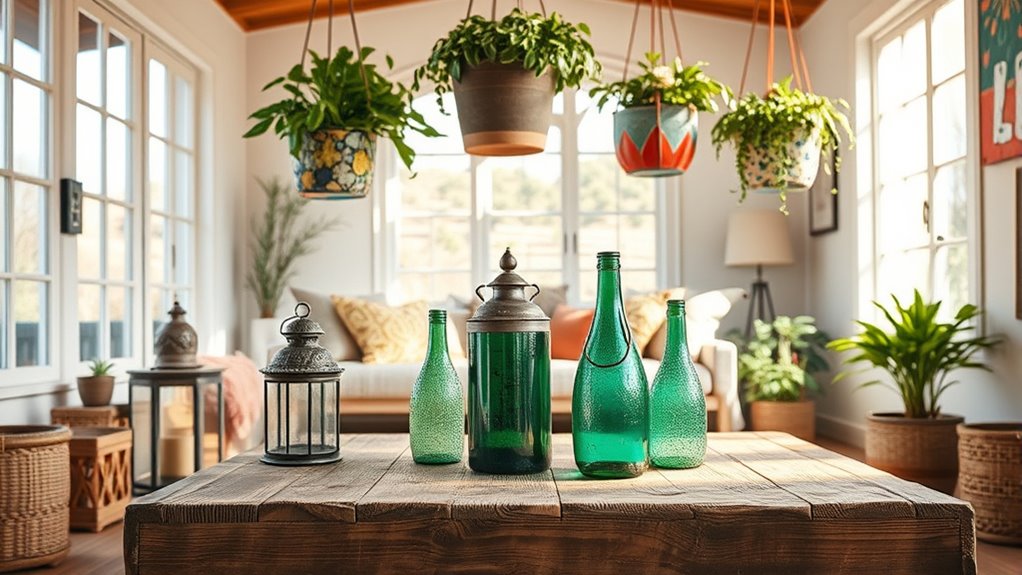
In the context of decor, this means repurposing materials that might otherwise end up in landfills. Instead of relying on newly mined raw materials, you’re supporting designs that incorporate reclaimed wood, recycled glass, or upcycled textiles. These strategies keep materials at their highest utility for longer, maintaining their value and reducing the need for continuous extraction. This approach aligns with policies and initiatives led by entities such as the European Union, which promote circular product design and recycling targets. Although only a small percentage of materials used today come from recycled sources, ongoing policy efforts aim to improve this, encouraging industries to develop more sustainable practices. Resource efficiency is increasingly essential as global resource extraction continues to rise, emphasizing the importance of maximizing the utility of materials throughout their lifecycle. Incorporating life cycle assessment techniques can help industries better understand and improve their sustainability performance.
Measuring the effectiveness of these efforts involves indicators that assess material preservation, especially recycling. While there isn’t a single standard for measuring material lifecycle extension, metrics like embodied energy and waste generation help evaluate progress. Energy recovery, such as incineration, is seen as a less preferable option because it often results in a loss of material quality, unlike recycling, which preserves and valorizes resources. Circular economy performance indicators can also consider unrecoverable waste, emphasizing the importance of maximizing material reuse and recycling.
In the decor industry, embracing circularity means investing in technologies and processes that facilitate material reuse and recycling. For instance, using recycled glass for decorative items or upcycled fabrics for textiles reduces the demand for virgin materials. This shift not only minimizes environmental footprints but also creates economic value through innovative upcycling and recycling practices. By integrating these principles, you’re helping to decouple material use from economic growth, fostering a more sustainable future where resources are valued and kept in circulation longer.

DIY Pallet Furniture Projects: Creative and Affordable Designs to Transform Your Home with Upcycled Wooden Pallets
As an affiliate, we earn on qualifying purchases.
As an affiliate, we earn on qualifying purchases.
Frequently Asked Questions
How Do Upcycled Materials Compare in Durability to New Products?
Upcycled materials often match or even surpass new products in material strength and durability, depending on how well you select and craft them. You can achieve a longevity comparison by carefully preserving the original material qualities during repurposing. While some upcycled items are as resilient as new, others may vary in durability, so your skill and the quality of source materials play vital roles in ensuring long-lasting decor.
Are Recycled Decor Items Safe for Children and Pets?
Recycled decor items can be safe for children and pets if you choose products with non-toxic finishes and child-safe paints. Always check that the materials are tested for safety and free from hazardous additives. Opt for transparent manufacturers who prioritize safety standards, and regularly maintain and clean the decor. By making informed choices, you guarantee a healthier environment and reduce potential chemical risks for your family.
What Are the Best Practices for Sourcing Sustainable Decor Materials?
You want sustainable decor, so start with material sourcing—choose recycled, upcycled, and renewable options. Don’t forget supplier transparency; ask for certifications like FSC or Fair Trade, and use digital tools to verify their practices. Balancing eco-friendly choices with quality guarantees your decor is safe and responsible. By prioritizing transparent suppliers and sustainable materials, you create beautiful spaces that support both the environment and social equity.
How Can Consumers Identify Genuinely Eco-Friendly Upcycled Products?
To identify genuinely eco-friendly upcycled products, look for eco friendly certifications like Upcycled Certification or GRS. Check for authenticity indicators such as clear labeling of material sourcing and recycled content. Research brands’ sustainability practices and verify supply chain transparency. Supporting products with verified certifications and thorough labels guarantees you’re choosing items made from waste streams, promoting real environmental benefits and encouraging responsible consumption.
What Are the Cost Differences Between Recycled and Traditional Decor?
You’ll find that recycled decor often has a higher initial cost due to complex cost analysis, specialized processing, and labor, making it more expensive than traditional decor. Market pricing varies depending on material type and craftsmanship, with some recycled fibers being more affordable. However, traditional decor is usually cheaper upfront but may incur hidden costs like frequent replacements and environmental impact, making recycled options potentially more economical long-term.

Mud Pie Recycled Green Spanish Rounded Small Glass Vase 7.5" x 6.5" Dia
This beautiful spanish glass rounded vase is sure to impress!
As an affiliate, we earn on qualifying purchases.
As an affiliate, we earn on qualifying purchases.
Conclusion
By choosing upcycled and recycled decor, you naturally participate in the circular economy, turning waste into beauty. It’s almost poetic how what once seemed discarded now enhances your space sustainably. As you embrace these materials, you realize that elegance and eco-consciousness often go hand in hand—no coincidence, just thoughtful design meeting mindful living. In doing so, you help close the loop, proving that style and sustainability truly coexist.

Life-Changing Homes: Eco-Friendly Designs That Promote Well-Being
As an affiliate, we earn on qualifying purchases.
As an affiliate, we earn on qualifying purchases.

Your Space, Made Simple: Interior Design That's Approachable, Affordable, and Sustainable
As an affiliate, we earn on qualifying purchases.
As an affiliate, we earn on qualifying purchases.