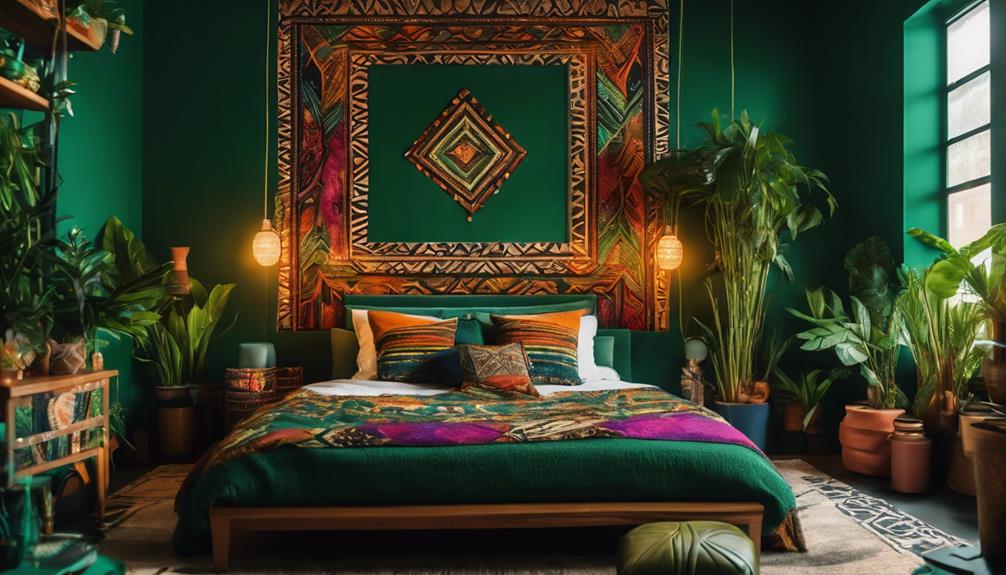
Biophilic design helps you bring nature into your home by incorporating natural elements like greenery, water features, and ample sunlight. You can use natural materials such as wood and stone, add botanical motifs, and include organic shapes like arches and curved ceilings. These features create a calming, vibrant space that boosts your wellbeing and connects you with the outdoors. If you want to discover more about transforming your home through nature-inspired design, you’re in the right place.
Key Takeaways
- Incorporate natural materials like wood and stone for aesthetic appeal and sustainability.
- Use large windows and skylights to maximize natural light and ventilation.
- Add greenery through indoor plants, living walls, and roof gardens to create calming environments.
- Integrate natural shapes and patterns, such as arches and fractal motifs, into architectural details.
- Include water features and textured surfaces to evoke a sense of connection with nature.
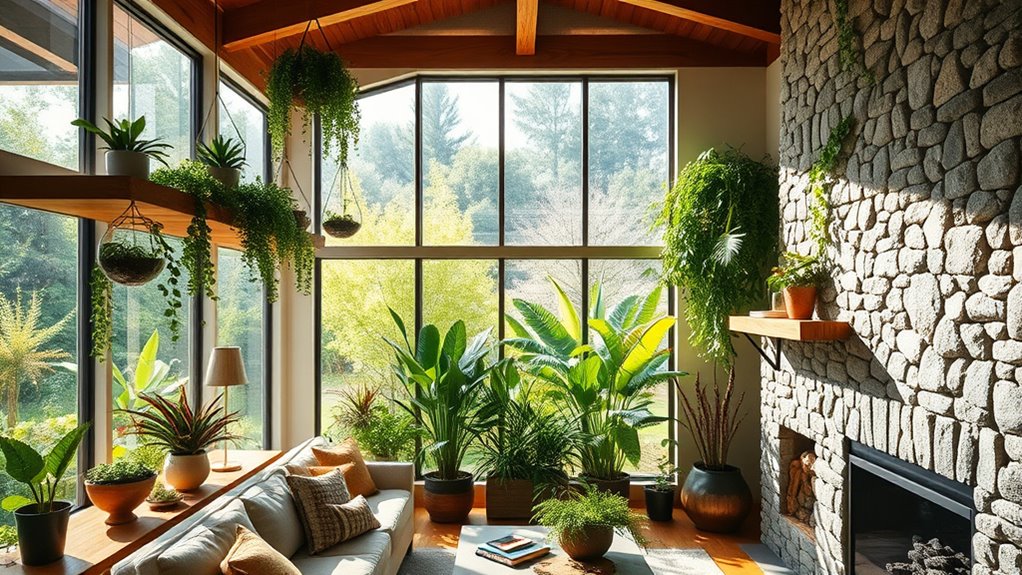
Have you ever wondered how bringing nature into your built environment can transform your space? When you consider biophilic design, you’re tapping into principles that seamlessly blend natural elements with architecture. This approach isn’t just about adding plants—it’s a holistic way to reconnect people with nature through thoughtful urban planning and historical architecture. By integrating natural features, you can create a space that feels alive, calming, and restorative, no matter its size or style.
Bringing nature into your environment creates calming, restorative spaces that reconnect us with the natural world.
In urban planning, biophilic design encourages incorporating greenery, water features, and natural light into city environments. Imagine your home surrounded by lush gardens or having large windows that invite sunlight to flood your rooms. Historical architecture often features natural shapes and forms—arched doorways, curved ceilings, and botanical motifs—elements that can be echoed in modern designs to foster a sense of continuity and harmony with nature. These natural shapes and patterns, like spirals or organic textures, help your environment feel more authentic and connected to the natural world.
Natural materials, such as wood and stone, play a crucial role in this design philosophy. They not only enhance aesthetic appeal but also support environmental sustainability. Incorporating geological features or landscape-inspired elements can further deepen this connection, making your space feel rooted in the natural landscape. When you focus on natural patterns—like fractals, growth sequences, or erosion-inspired textures—you evoke a sense of rhythm and scale found in nature, which has proven benefits for your mental and physical health. Natural Materials and textures also contribute to a tactile connection that enhances your sensory experience within the space.
Biophilic design promotes health and wellbeing by reducing stress, boosting productivity, and fostering emotional bonds with your surroundings. Imagine working in an open-plan space filled with natural light and fresh air, or relaxing in a home where greenery and water features create a tranquil ambiance. Large windows not only maximize sunlight but also improve natural ventilation, reducing reliance on artificial climate control. Green walls and roof gardens can turn your home into a miniature eco-system, supporting sustainability and reducing your environmental footprint.
Applying these principles to residential spaces makes your home more than just a shelter; it becomes a sanctuary that nurtures your mind and body. Whether through sustainable materials, open layouts, or integrating natural shapes, biophilic design transforms your space into a vibrant, health-promoting environment. By embracing natural elements and patterns, you’re not only enhancing your living experience but also contributing to a sustainable future rooted in the timeless beauty of nature.
Frequently Asked Questions
How Can I Incorporate Biophilic Design on a Budget?
To incorporate biophilic design on a budget, focus on budget-friendly ideas like adding DIY biophilic decor with repurposed materials, such as reclaimed wood or glass jars for plants. Use low-maintenance, affordable plants like pothos or snake plants, and place mirrors to amplify natural light. Create a sensory corner with herbs or DIY water features, and incorporate natural textures through textiles or second-hand decor, transforming your space into a calming, nature-inspired retreat without breaking the bank.
What Are the Best Indoor Plants for Air Quality?
You should choose low-maintenance indoor plants like Snake Plants and Spider Plants for better air quality. They tolerate low light and require minimal watering, making plant maintenance easier. Guarantee your plants get natural lighting, even indirect, to help them thrive and absorb toxins effectively. While a large number of plants boosts air purification, even a few well-cared-for plants can improve your indoor environment and add a touch of nature to your space.
How Does Biophilic Design Impact Mental Health?
Biophilic design boosts your mental health by promoting stress reduction and cognitive enhancement. When you incorporate natural elements like plants, water, or wood, you lower your anxiety levels and improve focus. Visual connections with nature calm your nervous system, helping you feel more relaxed. These features also sharpen your memory and attention, making daily tasks easier. Overall, embracing biophilic design creates a healthier, more balanced environment for your mind.
Can Biophilic Design Be Adapted for Small Spaces?
You can definitely adapt biophilic design for small spaces by thoughtfully integrating urban greenery and compact layouts. Use scaled-down natural elements like potted plants, green walls, and natural textures to create a soothing atmosphere. Maximize natural light with large windows and skylights, and introduce water features or multisensory elements to enrich your environment. These strategies help you feel connected to nature, even in limited spaces, fostering relaxation and well-being.
What Are Common Mistakes to Avoid in Biophilic Design?
To avoid common mistakes, don’t overcrowd your space with too many plants, which creates clutter and overwhelms your design. Balance large statement plants with smaller accents for harmony. Make certain good lighting, as poor lighting can hinder plant health and mood. Choose low-maintenance, climate-appropriate plants, and maintain them properly. Also, incorporate natural elements like light and water thoughtfully, so they support your lifestyle and don’t hinder daily functionality.
Conclusion
By embracing biophilic design, you’re opening a window to nature’s soul, turning your home into a lush oasis that breathes life into every corner. Imagine your space as a vibrant forest, where sunlight dances through leaves and tranquility blooms like wildflowers. When you bring nature inside, you’re not just decorating—you’re inviting a calming, invigorating heartbeat that nurtures your mind and body. Let nature’s touch transform your home into a sanctuary of serenity and vitality.