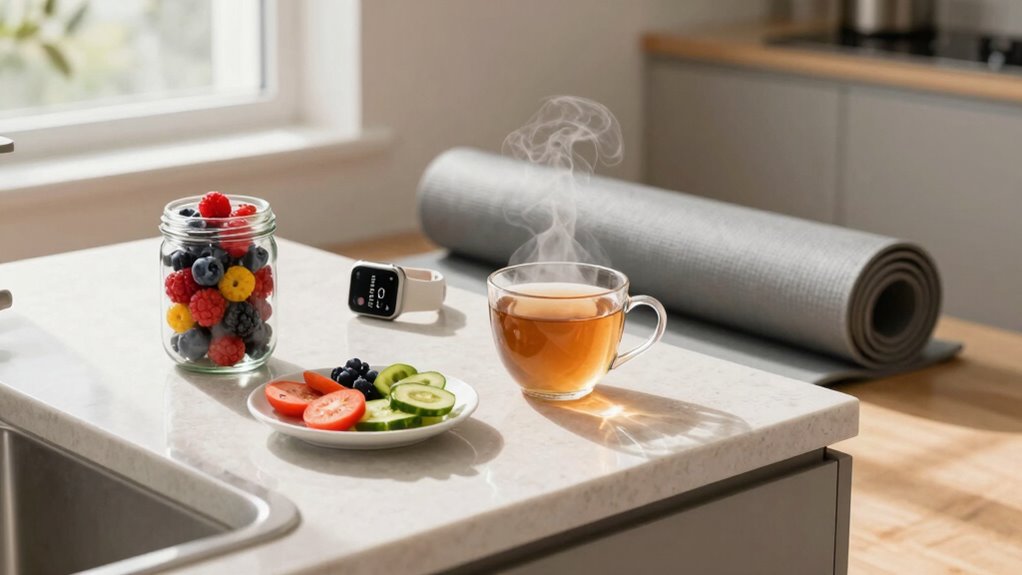

To make healthy habits feel automatic, link them to routines you already do, like stretching after brushing your teeth. Use environmental cues, such as placing your water bottle where you can see it, to trigger the behavior effortlessly. Simplify actions and prepare your space in advance to reduce friction. Stay consistent and track your progress to reinforce the habit loop. Keep going, and you’ll discover even more ways to shape habits that stick over time.
Listen free for 30 days with Audible
Thousands of audiobooks and originals — cancel anytime.
As an affiliate, we earn on qualifying purchases.
Key Takeaways
- Link new healthy habits to existing routines through habit stacking for seamless integration.
- Use environmental cues, like visible water bottles, to trigger healthy behaviors naturally.
- Reinforce neural pathways by practicing habits consistently to promote brain plasticity and automaticity.
- Keep routines simple and prepare your environment in advance to reduce friction and support habit formation.
- Track progress regularly to maintain motivation and strengthen the habit loop over time.
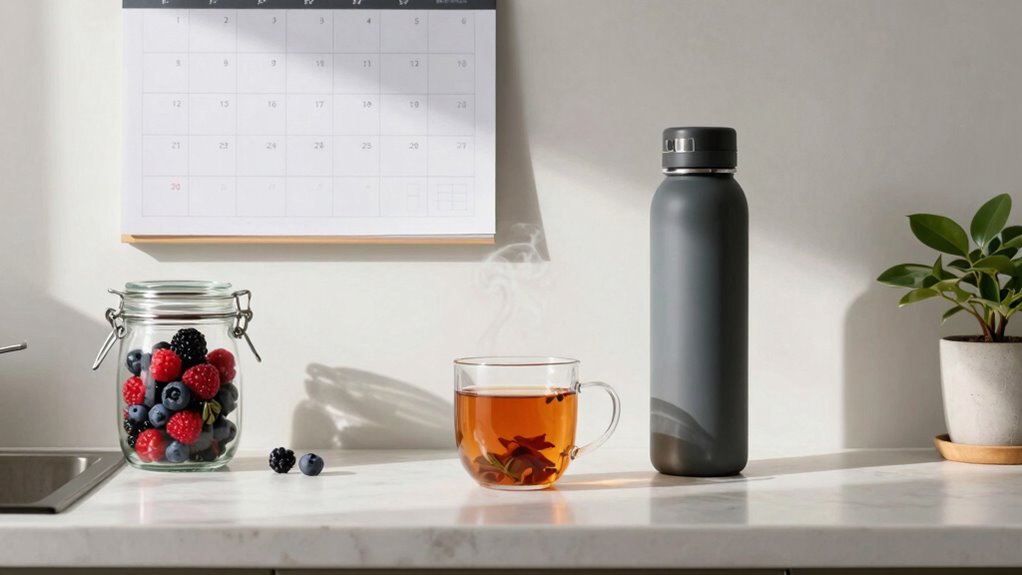
Creating healthy habits that feel automatic can substantially improve your overall well-being, but making them stick requires more than just good intentions. One effective way to do this is through habit stacking, which involves linking new behaviors to existing routines. For example, if you already brush your teeth every morning, you can add a simple habit like taking a vitamin or doing some light stretching immediately afterward. This method leverages the routines you already perform, making it easier for your brain to associate the new habit with an established one. Over time, these linked behaviors become automatic because your mind begins to see them as a single, seamless sequence.
Link new habits to existing routines to make them automatic and seamless over time.
Environmental cues also play a *pivotal* role in forming habits that stick. These cues are physical or contextual signals that trigger your behavior without requiring conscious effort. If you want to develop a habit of drinking more water, place a glass or water bottle somewhere you’ll see it frequently, like next to your workspace or beside your bed. Whenever you encounter that cue, it prompts you to take action, reinforcing the habit. Consistently pairing cues with specific behaviors helps your brain associate the two, making the habit feel more natural over time. Additionally, understanding how habits are formed through neural pathways can help you tailor your strategies for lasting change. Recognizing how these pathways strengthen with repetition underscores the importance of consistency. Moreover, being aware of brain plasticity can motivate you to persist with your efforts, knowing that your brain is capable of rewiring itself as you develop new routines. Developing a clear understanding of habit formation processes can also boost your motivation to maintain these behaviors long-term. To support this, cultivating neuroplasticity through engaging in varied behaviors can help prevent habits from becoming stale or automatic in a less beneficial way.
To make the most of habit stacking and environmental cues, you need to be intentional and consistent. Identify existing routines you can build upon and think about what environmental signals could help prompt your new habits. For instance, if you want to meditate daily, consider doing it right after you brush your teeth or after your morning coffee. Place your meditation cushion or app icon in a visible spot to serve as a cue. The key is to keep the cues obvious and the routines simple, especially in the beginning, so they don’t feel overwhelming. Additionally, it’s helpful to track your progress to stay motivated and recognize the positive changes as they occur, which reinforces the habit loop.
Additionally, it’s important to minimize friction and remove barriers that could disrupt your progress. If a habit requires too much effort or isn’t easily accessible, it’s less likely to become automatic. Prepare your environment to support your goals—set out workout clothes the night before or keep healthy snacks within reach. The more seamless these actions are integrated into your daily life, the easier it becomes for them to happen automatically. Building habit strength over time through small, consistent actions will help these behaviors become a natural part of your routine.
As an affiliate, we earn on qualifying purchases.
Frequently Asked Questions
How Long Does It Typically Take to Form a New Habit?
It typically takes about 21 to 66 days to form a new habit, but it varies for everyone. Using habit stacking helps you build routines faster by linking new behaviors to existing triggers for change. Consistency is key—by repeating actions daily and leveraging triggers, you create automaticity. Remember, patience is essential; stay committed, and over time, your healthy behaviors will become second nature.
Can Existing Routines Be Adjusted to Include Healthy Habits?
Yes, you can adjust existing routines to include healthy habits. For example, incorporate meal planning into your weekly schedule to guarantee nutritious options are ready. Also, tweak your sleep routines by setting consistent bedtimes and winding down earlier. These small adjustments make it easier to integrate healthy habits seamlessly into your daily life, helping them become automatic over time. Consistency is key to making these changes stick.
What Are Common Obstacles to Habit Formation?
Common obstacles to habit formation include inconsistent effort and environmental distractions. You might struggle with maintaining mindful consistency, which is essential for establishing habits. Environmental cues, like reminders or designated spaces, can help trigger your desired behavior. Without these cues, it’s easy to forget or lose motivation. By creating a supportive environment and staying mindful of your progress, you can overcome these obstacles and make healthy habits stick.
How Can I Stay Motivated During Setbacks?
Remember, “When the going gets tough, the tough get going.” To stay motivated during setbacks, focus on mindset shifts that emphasize progress over perfection. Find accountability partners who encourage you and keep you accountable. Celebrate small wins, and don’t dwell on setbacks—view them as learning opportunities rather than failures. With resilience and support, you can regain momentum and keep working toward your healthy habits.
Do Habits Vary in Ease Depending on Personality Types?
Yes, habits can vary in ease depending on personality influence. If you’re more extroverted or disciplined, sticking to new routines might come naturally, making habit consistency easier. Conversely, introverted or spontaneous personalities may find certain habits more challenging initially. Recognizing your personality traits helps tailor strategies, ensuring you build habits that fit your style, ultimately making consistency more achievable and habits feel more automatic over time.
Conclusion
Think of building healthy habits like planting a garden; with patience and consistent watering, seeds grow into vibrant, unstoppable blooms. As you nurture these routines, they’ll weave into the fabric of your daily life, becoming as natural as the sun rising each morning. Before you know it, your habits will flourish effortlessly, turning your efforts into a beautiful, self-sustaining landscape of wellness—an enduring masterpiece painted by your daily choices.
Grilling season Picks
grills
As an affiliate, we earn on qualifying purchases.