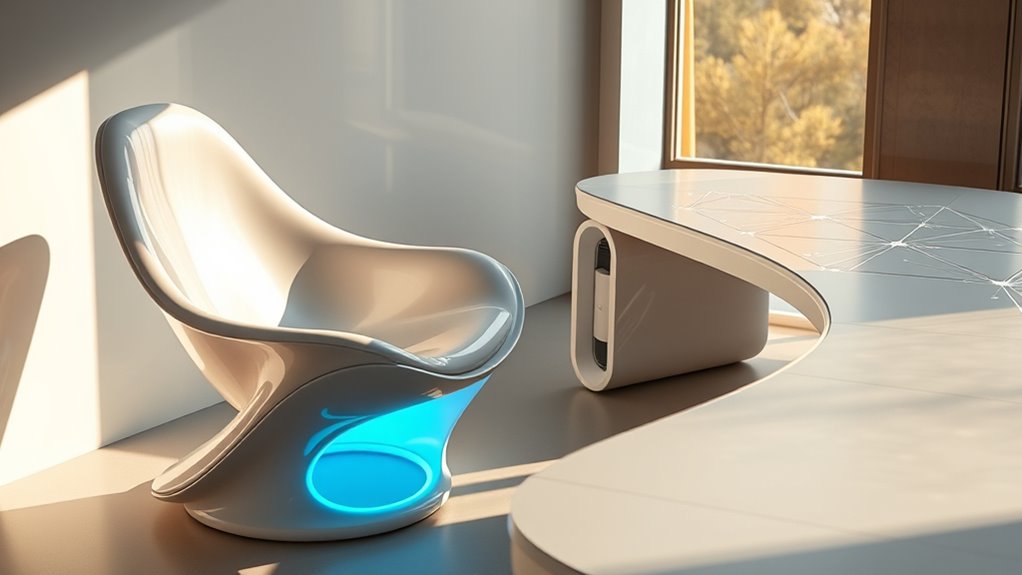

Algorithmic ergonomics uses AI to create furniture that adapts to your movements and environment in real time. These smart pieces automatically adjust height, tilt, and lumbar support to keep you comfortable and safe throughout your workday. Sensors monitor your posture, fatigue, and tension, while machine learning fine-tunes the setup for your individual needs. This innovative approach promotes better movement, reduces discomfort, and boosts productivity, with many more insights waiting if you explore further.
Key Takeaways
- AI-driven ergonomic furniture adapts in real-time to user posture, movement, and fatigue for optimal comfort and safety.
- Sensors and wearable devices monitor physical and environmental data to inform dynamic workspace adjustments.
- Machine learning models analyze ergonomic risks and trigger immediate furniture modifications to prevent discomfort.
- Personalized ergonomic profiles evolve through continuous user behavior analysis, promoting healthier movement patterns.
- Feedback mechanisms, including visual, haptic, and auditory cues, empower users to make quick, informed ergonomic adjustments.

Algorithmic ergonomics leverages artificial intelligence to create smarter, more adaptive human-system interfaces. This technology transforms workplaces by enabling furniture and workspaces to respond dynamically to your physical and cognitive needs. This integration of AI-driven systems not only enhances comfort but also contributes to overall productivity. When it comes to workplace adaptation, AI-driven systems analyze detailed movement and environmental data collected through sensors or wearable devices. This continuous monitoring allows your environment to adjust in real time, ensuring your workspace aligns with your current posture, fatigue levels, and movement patterns. As a result, the furniture you use isn’t static; it evolves with you, promoting comfort, safety, and efficiency throughout your workday. Research shows that adaptive ergonomic systems can significantly reduce musculoskeletal discomfort. Sensory feedback plays a critical role in this adaptive process. When you sit or move, sensors detect your position, tension, and even muscle fatigue, feeding this information into machine learning models that interpret your ergonomic risks. Based on these insights, your furniture can make immediate adjustments—such as height, tilt, or lumbar support—to help you maintain a neutral posture. This feedback loop not only corrects potentially harmful positions but also encourages healthier movement patterns, reducing the likelihood of discomfort or injury. The real-time nature of sensory feedback means you get instant cues, guiding you toward better ergonomic practices without disrupting your workflow. Workplace adaptation through AI doesn’t replace your judgment; instead, it enhances it. Your personalized ergonomic profile is continuously refined as you work, ensuring that adjustments are tailored specifically to your physical traits and behavior. Whether you’re experiencing fatigue after long hours or need to stretch, the system detects these cues and responds accordingly. This proactive approach minimizes static postures that cause fatigue and repetitive strain, encouraging movement and stretching opportunities. The furniture’s intuitive controls and clear feedback mechanisms—visual, haptic, or auditory—empower you to make quick, informed adjustments, further personalizing your ergonomic setup. Additionally, ongoing advances in AI security are essential to protect sensitive ergonomic data from potential vulnerabilities, ensuring user privacy and safety.
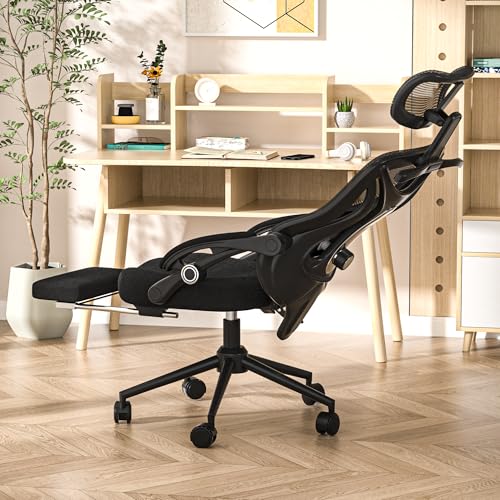
Ergonomic Office Chair with Footrest – Adjustable Lumbar Support & Headrest, 90-160° Reclining Mesh Back Computer Chair – Home Office/Gaming, 350lbs Capacity
This is more than a chair; it's a personalized comfort zone for work, rest, and play. We've meticulously…
As an affiliate, we earn on qualifying purchases.
As an affiliate, we earn on qualifying purchases.
Frequently Asked Questions
How Does AI Determine Optimal Comfort Levels for Furniture?
AI determines your ideal comfort levels through ergonomic assessment and comfort modeling. It analyzes biometric data like posture and pressure distribution, along with environmental factors, to understand your preferences. The system continuously adjusts based on real-time feedback and sensor inputs, ensuring your furniture supports your body naturally. By simulating different designs and personalizing settings, AI creates a tailored ergonomic experience that maximizes comfort and reduces strain.
Are Ai-Designed Furniture Customizable for Individual User Needs?
Imagine customizing a sofa for your living room, specifying exact style, size, and materials through an AI platform. You’ll find that AI-designed furniture offers extensive personalization options and design versatility, allowing you to tailor every detail to your needs. You can adjust colors, add storage, or modify ergonomic features easily, ensuring your furniture fits your space perfectly and reflects your personal taste.
What Safety Standards Do Ai-Generated Furniture Designs Meet?
You’ll find that AI-generated furniture designs meet strict safety certifications and material compliance standards like EN 12520:2024 and EN 12521:2023, ensuring safety, strength, and durability. These designs are reviewed against national and international regulations, including material safety and structural requirements. Continuous updates keep the models aligned with evolving safety codes, while rigorous testing and legal reviews confirm that every piece adheres to relevant safety standards before reaching the market.
How Does Machine Learning Improve Ergonomic Furniture Over Time?
Machine learning enhances ergonomic furniture over time by analyzing your sitting patterns, material innovation, and aesthetic evolution. It adapts the design to suit your needs, making adjustments for better support and comfort. As it learns, the furniture becomes more personalized, integrating sustainable materials and modern aesthetics. This continuous refinement guarantees your workspace remains comfortable, functional, and visually appealing, keeping up with your changing preferences and ergonomic demands.
Can AI Predict Future Ergonomic Trends in Furniture Design?
Yes, AI innovation can anticipate future ergonomic trends in furniture design. By analyzing data from ergonomic assessments, AI identifies emerging posture habits and health concerns, helping you stay ahead. It uses predictive analytics to forecast user needs, allowing designers to create adaptable, personalized furniture. This proactive approach ensures ergonomic comfort, reduces physical strain, and aligns with evolving workplace and user preferences, making your ergonomic solutions more effective and future-proof.

Nuwave Air Purifier for Extra Large Room 2934 Sq Ft, OxyPure Smart Air Purifier with 5 Stage Filtration, Extra EZ Covers for Pet, Air Quality & Odor Sensors, Smart WiFi, Quiet Sleep Mode for Bedroom
NUWAVE'S TOP-PERFORMING OXYPURE SMART AIR PURIFIER: OxyPure captures 100% of particle pollutants as small as 0.09 microns including…
As an affiliate, we earn on qualifying purchases.
As an affiliate, we earn on qualifying purchases.
Conclusion
So, imagine a future where every piece of furniture molds perfectly to your body in seconds, making discomfort vanish like magic. With AI-driven design, your chair could become your soulmate, whispering comfort into your bones. This isn’t just innovation; it’s a revolution so powerful, it’ll turn your living space into a sanctuary of absolute perfection. Get ready—your furniture might soon be smarter, comfier, and more personalized than you ever dreamed possible. The future of ergonomics is here, and it’s mind-blowingly incredible.

Marsail Ergonomic Mesh Office Chair High Back Home Office Desk Chair with Adaptive Lumbar Support, 2D Headrest, 3D Flip-Up Armrests, Height Adjustable and Rocking Tilt for Home Office and Gaming
Breathable Mesh Design: Our ergonomic mesh office chair keeps you cool and comfortable, whether you’re working or gaming…
As an affiliate, we earn on qualifying purchases.
As an affiliate, we earn on qualifying purchases.

ELECOM EX-G Pro Trackball Mouse, Wired, Wireless, Bluetooth, Thumb Control, 8-Button Function, Ergonomic Design, Optical Gaming Sensor, Smooth Red Ball, Windows11, macOS (M-XPT1MRBK)
✅《OPTICAL TRACKING TECHNOLOGY》The ELECOM "EX-G PRO" trackball provides precise cursor movement for superior accuracy so you can get…
As an affiliate, we earn on qualifying purchases.
As an affiliate, we earn on qualifying purchases.