To quickly size an air purifier for your room, start by measuring its length, width, and height to calculate the total volume. Look for a model with a CADR rating that covers at least two-thirds of your room’s square footage. Choose a unit with a slightly higher CADR for better efficiency without excess noise. For more tips on matching size and choosing the right purifier, keep exploring these guidelines.
Key Takeaways
- Measure your room’s length, width, and height to calculate total volume in cubic feet or meters.
- Determine your room size and select an air purifier with a CADR rating at least two-thirds of that area.
- Check manufacturer coverage specifications to ensure the unit is suitable for your room size.
- Choose a purifier with a slightly higher capacity for better performance and future room size adjustments.
- Consider maintenance needs and noise levels to maintain efficient and effective air purification over time.
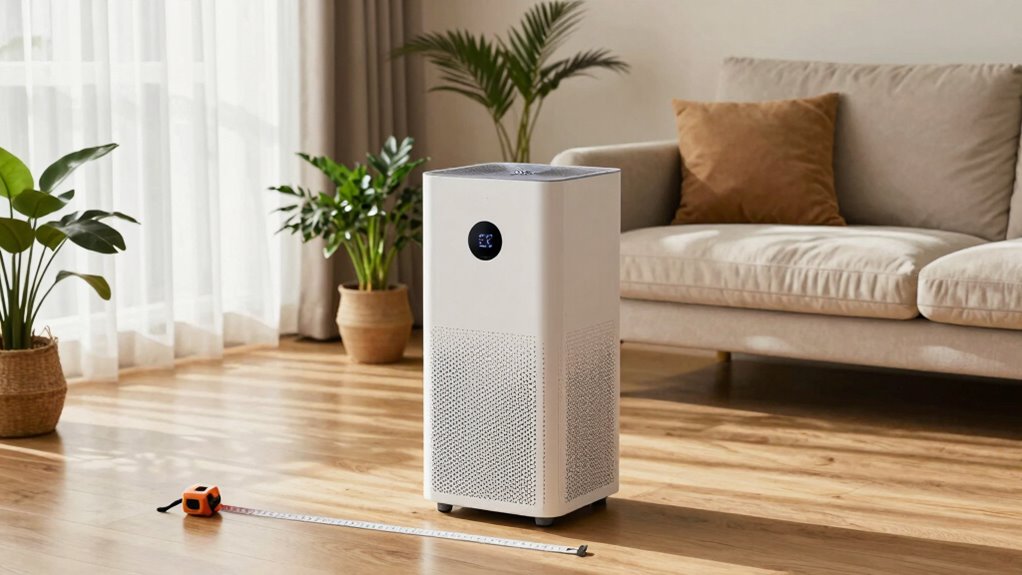
Choosing the right size air purifier for your room is essential to effectively improve air quality. To do this quickly, you need to understand two key factors: CADR ratings and room coverage. CADR, or Clean Air Delivery Rate, measures how much filtered air an air purifier can deliver per minute, indicating its effectiveness against dust, pollen, and smoke. The higher the CADR, the faster it cleans the air. Room coverage, on the other hand, tells you the maximum area an air purifier can effectively purify, usually expressed in square feet or meters. Matching these numbers to your space ensures you’re not wasting money on an underpowered unit or overpaying for unnecessary capacity.
Start by measuring your room. Note its length, width, and height. Multiply these dimensions to get the total volume in cubic feet or meters. This helps you determine the size of the air purifier needed. For example, a 200-square-foot room with standard ceiling heights roughly translates to a volume of about 8,000 cubic feet. Once you know your room’s size, check the CADR rating of the air purifier. Manufacturers typically list CADR ratings for smoke, pollen, and dust. To be safe, pick a model with a CADR that’s at least two-thirds of your room’s square footage. For instance, if your room is 200 square feet, look for an air purifier with a CADR of at least 133 for dust, pollen, or smoke. This ensures the device can clean the air efficiently without overworking. Additionally, consider filter maintenance requirements to keep your unit functioning optimally over time.
Next, verify the unit’s room coverage. Most manufacturers specify the maximum square footage the purifier can handle. Choose a model whose room coverage matches or slightly exceeds your room’s size. If your space is slightly larger than the specified coverage, consider a unit with a higher CADR or one designed for larger areas. Remember, an air purifier working at full capacity in a room it’s too small for can be noisy and less efficient, while one that’s too small for your space won’t clean the air adequately.

Air Purifiers for Home Large Room up to 1200ft², LUNINO H13 True HEPA Air Purifier for Bedroom with Fragrance Function, Air Quality Sensor, Sleep Mode, Air Cleaner for Pet Dander, Odor, Dust, Smoke
【High-Performance H13 HEPA Filter & 360° Air Intake】LUNINO H13 HEPA air purifiers for home is equipped with a…
As an affiliate, we earn on qualifying purchases.
As an affiliate, we earn on qualifying purchases.
Frequently Asked Questions
Can I Use a Larger Air Purifier Than Recommended?
Yes, you can use a larger air purifier than recommended, and it can be beneficial for your room. A higher air purifier capacity improves air quality faster because it handles larger room size compatibility more effectively. Just make certain the purifier fits your space and doesn’t create excessive noise or consume unnecessary energy. Larger units are often more versatile, but always check the manufacturer’s guidelines for ideal performance and efficiency.
Do Air Purifiers Work in High-Humidity Environments?
Yes, air purifiers can work in high-humidity environments, but humidity interference and moisture effects might reduce their efficiency. Excess moisture can cause mold and bacteria growth inside the unit, potentially damaging it or decreasing its lifespan. To keep your purifier functioning at its best, consider models designed for humid conditions or use dehumidifiers alongside. Don’t overlook the impact of moisture—your air purifier’s performance depends on it.
How Often Should I Replace the Filter?
You should replace your air purifier’s filter based on its filter lifespan and recommended replacement frequency, typically every 6 to 12 months. Check the manufacturer’s guidelines for your specific model, as usage and environment can affect how often you need a new filter. Regularly inspect the filter for dirt and dust buildup, and replace it promptly to maintain ideal air quality and purifier efficiency.
Are Air Purifiers Effective Against All Pollutants?
Air purifiers are effective against many indoor allergens like dust, pollen, and pet dander, and they also reduce chemical pollutants such as VOCs. However, their effectiveness varies depending on the type and filter quality. While they can markedly improve air quality, they don’t eliminate all pollutants, especially gases or odors. For complete protection, choose an air purifier with specialized filters like activated carbon and HEPA.
Can Multiple Small Purifiers Outperform One Large Unit?
Using multiple small purifiers is like having a team working together, often outperforming one large unit. They can better target different areas, especially in large or irregularly shaped rooms, by matching each purifier’s capacity to specific zones. This approach provides more thorough coverage, guaranteeing cleaner air throughout your space. Just guarantee each purifier’s capacity suits your room size for ideal performance and effective air purification.

PuroAir 240 HEPA Air Purifier for Home Large Rooms – Covers Up To 1,000 Sq Ft – Filters Up To 99.9% of Pollutants, Smoke, Pollen, Dust – Quiet HEPA Air Filter – Air Purifiers for Bedroom
Cleaner Air in Minutes: PuroAir is proven to filter the pollutants lurking in your home’s air. This large…
As an affiliate, we earn on qualifying purchases.
As an affiliate, we earn on qualifying purchases.
Conclusion
Now that you know how to size an air purifier in just 60 seconds, you’re practically a breathing superhero! With the perfect purifier, you’ll banish dust, allergens, and odors faster than you can say “fresh air.” Say goodbye to sneezing fits and hello to a house so purified, it’ll feel like you’ve stepped into a cloud of pure bliss. Get the right size, and breathe easier—your lungs will thank you for it!

LEVOIT Air Purifiers for Bedroom Home Dorm, AHAM Verified, 3-in-1 Filter Cleaner With Aroma Pad, Filters Smoke, Allergens, Pet Dander, Odor, Dust, Office, Desktop, Core Mini-P, White
𝗥𝗘𝗠𝗢𝗩𝗘 𝗣𝗢𝗟𝗟𝗨𝗧𝗔𝗡𝗧𝗦 𝗘𝗩𝗘𝗥𝗬𝗪𝗛𝗘𝗥𝗘: Our Pre-Filter and Main Filter capture allergens as lint, hair, pet dander, pet hair, fine…
As an affiliate, we earn on qualifying purchases.
As an affiliate, we earn on qualifying purchases.
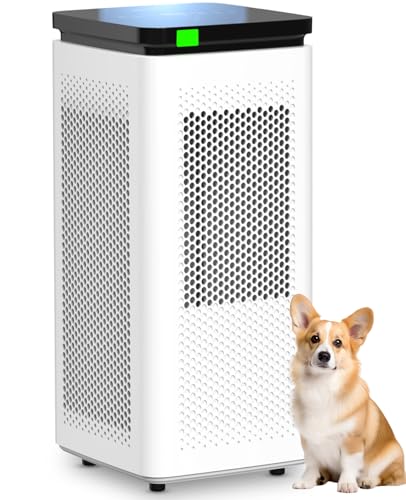
Air Purifiers for Home Large Rooms up to 3500 Ft², H13 True HEPA 0.1 Micron 99.97% Filtration with Carbon Filter, 235 CFM CADR, Removes Allergens, Pet Odor, Smoke, VOCs, 30dB Sleep Mode, PM2.5 Display
H13 True HEPA + Carbon Filter – Removes Allergens, Odors & Smoke: Equipped with H13 True HEPA (0.1μm,…
As an affiliate, we earn on qualifying purchases.
As an affiliate, we earn on qualifying purchases.