
If you find a lost pet, start by checking for visible tags or markings and note where you found them. Have a microchip scanned at a vet or shelter to identify the owner swiftly. Post clear photos and details on social media and community groups, and notify local shelters and vets. Keep track of responses and stay organized. Acting promptly and methodically greatly increases the chances of reuniting the pet with its owner. If you continue, you’ll discover more helpful steps to ensure a safe reunion.
Key Takeaways
- Carefully observe for identification tags or markings and record details of the pet’s appearance and location found.
- Have the pet microchipped scanned at a vet or shelter to quickly locate the owner’s contact information.
- Post recent, clear photos and detailed descriptions on social media and community groups to broaden outreach.
- Notify local shelters, vet clinics, and put up flyers with the pet’s info in the neighborhood for increased recognition.
- Keep organized records of responses and act promptly to maximize chances of reuniting the pet with its owner.
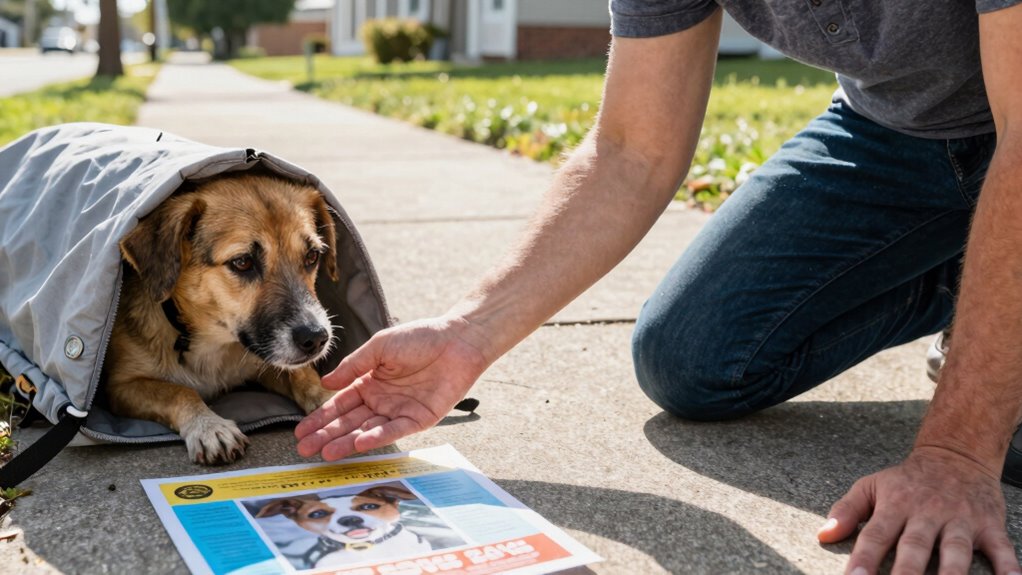
Losing a pet can be a heartbreaking experience, but taking quick and organized action increases the chances of reunion. When you find a stray or lost pet, your first step should be to carefully observe and note any visible identifiers—collars, tags, or unique markings. These can help you quickly contact the owner if they’re nearby. However, many lost pets aren’t wearing tags or might have lost their collar, so your next move should be to check if the pet has a microchip. Pet microchipping is a simple, permanent way to identify animals, and most veterinary clinics or shelters can scan for one. If the pet is microchipped, the microchip’s information can lead you directly to the owner, saving valuable time and increasing the chances of a safe reunion. It’s a good idea to take the pet to a nearby vet or shelter to get the microchip scanned, especially if the owner’s contact details aren’t immediately available.
While waiting for the microchip scan results, you should also leverage social media outreach. Posting clear, recent photos of the pet along with specific details—such as location found, size, color, and any noticeable features—can reach hundreds of people quickly. Share your post in local community groups, lost pet pages, and neighborhood pages. Ask your friends and followers to share it too, expanding the reach. Social media can often connect you with the pet’s owner who might be actively searching for their furry friend. When posting, include contact information and be responsive to inquiries. Sometimes, a simple post can lead directly to the owner or someone who recognizes the pet. Additionally, understanding lease terms and knowing the process of returning or purchasing a vehicle can be helpful if you’re considering leasing a car to facilitate your search or other needs.
In addition to social media, visit local shelters, vet clinics, and pet stores to report the found animal. Leave your contact details and a clear description of the pet. Many lost pets end up in shelters, so checking in regularly or providing a photo can help staff identify the pet quickly. Also, consider putting up flyers in your neighborhood with a recent picture and your contact info. This increases the chances that someone who recognizes the pet will reach out. Remember, staying organized—keeping track of where you’ve posted, the pet’s details, and any responses—will streamline your effort and increase the likelihood of a safe reunion. Acting swiftly, utilizing microchip information, and harnessing the power of social media outreach are essential steps that can truly make a difference in reuniting a lost pet with its family.
microchip scanner for pets
As an affiliate, we earn on qualifying purchases.
As an affiliate, we earn on qualifying purchases.
Frequently Asked Questions
How Can I Identify a Lost Pet if They’Re Scared?
You can identify a scared lost pet by observing their body language, such as crouching, tail tucking, or avoiding eye contact. They might also show hesitation or try to hide. Look for scent marking behaviors, like rubbing against objects or territory, which indicate they’re trying to find familiar smells. Stay calm, move slowly, and avoid loud noises to help them feel safe enough to approach you.
What Should I Do if I Find an Injured Lost Pet?
If you find an injured lost pet, first guarantee your safety and then carefully assess their condition. Use pet first aid to provide basic care, like stopping bleeding or immobilizing broken limbs. Call emergency contacts, such as local vets or animal rescue services, for professional help. Keep the pet warm and comfortable while waiting for assistance. Your quick, calm actions can make a huge difference in their recovery.
How Long Should I Wait Before Giving up on Finding a Pet?
Waiting to find your lost pet is like waiting for a flower to bloom—timing considerations matter. You should give yourself at least two weeks, as some pets hide or wander far. During this time, stay emotionally prepared for the possibility they might not return. Keep searching daily, post flyers, and consult local shelters, but if no signs after a month, consider expanding your search or moving forward.
Can Social Media Really Help Locate a Lost Pet?
Yes, social media can really help locate a lost pet. Its effectiveness lies in reaching a wide, local audience quickly, increasing your chances of finding your pet. Sharing clear photos and details often leads to successful reunions, supported by countless pet recovery stories. By posting on platforms like Facebook, Instagram, and community groups, you tap into a network of caring people enthusiastic to help, making social media a crucial tool in pet recovery efforts.
What if My Lost Pet Has a Medical Condition or Special Needs?
Ever wonder what to do if your lost pet has special needs? You should include detailed medical information and special needs care instructions in their medical identification tags and profiles. Contact local shelters and vets, emphasizing your pet’s medical condition. Do you have recent photos showing their condition? Sharing these on social media can help others recognize your pet and guarantee they get the proper care, speeding up the reunion.
lost pet ID tags
As an affiliate, we earn on qualifying purchases.
As an affiliate, we earn on qualifying purchases.
Conclusion
Remember, responding quickly, spreading the word, and staying patient can turn panic into a happy reunion. By being brave, bold, and consistent, you boost your chances of bringing your beloved pet back home. So stay hopeful, stay helpful, and keep hope alive. Your caring commitment could be the key to reconnecting with your cherished companion. With a little effort and a lot of love, you’ll soon see that happy ending you’re hoping for.
pet recovery flyers
As an affiliate, we earn on qualifying purchases.
As an affiliate, we earn on qualifying purchases.
dog and cat microchip database
As an affiliate, we earn on qualifying purchases.
As an affiliate, we earn on qualifying purchases.