To reduce food waste, you can support community food recovery programs, donate surplus food, and adopt smarter shopping and storage habits. Innovative solutions like waste audits help identify waste hotspots, while apps and platforms connect surplus food with those in need. Communities are also organizing composting initiatives and educational campaigns to raise awareness. Embracing these actions can make a real difference—keep exploring to discover more ways you can help tackle food waste effectively.
Key Takeaways
- Implement food recovery programs and donation initiatives to redirect surplus edible food to those in need.
- Conduct waste audits to identify waste hotspots and develop targeted strategies for reduction.
- Promote community education on meal planning, proper storage, and expiration date management to minimize household waste.
- Use inventory management and smarter ordering systems in retail and food service sectors to prevent overproduction and spoilage.
- Foster local community actions, such as composting and food sharing, to reduce waste and support sustainable practices.
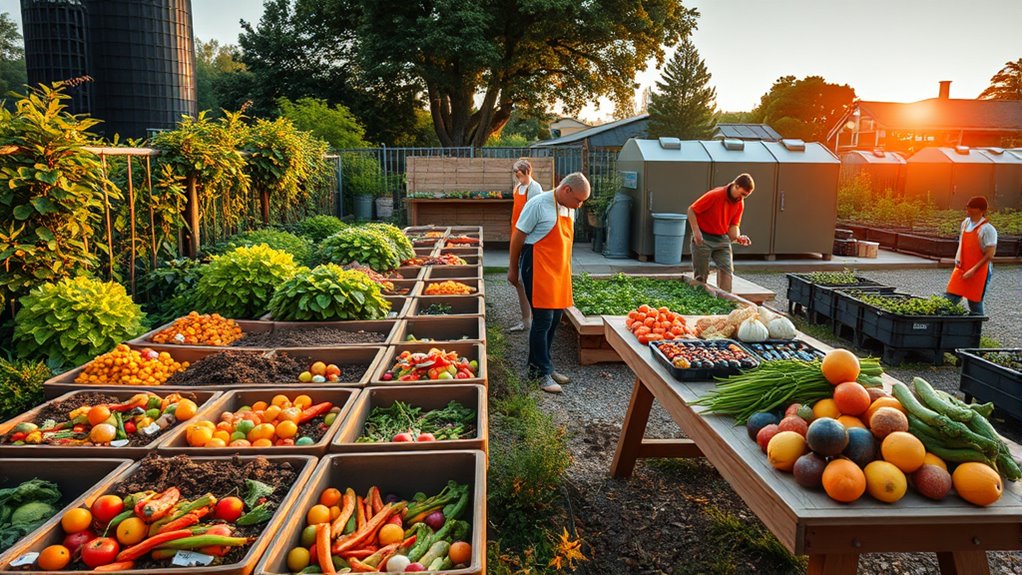
Have you ever wondered how much food gets wasted worldwide and what that means for our environment and economy? In 2022, the global food waste topped approximately 1.05 billion tonnes, spanning retail, food service, and households. This staggering amount contributes considerably to greenhouse gas emissions—around 8-10%—and occupies nearly 30% of agricultural land. While billions face food insecurity, large quantities of edible food are wasted daily, highlighting an urgent need for innovative solutions like food recovery programs and waste audits. The global production of food waste in 2022 was approximately 1.05 billion tonnes. Food recovery efforts aim to redirect edible leftovers from landfills to those in need, reducing waste and alleviating hunger. Community-driven initiatives and organizations work tirelessly to recover surplus food, yet many waste streams go unnoticed without proper waste audits. Waste audits help identify exactly where and how food is wasted, providing essential data that informs targeted interventions. By analyzing waste patterns, communities can develop strategies to minimize excess, improve storage, and optimize food use, ultimately reducing the economic burden of waste, which exceeds $1 trillion annually worldwide. Additionally, implementing waste management practices can significantly enhance the effectiveness of these efforts. In households, the largest share of food waste occurs, with an average of 79 kg per person globally. Consumers often discard food due to spoilage or misjudged freshness, even though a significant portion could be salvaged through better planning and storage. Despite rising food prices, household waste has surged—by up to 280% in the US from 2021 to 2022—mainly because of inefficient use of purchased food. Much of this waste stems from food not being used before spoilage, which accounts for about two-thirds of household waste in the US. Addressing this requires behavior change, education, and community campaigns that emphasize meal planning, proper storage, and food preservation. The food service and retail sectors also contribute heavily to waste. Restaurants spend billions annually on food waste, and nearly 40% of food in the US gets wasted, much of which could be avoided through better inventory management and donation programs. Retailers waste sizable portions before they even reach consumers, with about 23% of food never harvested due to overproduction or spoilage. Innovative solutions like implementing more rigorous waste audits and establishing food recovery networks can substantially cut down these losses, channel surplus food to charities, and reduce environmental impacts. Reducing food waste isn’t just a matter of individual effort—it’s a systemic challenge requiring community action and smarter resource management. Through food recovery initiatives and detailed waste audits, you can help identify waste hotspots, create better food management practices, and build a more sustainable food system. Every effort counts when it comes to conserving resources, lowering emissions, and fighting hunger.
Frequently Asked Questions
How Can Technology Further Reduce Food Waste at the Household Level?
You can leverage smart appliances equipped with AI algorithms to further cut household food waste. These devices automatically track your food inventory, monitor expiration dates, and suggest recipes based on what you have. By providing real-time notifications and personalized tips, they help you plan meals better and use up ingredients before spoilage. This proactive approach minimizes waste, saves money, and promotes sustainable habits effortlessly.
What Role Do Businesses Play in Minimizing Food Waste?
You play a vital role in minimizing food waste through your company’s corporate responsibility and supply chain management. By setting clear waste reduction targets, investing in innovative solutions, and fostering partnerships, your business can substantially cut surplus food. Streamlining operations like procurement, storage, and distribution helps prevent excess. Embracing transparency and community programs further support sustainability, showing that responsible business practices not only save costs but also contribute to a healthier planet.
How Effective Are Government Policies in Combating Food Waste?
Policy effectiveness in combating food waste remains limited, mainly due to implementation challenges. You’ll find that state policies alone divert only about 5% of waste, and federal efforts focus heavily on recycling, which falls short of 2030 goals. To improve, you need strategies that prioritize prevention and donation incentives, address regional gaps, and foster interagency collaboration, ensuring policies are practical and impactful across the entire supply chain.
Can Food Waste Reduction Positively Impact Local Economies?
You might think wasting food is harmless, but reducing food waste actually fuels local economies. When you cut back on waste, food waste and economic growth go hand in hand, boosting community engagement and creating jobs. Less waste means more resources stay in your community, supporting farmers, businesses, and services. So, by simply wasting less, you’re helping your local economy thrive, proving that every saved bite counts.
What Are Innovative Methods for Redistributing Surplus Food?
You can implement innovative food rescue methods by using AI-driven systems to match surplus food with charities efficiently, reducing waste markedly. Encourage charitable donations through policies that offer tax incentives and liability protections, making it easier for businesses to donate. Community networks also play an essential role; volunteers collect and distribute surplus food, fostering social cohesion and preventing edible food from going to landfills.
Conclusion
As you’ve seen, innovative solutions and community efforts are making a difference in reducing food waste. But the real question remains: what if your next meal could be part of a bigger change? Every small action you take could lead to something greater—saving resources, protecting the planet, or inspiring others to act. The future of food waste reduction is in your hands. Are you ready to be part of the next big breakthrough?