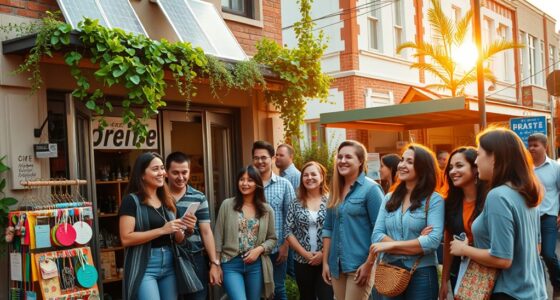
Neighborhood swap culture offers surprising warmth as you connect with neighbors through shared exchanges of goods and skills. It builds a strong sense of community by encouraging mutual support, trust, and creativity. You’ll find yourself decluttering, saving money, and learning new skills all at once. Beyond the items, these swaps foster genuine relationships and resilience. If you’re curious about how these exchanges help communities thrive, keep exploring this inspiring local tradition.

Get the latest gadgets delivered free with Prime
- Fast, free delivery on millions of items
- Prime Video, Amazon Music and more included
- Member-only deals all year
Key Takeaways
- Neighborhood swaps foster genuine connections, creating warmth and community beyond just exchanging items.
- Sharing resources builds trust, mutual support, and a sense of belonging among neighbors.
- These exchanges promote emotional bonds through shared stories, skills, and collaborative efforts.
- The culture emphasizes generosity and cooperation, nurturing resilient and supportive local communities.
- Engaging in swaps enhances community spirit, creating a welcoming environment rooted in sustainability and mutual care.

In recent years, neighborhood swap culture has gained popularity as communities seek more sustainable and social ways to share resources. This movement taps into local exchange traditions that have been part of communities for generations, bringing a modern twist to age-old practices. You might find yourself participating in these community sharing practices without even realizing it, exchanging everything from books and clothes to homemade goods and skills. It’s a simple yet powerful way to foster connections, reduce waste, and save money while strengthening bonds with your neighbors.
When you engage in neighborhood swaps, you’re not just trading items—you’re participating in a form of community building. These exchanges often happen informally, through neighborhood groups, social media, or dedicated swap events. You get to see firsthand how local exchange traditions adapt over time, blending old customs with contemporary needs. For example, a community might host a clothing swap to help neighbors refresh their wardrobes without buying new, or organize a tool exchange to ensure everyone has access to what they need without each owning the same equipment. These activities aren’t just about saving; they’re about creating a culture of sharing that encourages generosity and cooperation.
Neighborhood swaps foster community building through informal, shared traditions that promote generosity, cooperation, and resourcefulness.
You’ll notice that community sharing practices like neighborhood swaps foster a sense of belonging and mutual support. When you participate, you’re actively contributing to a cycle of giving and receiving that strengthens social ties. It’s a way to meet neighbors, share stories, and build trust. These exchanges often reveal the creativity and resourcefulness within your community—people repurpose, upcycle, and find new uses for what might otherwise be discarded. It’s a reminder that resources are finite, and sharing can extend their life while reducing environmental impact. Recognizing the importance of biodiversity in local ecosystems can further inspire communities to incorporate sustainable practices into their sharing traditions, encouraging a more resilient environment.
Participating in neighborhood swaps also offers practical benefits. You can declutter your space, find affordable alternatives to shopping, and even learn new skills from neighbors. Plus, it’s a chance to connect on a more personal level, breaking down barriers that might exist in larger, more anonymous settings. As you become involved, you’ll see how these community sharing practices become more than just trades—they turn into a way to nurture a resilient, supportive neighborhood. The warmth you feel from these exchanges often goes beyond the items swapped; it’s about creating a shared sense of purpose and community that endures long after the last item has been exchanged. Incorporating sustainable practices and understanding local ecosystems can further enhance these sharing traditions and their positive impact.
Products Worth Considering

Kindle Paperwhite Signature Edition 32GB (2024 Model) – Metallic Black

Logitech MX Keys S Combo Wireless Keyboard and Mouse, Graphite

Logitech MX Mechanical Wireless Illuminated Keyboard, Tactile Quiet, Graphite
As an affiliate, we earn on qualifying purchases.
Frequently Asked Questions
How Did Neighborhood Swap Culture Originate Historically?
Neighborhood swap culture originated from local traditions and barter systems, where communities exchanged goods and services to meet their needs. Historically, people relied on face-to-face interactions and trust, creating strong bonds. Over time, these informal exchanges evolved into more organized events, fostering a sense of community. You can see how this tradition promotes cooperation, sustainability, and mutual support, making neighborhoods more connected and resilient.
What Are Common Items Traded in Neighborhood Swaps?
You’ll find vintage collectibles and gardening tools commonly traded in neighborhood swaps, like treasures passing hands in a lively marketplace. These exchanges become a tapestry of shared stories and nostalgia, where old records, quirky trinkets, and practical tools find new homes. As neighbors trade, they weave a fabric of connection, turning simple swaps into moments of warmth and community spirit, making each item more than just material—it’s a piece of collective history.
How Do Neighborhoods Organize Swap Events?
You can organize neighborhood swap events by involving community engagement through flyers, social media, or local meetings. Set a date, choose a central location, and encourage residents to bring items for trading, emphasizing environmental sustainability. Clear guidelines help guarantee fairness, and promoting the event can foster stronger community bonds. By focusing on shared participation, you create an eco-friendly gathering that reduces waste and strengthens neighborhood ties.
Are There Any Safety Concerns With Swapping Items?
You might worry about safety concerns when swapping items, but imagine a fortress of safety protocols shielding your treasures. By following theft prevention tips, like verifying identities and using secure exchange points, you create a bubble of security. It’s like having an invisible force field protecting your belongings. So, while some risks exist, your proactive safety measures turn swap events into safe, friendly exchanges, making neighborhood sharing enjoyable and worry-free.
How Does Swap Culture Impact Local Community Bonds?
You’ll find that swap culture strengthens local community bonds by fostering cultural exchange and shared experiences. As neighbors exchange items, you build trust and camaraderie, making your community more connected. Plus, the economic benefits are clear—you save money, reduce waste, and support local initiatives. This active participation encourages a sense of belonging and mutual support, ultimately creating a more vibrant, resilient neighborhood where everyone feels valued and engaged.
Conclusion
You embrace the unexpected, you find community in the unfamiliar, and you discover connection through exchange. Neighborhood swap culture invites you to share, to learn, and to grow. It’s about opening your door and opening your heart. It’s about breaking barriers and building bonds. So, step into the warmth of this movement. Step into the possibility. Step into a world where giving and receiving become the heartbeat of your neighborhood.