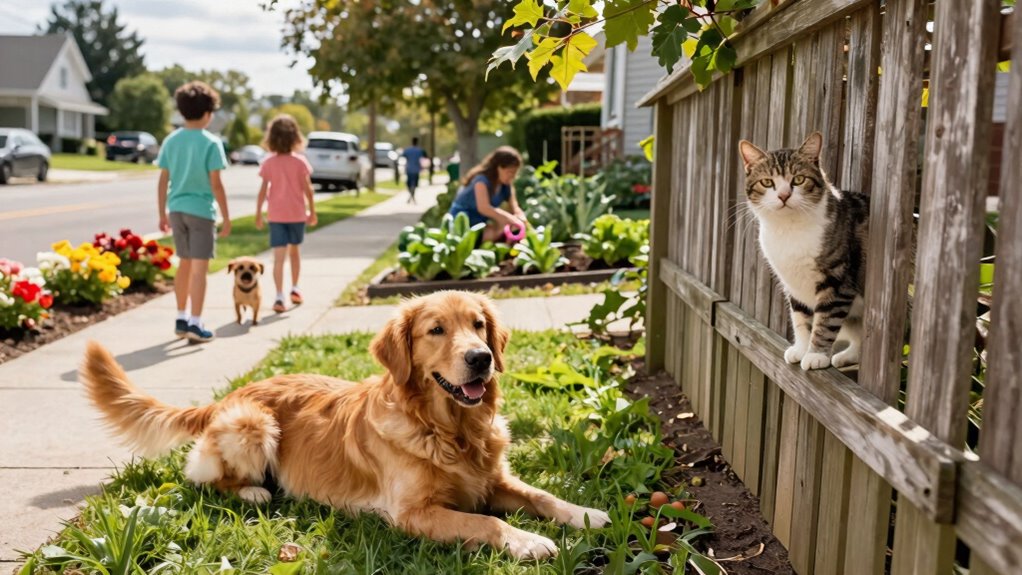

When you notice neighborhood pets frequent your area, it’s because residents like you start recognizing them as part of the community. As you care for and support these animals, they become shared symbols of neighborhood unity. Your collective efforts, like feeding or caring, foster trust and responsibility among neighbors. This sense of responsibility turns stray animals into community pets, reminding everyone of the importance of coexistence. If you stay engaged, you’ll discover how this strengthens community bonds and supports urban wildlife.

Get the latest gadgets delivered free with Prime
- Fast, free delivery on millions of items
- Prime Video, Amazon Music and more included
- Member-only deals all year
Key Takeaways
- Neighborhood animals become familiar fixtures, fostering recognition and a sense of responsibility among residents.
- Pet adoption programs highlight existing community animals, encouraging collective care and integration.
- Shared responsibilities, like feeding and caring, strengthen trust and camaraderie among neighbors.
- Community pets symbolize neighborhood unity and promote responsible ownership and wildlife conservation.
- Recognizing urban wildlife’s role fosters compassion, ecological awareness, and enhances community cohesion.

Neighborhood pets often become more than just animals living nearby; they evolve into community pets that bring people together. In urban environments where green spaces and alleyways intersect with busy streets, urban wildlife becomes a common sight. These animals, often strays or lost pets, adapt to city life and, over time, become familiar fixtures in the neighborhood. As residents notice these animals frequenting the same spots, they develop a sense of familiarity and responsibility. This connection encourages community members to look out for these animals, fostering a collective sense of care and concern.
Neighborhood animals become neighborhood heroes, fostering care, responsibility, and community unity in urban life.
Pet adoption programs play a vital role in transforming neighborhood animals into true community pets. When local shelters promote adoption, they often highlight animals that have already integrated into the neighborhood’s fabric. Instead of strangers, these pets become familiar faces, strengthening the bond between humans and animals. You might find yourself more willing to care for a stray or adopt a pet from a nearby shelter because you’ve already seen how these animals are part of the neighborhood. These programs also help reduce the number of urban wildlife that live without proper care, providing a safer environment for everyone. Supporting these initiatives can also enhance urban biodiversity by encouraging the preservation of diverse species that coexist within city ecosystems.
Once a pet is adopted through these programs, it often becomes a shared responsibility within the community. People may take turns feeding or walking the animal, creating a sense of collective ownership. This shared care fosters trust and camaraderie among neighbors who may not have interacted much before. Over time, these animals become symbols of neighborhood unity, reminding everyone that caring for urban wildlife and stray pets isn’t just about individual responsibility but about working together for the common good. Recognizing urban wildlife as an essential part of city ecosystems encourages more compassionate attitudes toward coexistence. Supporting these efforts can also improve urban biodiversity by fostering healthier habitats for local species. Understanding the urban ecosystem helps residents appreciate the interconnectedness of city life and local wildlife.
Furthermore, community pets often serve as ambassadors for local wildlife conservation efforts. They help highlight the importance of humane treatment and responsible pet ownership. By supporting pet adoption programs, residents demonstrate their commitment to reducing urban wildlife conflicts and promoting coexistence. When neighbors come together to care for these animals, it emphasizes that urban wildlife isn’t just a nuisance but an integral part of city life deserving attention and compassion.
In the end, neighborhood pets become community pets because they embody the spirit of collective care. Whether through pet adoption programs or simply recognizing urban wildlife’s role in city life, these animals help unify residents. They remind you that, in a bustling city, compassion and shared responsibility can turn stray animals into beloved community members.
Products Worth Considering

Bose SoundLink Plus Portable Bluetooth Speaker, Wireless Outdoor Speaker, Up to 20 Hours Battery Life, Waterproof and Dustproof, Black

Anker SOLIX C1000 Gen 2 Portable Power Station

EcoFlow Delta 3 Ultra 3072Wh Portable Power Station – 3600W AC Output
As an affiliate, we earn on qualifying purchases.
Frequently Asked Questions
How Do Neighborhood Pets Gain Trust From Residents?
You build trust with neighborhood pets through consistent pet socialization and gentle interactions. Spend time calmly approaching them, offering treats or toys to create positive experiences. Over time, these actions foster trust development, making pets feel safe and comfortable around you. Patience is key, as regular, friendly encounters help pets recognize you as a trustworthy presence, encouraging them to approach and interact more confidently within their community.
What Role Do Local Events Play in Pet Community-Building?
Local events play a crucial role in pet community-building by encouraging pet adoption and fostering connections among residents. When you participate in events like pet fairs or adoption days, you help create a welcoming environment that promotes responsible pet ownership, including understanding leash laws. These gatherings build trust, share knowledge, and inspire residents to care for and protect their neighborhood pets, transforming them into beloved community members.
How Do Pets Influence Neighborhood Safety?
Like loyal guardians in a story, pets influence neighborhood safety by acting as natural deterrents. Their socialization helps them alert you to unusual activity, while their presence often encourages neighborhood patrols, fostering vigilance. You’ll notice that a well-socialized pet can reduce crime, making your community safer. With their keen senses and friendly demeanor, pets become active participants in neighborhood safety, turning everyday spaces into more secure, welcoming places for everyone.
Are There Common Challenges in Managing Community Pets?
Managing community pets often presents challenges like ensuring proper veterinary care and handling breed diversity. You might struggle to coordinate regular vet visits or vaccinations, risking health issues. Breed diversity can also lead to varied behavior and needs, making responsible management more complex. You need to foster cooperation among pet owners and local authorities, ensuring every pet receives proper care and supervision to promote a safe, harmonious neighborhood environment.
How Do Community Pets Impact Local Property Values?
Back in the day, community pets can boost local property values by fostering a welcoming neighborhood. When you support pet adoption and guarantee proper veterinary care, these animals become cherished community members. Their presence encourages outdoor activities and social interactions, making the area more desirable. Conversely, neglecting responsible pet management might lead to issues that decrease property appeal. Overall, well-cared-for community pets positively influence your neighborhood’s value and charm.
Conclusion
So, next time you see a neighborhood pet wandering your streets, remember they’re more than just animals—they’re the heartbeat of your community’s story. Like familiar stars in your night sky, they brighten your days and weave connections that turn strangers into neighbors. Embrace these furry friends, for they remind us that love and companionship can turn any corner into a cozy home. In their presence, your neighborhood becomes a tapestry of shared warmth and endless kindness.