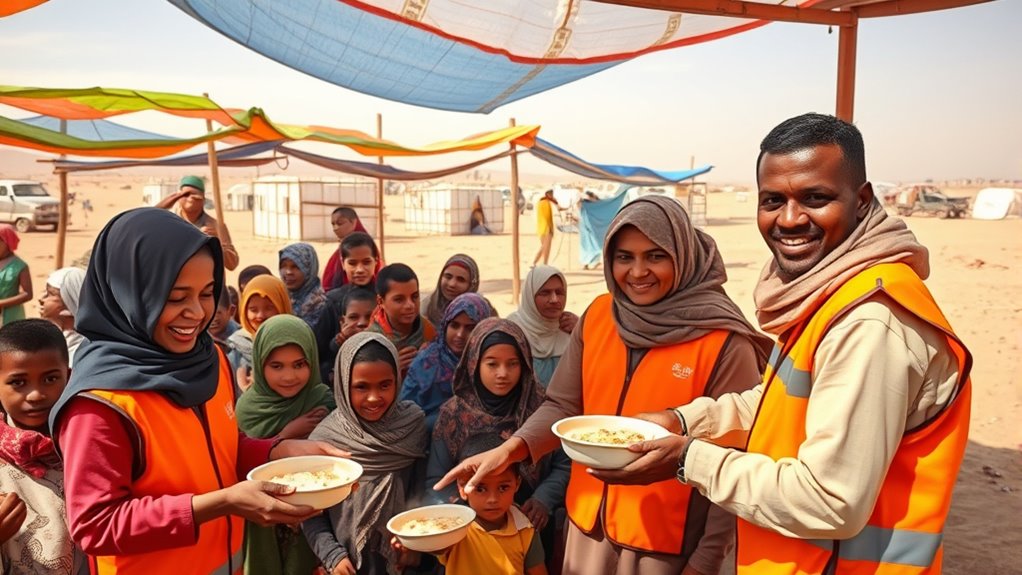

Humanitarian efforts have made notable progress in helping refugees, despite ongoing challenges like underfunding and security risks. Agencies such as UNHCR have supported millions through aid, cash programs, and health initiatives, showing that targeted actions can improve lives and promote dignity. Coordination among donors, NGOs, and governments helps maximize resources and prevent duplication. If you want to see how these strategies are making a difference and what future efforts hold, there’s more to discover.
Key Takeaways
- Humanitarian agencies have assisted over 116 million people globally in 2024, despite persistent funding shortages.
- Cash and voucher programs promote refugee autonomy, dignity, and efficient resource utilization.
- Coordinated efforts among donors, NGOs, and governments improve aid delivery and reduce duplication.
- Strengthening health systems and disease surveillance enhances crisis response and disease prevention.
- Expanding operational security and innovative policies help overcome obstacles in aid implementation.
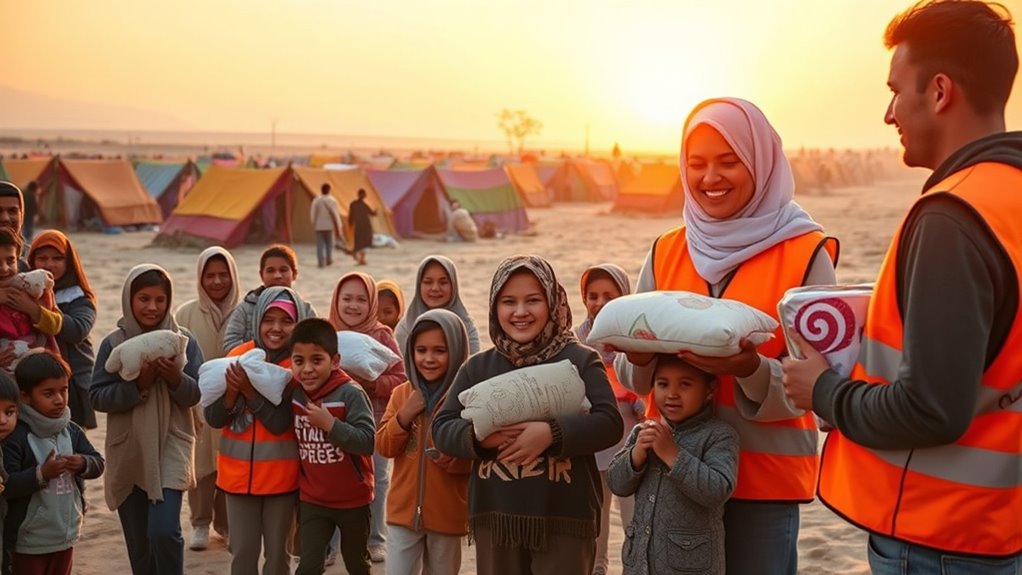
Are we truly prepared to meet the growing needs of millions displaced by conflict and disaster? The scale of global displacement has reached staggering levels, with around 31 million refugees in 2025—nearly double what it was a decade ago. Over 122 million people are forcibly displaced worldwide, including refugees, internally displaced persons, and asylum seekers. Most originate from just ten countries, with more than half coming from the top three. Countries like Ukraine, Eritrea, Syria, Afghanistan, and South Sudan continue to produce large refugee populations, straining both international and local resources. As a responder or supporter, you realize that addressing these crises demands effective resource allocation and strategic policy development. Without these, aid efforts risk becoming inefficient, leaving many without the help they urgently need.
Global displacement soars, demanding urgent strategic policy and resource allocation to meet skyrocketing humanitarian needs.
You see that humanitarian assistance efforts have made significant strides, yet remain hampered by persistent funding shortages and logistical hurdles. In 2023, UNHCR provided aid to over 4.3 million people in Ukraine and 2.6 million in neighboring countries. Despite these efforts, the scale of need continues to outpace available resources. In 2024, nearly 116 million people received aid, but only 22% of the $2.4 billion humanitarian response plan was funded by midyear. This underfunding forces aid agencies to prioritize critical interventions, often at the expense of comprehensive care, especially in fragile states. You recognize that expanding cash and voucher assistance has empowered refugees by supporting their autonomy and dignity, yet coordination gaps among donors, NGOs, and governments hinder the delivery of aid. Effective resource allocation and policy development are essential to streamline efforts, prevent duplication, and ensure aid reaches those most in need.
Operational and security challenges further complicate humanitarian work. Humanitarian workers face hostile environments, attacks, and obstruction, while local staff take on leadership roles amidst danger and limited resources. Conflict escalation and climate-related disasters increase these risks, making access to vulnerable populations even harder. In many conflict zones, coordination remains insufficient to implement early warning systems for infectious disease outbreaks, such as cholera and Nipah virus, which disproportionately impact displaced populations. The number of refugees from the Democratic Republic of the Congo has exceeded 1.06 million, and the underfunding of health programs worsens these issues, hampering efforts to control disease and improve maternal and child health. Recognizing the importance of health governance and disease surveillance is vital for effective humanitarian response.
You understand that urgent focus on health governance, disease surveillance, and pandemic preparedness is crucial. Strengthening these areas in crisis hotspots like Ukraine and Syria can save lives and reduce suffering. As displacement continues to grow, so does the need for smarter resource allocation and innovative policy development to adapt to complex challenges. Only through coordinated, well-funded, and strategic efforts can we meet the demands of this escalating humanitarian crisis and ensure the dignity and safety of displaced populations around the world.

The Other Side of the Coin: The Comparative Evidence of Cash and in-Kind Transfers in Humanitarian Situations? (World Bank Studies)
As an affiliate, we earn on qualifying purchases.
As an affiliate, we earn on qualifying purchases.
Frequently Asked Questions
How Do Refugees Access Legal Protection Programs?
You access legal protection programs mainly through legal pathways like asylum applications or refugee status determinations. Protection mechanisms involve working with organizations that provide legal aid, rights education, and support during the process. You often need referrals from UNHCR, government agencies, or trusted NGOs. These groups help you understand your rights, prepare your case, and navigate complex procedures, ensuring you get the protection you deserve under international and national laws.
What Are the Most Effective Long-Term Integration Strategies?
You find that the most effective long-term integration strategies involve fostering cultural assimilation and employment integration. By creating programs that encourage refugees to participate in local customs and language learning, you help them build strong community ties. Simultaneously, offering vocational training and employment support boosts their economic independence. When these strategies work together, you enable refugees to thrive socially and financially, ensuring a smoother progression into their new lives.
How Is Funding for Humanitarian Efforts Secured Annually?
You secure funding for humanitarian efforts through donor partnerships, which involve governments, multilateral agencies, and private donors committing resources annually. These partnerships help navigate funding challenges, such as heavy donor dependency and shifting priorities. You must actively engage with these partners, advocate for sustained support, and diversify funding sources to guarantee reliable, multiyear commitments that sustain emergency responses and maximize the impact of humanitarian aid efforts.
What Role Do Local Communities Play in Refugee Support?
Imagine a vibrant tapestry, each thread representing community involvement and cultural exchange. You play a crucial role by fostering social cohesion, supporting refugees through local organizations, and welcoming diverse cultures. Your engagement helps create inclusive neighborhoods where newcomers find stability and belonging. By participating in community sponsorships and supporting local services, you help refugees integrate, enriching your community’s social fabric and fostering mutual understanding and respect.
How Do Humanitarian Efforts Adapt to Changing Refugee Crises?
You adapt humanitarian efforts by focusing on emergency preparedness and cultural assimilation. You rapidly modify programs to address evolving crises, using data-driven tools to target the most affected populations. You also emphasize integrating local capacities to foster resilience, ensuring aid aligns with community needs. By incorporating cultural understanding and flexible strategies, you help refugees rebuild lives while managing ongoing challenges like conflict and climate impacts effectively.

Mayday Pouch Water, Coast Guard Emergency Water, 5-Year Shelf LIfe, Disaster Preparedness Supplies for, Earthquake, Fire, Flood, Leak-Proof Pouches, 4.225 Oz/125Ml 50 Pack
EMERGENCY DRINKING WATER POUCHES: Mayday ready to drink water has a 5 year shelf life. Prevent hydration with…
As an affiliate, we earn on qualifying purchases.
As an affiliate, we earn on qualifying purchases.
Conclusion
You’ve seen how relentless and unstoppable humanitarian efforts are, like a tidal wave of compassion that can move mountains and change destinies overnight. Every aid package, every act of kindness, feels like a superpower, transforming lives in ways you wouldn’t believe. Your support fuels this unstoppable force, proving that even in the darkest times, hope can shine brighter than the sun. Together, we’re rewriting the impossible into reality—one life at a time.
humanitarian aid logistics equipment
As an affiliate, we earn on qualifying purchases.
As an affiliate, we earn on qualifying purchases.

Secure Safety Solutions Chair Alarm for Elderly Dementia Patients – Caregiver Alert Monitor and Pressure Sensor Pad – Wheelchair Exit Monitoring Kit, Wandering and Fall Prevention Alarms for Seniors
Know When They Try to Stand: The Secure 14CSET-1Y Chair Exit Alarm System alerts caregivers when a fall-risk…
As an affiliate, we earn on qualifying purchases.
As an affiliate, we earn on qualifying purchases.