

Cities banning fossil fuel ads are taking vital steps toward cleaner air and healthier communities. By restricting industry promotion in public spaces, these cities aim to reduce climate change impacts, improve air quality, and decrease industry influence. Restrictions now cover billboards, digital screens, and sponsorships, especially targeting vulnerable groups like children. If you want to discover how these efforts are transforming urban environments and empowering citizens, keep exploring what’s happening worldwide.
Key Takeaways
- Cities worldwide are banning fossil fuel advertising to reduce industry influence and promote sustainable energy awareness.
- Restrictions target public spaces, digital displays, and event sponsorships to limit exposure, especially among vulnerable populations.
- These bans help improve air quality by discouraging promotion of pollution-heavy industries and encouraging cleaner alternatives.
- Public support and advocacy groups drive policies, aiming to shift societal norms towards responsible consumption and climate action.
- Such measures contribute to a broader movement for transparent, responsible marketing and a healthier, cleaner environment.
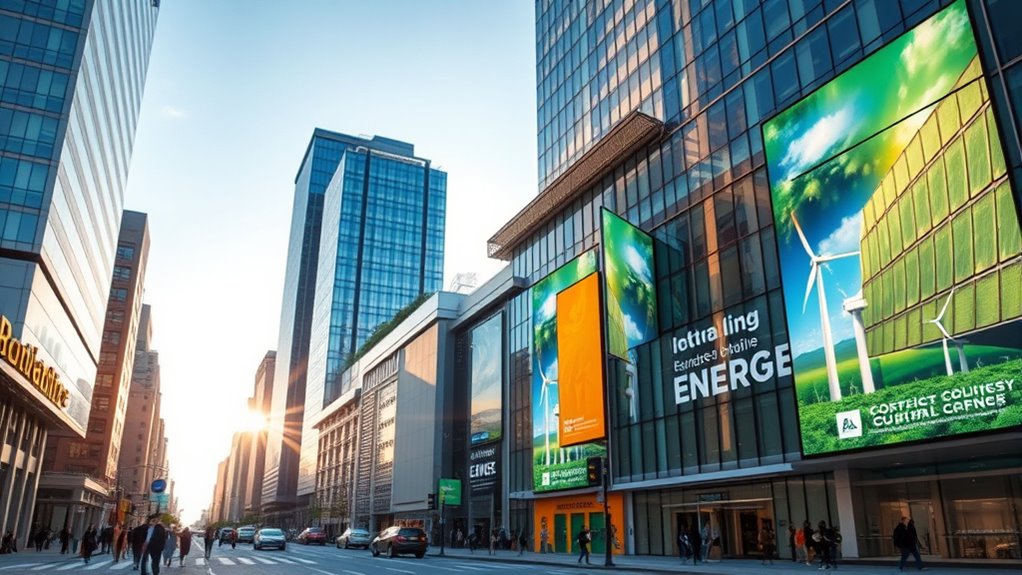
Cities around the world are taking bold steps to ban fossil fuel advertising, aiming to reduce industry influence and promote cleaner energy. These measures are part of broader efforts to encourage green marketing and hold corporations more accountable for their role in climate change. By removing fossil fuel ads from public spaces, cities send a clear message that promoting dirty energy sources is no longer acceptable and that public health and environmental sustainability take priority.
In Edinburgh, council-owned advertising spaces like billboards and bus stops now exclude ads for fossil fuel companies, airlines, airports, and vehicles powered by fossil fuels, including hybrids and SUVs. Meanwhile, Utrecht has extended this approach by prohibiting fossil fuel ads in all new advertising contracts and tenders, specifically targeting companies involved in coal, oil, and gas. Amsterdam has gone even further, banning all fossil fuel advertising, including those aimed at children, demonstrating a strong municipal stance against promoting industries that threaten climate goals. Sydney follows suit as the second city globally to ban fossil fuel ads on public property and at public events, emphasizing the growing international momentum. France has set a national precedent by implementing a nationwide ban on advertising gasoline and diesel, signaling a considerable policy shift at the country level.
These bans aren’t just about stopping ads for fossil fuel companies. They often extend to sponsorships of events, cultural partnerships, and sponsorships that reinforce industry influence beyond traditional advertising. Public spaces like bus stops, digital displays, and billboards are common venues where restrictions are enforced, ensuring that fossil fuel promotion doesn’t reach vulnerable populations, especially children. Some legislation also covers future advertising contracts to prevent new fossil fuel promotions from taking root, reinforcing a move toward sustainable, responsible communication. Research shows that public support for these bans continues to grow as awareness of climate issues increases, and industry influence is increasingly challenged by these policies.
The motivation behind these bans is multifaceted. Cities recognize that reducing exposure to fossil fuel promotion supports climate goals and improves air quality. They aim to diminish the social legitimacy and political influence of fossil fuel companies, addressing greenwashing practices that misrepresent industry impacts. Public health benefits also motivate these actions, as cleaner air results from cutting emissions linked to fossil fuel infrastructure. Ultimately, these policies foster societal shifts away from fossil fuels, encouraging adoption of cleaner energy sources and altering societal norms around consumption.
Advocacy groups like Greenpeace and 350.org champion these efforts, framing fossil fuel advertising as the new tobacco industry’s harmful influence. Campaigns in Australia, Canada, and the UK rally support for bans on fossil fuel sponsorships and ads, emphasizing the need for industry accountability. Citizen initiatives propose redirecting fossil fuel advertising funds into transition programs, strengthening community-led solutions. Legal challenges also target misleading campaigns, reinforcing the importance of transparency and honesty.
The advertising and PR industries are considerably impacted. Over 230 agencies worldwide work with fossil fuel companies, highlighting the industry’s entrenched nature. As cities continue to implement bans, the shift toward transparent, responsible green marketing grows stronger, fostering a future where public spaces promote clean energy instead of polluting industries. These steps mark essential progress in reducing industry influence, encouraging accountability, and supporting healthier communities.
air quality monitor
As an affiliate, we earn on qualifying purchases.
As an affiliate, we earn on qualifying purchases.
Frequently Asked Questions
How Will Bans Impact Local Economies and Job Markets?
You’ll see the bans impact local economies and job markets by shifting economic growth toward green industries and improving community health. While fossil fuel advertising jobs decline, new opportunities in clean energy marketing emerge. This shift may cause short-term disruptions, but in the long run, it promotes sustainable economic development and healthier communities, attracting eco-conscious investments and fostering innovation. Your community can benefit from a cleaner environment and a resilient, forward-looking economy.
Are There Legal Challenges to Implementing Ad Bans?
You may face legal hurdles and constitutional challenges when implementing ad bans. Courts might argue restrictions infringe on commercial speech rights protected by law, but bans can be justified if they’re proportionate and backed by scientific evidence. It’s essential to navigate local laws carefully, seek legal advice, and build public support. Successful implementation depends on demonstrating that the bans serve a legitimate public interest without unfairly restricting free speech.
How Will These Bans Affect Advertising Revenue for Media Outlets?
You might be surprised to learn that fossil fuel companies spend over $2 billion annually on media ads. Banning these ads can impact media revenue, especially for outlets relying heavily on energy sector advertising. However, focusing on advertising ethics and aligning with public perception, which increasingly favors green initiatives, offers new opportunities. Diversifying into renewable energy and sustainability content can offset revenue loss and boost your outlet’s reputation.
What Alternative Advertising Methods Might Fossil Fuel Companies Pursue?
You might see fossil fuel companies adopting green marketing strategies and enhancing community outreach efforts. They’ll likely use native advertising, social media campaigns, and sponsorships that subtly promote their sustainability initiatives without violating ad bans. By focusing on community engagement and eco-friendly branding, they aim to maintain public trust and influence perception, all while aligning their messaging with environmental values through content that emphasizes sustainability and local initiatives.
Will Similar Bans Be Considered at National or International Levels?
Like a wave building momentum, bans on fossil fuel ads are gaining ground. You can expect similar measures at national and international levels, driven by concerns over fossil fuel lobbying and the impact on public health campaigns. Countries are increasingly recognizing the need to limit greenwashing and influence, making broader bans more likely. These efforts aim to protect communities and steer global policies toward cleaner, healthier futures.
eco-friendly digital signage
As an affiliate, we earn on qualifying purchases.
As an affiliate, we earn on qualifying purchases.
Conclusion
By banning fossil fuel ads, cities are taking a bold step toward cleaner air and healthier communities. Did you know that air pollution from fossil fuels causes over 4 million premature deaths annually? When cities act, they not only reduce exposure but also send a powerful message to the industry. Your support can help amplify these efforts, making cleaner air a reality for everyone. Every step counts in building a healthier, more sustainable future.
sustainable advertising display
As an affiliate, we earn on qualifying purchases.
As an affiliate, we earn on qualifying purchases.
children's educational environmental books
As an affiliate, we earn on qualifying purchases.
As an affiliate, we earn on qualifying purchases.