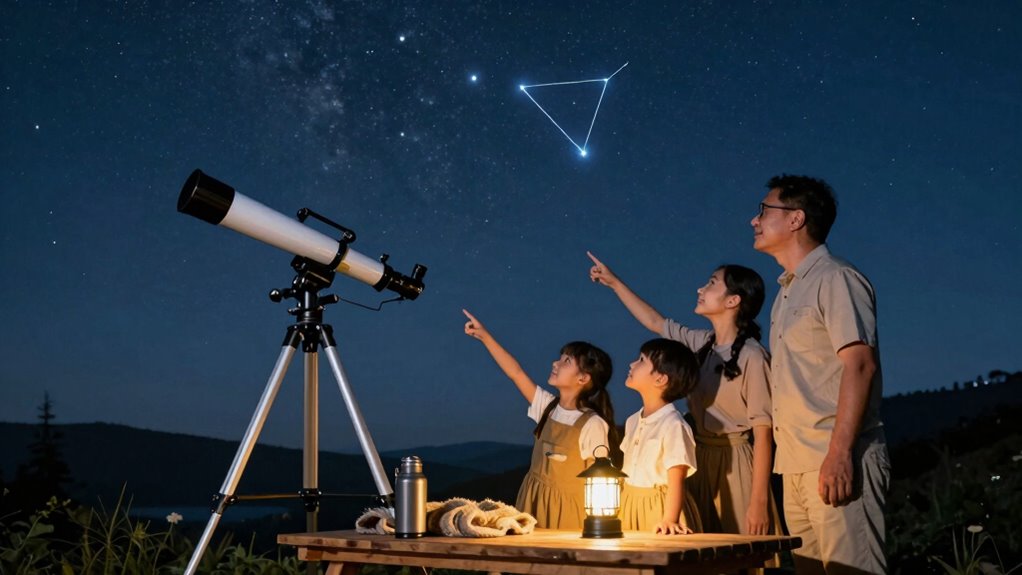

To plan your first family telescope night, pick simple, portable equipment like a basic refractor and check the moon phases for ideal viewing. Choose a clear, dark spot away from city lights, and set up before dark. Prepare warm clothes, snacks, and a star chart or app to locate celestial objects. Focus on the moon’s craters and planets, and involve everyone in the fun. Keep exploring—there’s more to discover for a memorable night under the stars.
Play games included with Prime
Start a Prime free trial and play with Amazon Luna on your devices.
As an affiliate, we earn on qualifying purchases.
Key Takeaways
- Check weather and moon phases to select a clear, moonless night for optimal viewing.
- Choose a simple, portable telescope like a beginner refractor for easy setup and use.
- Prepare warm clothing, snacks, and a star chart or app to help locate celestial objects.
- Focus on viewing the moon’s craters and planetary features, engaging family members in observations.
- Create a fun, relaxed atmosphere to foster curiosity, education, and lasting memories during your first stargazing experience.
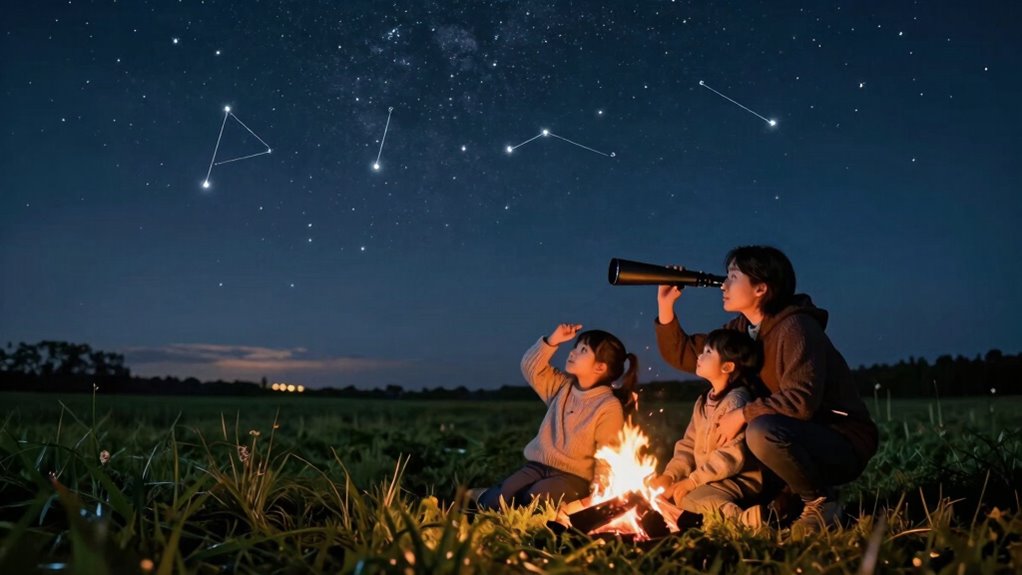
Planning a family stargazing night is a fantastic way to explore the cosmos together and create lasting memories. To make your night special, start by understanding the moon phases. The moon’s appearance changes throughout its cycle—from the new moon, when it’s invisible, to the full moon, when it’s fully illuminated. Knowing these phases helps you pick the best night for viewing certain celestial objects. For example, a new moon offers darker skies, making stars and distant galaxies easier to see, while a full moon illuminates the night and can wash out fainter objects but still makes for a beautiful backdrop. Tracking the moon phases in the days leading up to your outing allows you to plan accordingly and heighten the excitement for the night ahead.
Next, choosing the right telescope is vital. There are several types, each suited to different levels of experience and interest. Refractor telescopes, with their long, sleek tubes and lenses, are straightforward to use and great for beginners. They’re perfect for viewing the moon’s craters and planetary details. Reflector telescopes, which use mirrors, tend to offer larger apertures at a lower cost, providing brighter views of deep-sky objects like star clusters and galaxies. Compound telescopes combine lenses and mirrors, offering versatility but often at a higher price. When starting out, consider a beginner-friendly model that’s easy to set up and transport. You don’t need the most expensive equipment; a simple refractor or a tabletop telescope will do the job and make your first night enjoyable.
Once you have your moon phase info and chosen your telescope, plan your viewing session. Check the weather forecast to guarantee clear skies, and pick a location away from city lights for maximum visibility. Bring warm clothing, blankets, and snacks to keep everyone comfortable. Set up your telescope before it gets dark so you can focus on adjusting it and getting familiar with its controls. Use star charts or stargazing apps to locate prominent celestial objects, and don’t forget to include some time just looking at the moon—its craters and maria are mesmerizing, especially when you can see different phases. Learning about moon phases can deepen your appreciation of what you observe through the telescope. Encourage family members to take turns looking through the telescope and sharing their observations. With a bit of preparation, your first telescope night becomes an exciting adventure into the universe, fostering curiosity and creating memories that will last long after the stars have disappeared from view.
beginner refractor telescope for kids
As an affiliate, we earn on qualifying purchases.
As an affiliate, we earn on qualifying purchases.
Frequently Asked Questions
What Safety Precautions Should Families Take During Stargazing?
To stay safe during stargazing, you should avoid areas with heavy light pollution to clearly see the stars. Bring insect protection like bug spray or screens to keep bugs away. Watch your step in dark, uneven terrain, and keep flashlights dim or red to avoid disturbing others. Stay aware of your surroundings, and never look directly at bright lights or headlights to protect your eyes and guarantee a safe, enjoyable experience.
How Can I Teach Children About Constellations Effectively?
Did you know there are over 88 officially recognized constellations? To teach children effectively, use interactive storytelling to make the constellations come alive. Incorporate visual aids like star charts or apps to help them identify patterns. Encourage questions and make it fun by creating stories around each constellation. This hands-on approach keeps kids engaged and helps them remember the stories and the stars better.
What Is the Best Time of Year for Beginner Stargazing?
The best time of year for beginner stargazing is during fall or spring when the weather is cooler and skies are clearer. These seasons showcase seasonal constellations, making it easier to identify familiar patterns. Avoid cloudy or rainy nights, and choose nights with minimal moonlight for ideal visibility. Clear, crisp evenings provide the best conditions, helping you enjoy a rewarding stargazing experience with your family.
How Do I Choose the Right Telescope for Family Use?
You don’t need the most expensive telescope to enjoy family stargazing. Start by considering telescope types like refractors or beginners’ Dobsonians, which are easy to use. Keep your budget in mind—entry-level models are affordable and still offer great views of the moon and planets. Think about portability and ease of setup, ensuring everyone can participate. With the right choice, you’ll foster a love for the night sky together.
Are There Any Apps to Help Identify Stars and Planets?
Yes, there are apps that can help you with star mapping and tracking planets. Apps like SkyView, Star Walk, and Stellarium are perfect for identifying stars, planets, and constellations. They use your device’s GPS to show a real-time map of the night sky, making it easy for families to explore together. Download one of these apps before your telescope night to enhance your stargazing experience.
Conclusion
Don’t let worries about not being an expert stop you from enjoying your first telescope night. Remember, even beginners can spot amazing sights and make unforgettable memories. The key is to keep it simple and relaxed—there’s no need for perfect views or fancy equipment. Just share the wonder of the night sky with your family, and you’ll all create a special experience together. Sometimes, the best moments come from just looking up and appreciating the universe around you.
NFL season / tailgating Picks
team gear
As an affiliate, we earn on qualifying purchases.