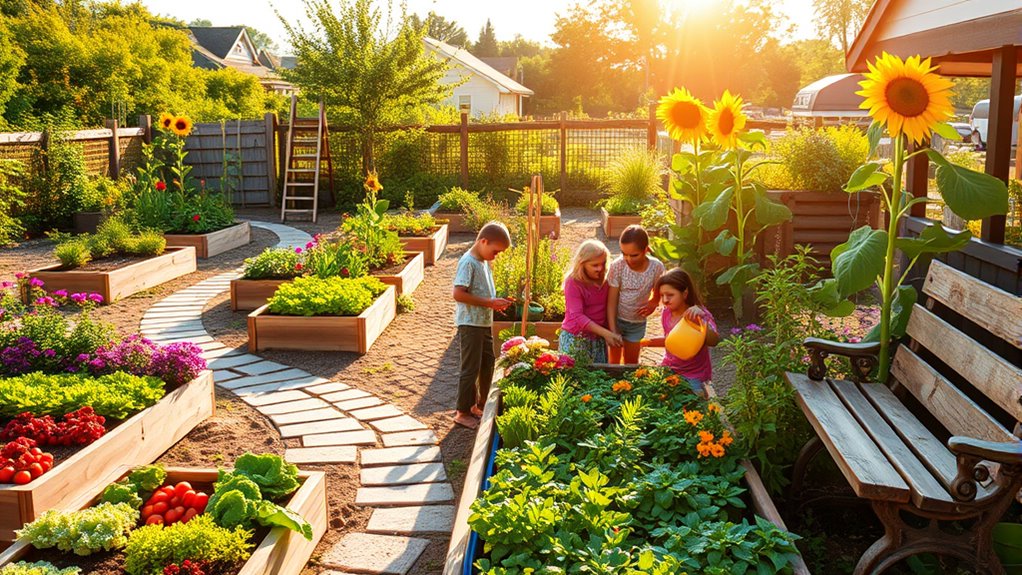

Community gardens are a great way to turn vacant lots into lively spaces where you can grow your own food, meet neighbors, and build friendships. As you work together, you’ll enhance neighborhood safety and beauty while enjoying fresh produce and learning new skills. Gardening also boosts your mental and physical health, reduces stress, and encourages sustainable practices. Keep exploring how these green spaces can transform your community and connect you with others.
Key Takeaways
- Community gardens transform vacant lots into vibrant spaces for growing fresh produce and flowers.
- They foster social connections, encouraging neighbors to collaborate and build friendships.
- Gardening activities promote physical health, mental well-being, and environmental sustainability.
- These spaces support food access, especially in food deserts, reducing reliance on industrial food systems.
- Community gardens serve as educational hubs for all ages, promoting sustainability and healthy lifestyles.

Have you ever wondered how shared outdoor spaces can transform urban communities? Community gardens are prime examples of this transformation. These spaces bring neighbors together to grow vegetables, fruits, and flowers, turning empty lots into vibrant hubs of activity. They offer local residents, especially in food deserts, access to fresh produce that’s often hard to find in stores. Because these gardens generally avoid synthetic pesticides and large-scale transportation, they support healthier eating and reduce reliance on industrial food systems. Composting is a common practice, which helps manage waste and enriches the soil, making garden plots more fertile. Managing these plots collaboratively encourages social engagement across diverse populations, strengthening community bonds. Additionally, community gardens help reduce urban heat by adding greenery that cools surrounding areas, improving local climate resilience.
Beyond providing fresh food, community gardens positively impact public health. Participants tend to eat more fruits and vegetables, improving their nutrition. Gardening also boosts mental health, reducing stress and enhancing overall well-being. When you get involved in community gardening, you’re more likely to experience less anxiety and social isolation than those who don’t garden. Physical activity from tending plants contributes to better health and happiness, and many studies link gardening to fewer symptoms of depression and anxiety. It’s a simple yet powerful way to improve your quality of life while contributing to your community’s significance.
Community gardens also serve as essential social and community anchors. They foster interaction and cooperation among neighbors, creating a sense of shared purpose. As vacant lots are transformed into lush green spaces, neighborhood aesthetics improve, and crime rates often decline. Gardens can become organizing centers for broader community initiatives, especially in low-income areas where they spark neighborhood revitalization. These spaces help develop social cohesion and local identity, increasing residents’ satisfaction with their surroundings. Intergenerational engagement is also promoted, with children learning about nature and health, and seniors sharing their gardening wisdom. These interactions help build trust and solidarity, making neighborhoods safer and more connected.

Indoor Herb Garden Starter Kit – Heirloom, Non-GMO Herb Seeds – Basil Thyme Parsley Cilantro Seed, Potting Soil, Pots, Scissors – DIY Grow Kits for Growing Herbs Indoors, Kitchen, Balcony, Window Sill
Grow Your Own Herb Garden: Enjoy the fresh taste of homegrown Cilantro, Large Leaf Italian Parsley, English Thyme,…
As an affiliate, we earn on qualifying purchases.
As an affiliate, we earn on qualifying purchases.
Frequently Asked Questions
How Do Community Gardens Impact Local Property Values?
Community gardens boost your local property values by enhancing urban beautification and fostering community engagement. When a garden is nearby, especially within 1,000 feet, your home’s worth can increase by around 9.4%. These gardens make neighborhoods more attractive, safe, and lively, encouraging community involvement. Over time, they continue to add value as they mature, creating a more desirable environment that benefits homeowners and local economies alike.
What Are Common Challenges Faced by Community Garden Organizers?
Think of your garden as a delicate mosaic, where each piece matters. You face challenges like coordinating volunteers, ensuring everyone’s roles are clear, and managing garden design to suit diverse needs. Clear communication is key to effective volunteer coordination, preventing confusion. Balancing these elements can be tough, but with attentive planning, you create a thriving space where community bonds grow alongside vibrant plants.
How Can Newcomers Join Existing Community Gardens?
You can join existing community gardens by researching local options through social media, official directories, or visiting gardens during open hours. Express interest in volunteer opportunities and ask about garden membership fees, which often support maintenance. Attend orientation sessions, meet current members, and show your willingness to contribute. Patience is key, as some gardens have waiting lists, but staying engaged and proactive increases your chances of becoming a member.
Are There Specific Permits or Legal Requirements for Starting a Garden?
Starting a garden is like planting a seed of opportunity—you need the right permissions. You’ll need to check zoning regulations to guarantee your space qualifies, and securing liability insurance protects you from unforeseen issues. Depending on your location, you might also need permits for land use or structures. Always follow local rules, get approvals, and document everything to keep your garden growing smoothly and legally.
How Do Community Gardens Promote Environmental Sustainability?
You promote environmental sustainability by implementing composting practices that reduce organic waste and methane emissions. Cultivating native plants in your community garden supports local biodiversity, conserves water, and minimizes the need for pesticides. These actions help lower your carbon footprint, improve soil health, and create resilient urban ecosystems. By actively engaging in sustainable gardening, you contribute to a greener, healthier environment for your neighborhood and future generations.

DIIYIV 2PCS Galvanized Raised Garden Bed with Legs,2PCS 48×18×30in Elevated Planter Box for Backyard,Outdoor Garden, Patio, Balcony, 300lb Capacity,Grey
Spacious planting space: Raised garden bed with legs,48x18x30 inches,300 capacity
As an affiliate, we earn on qualifying purchases.
As an affiliate, we earn on qualifying purchases.
Conclusion
Just like a garden needs care and friendship to truly flourish, your community garden is a vibrant tapestry of shared hopes and efforts. Each plant you nurture and every neighbor you meet adds a new thread, weaving a stronger, more colorful bond. When you tend to your garden, you’re tending to a living story of growth, trust, and connection. Keep planting seeds of kindness—together, you’ll harvest not just food, but a thriving, united community.

VIVOSUN Outdoor Tumbling Composter Dual Rotating Batch Compost Bin, 43 Gallon Black Door
Twin chambers: Two separate chambers allow one side to finish composting while leaving the other side available to…
As an affiliate, we earn on qualifying purchases.
As an affiliate, we earn on qualifying purchases.

GROWIT Heavy Duty Gardening Tools – Gardening Gifts for Women, Men, Mom, Dad – Durable, Ergonomic Garden Tools Set
IDEAL GIFTS FOR MEN, WOMEN – Our gardening tools set is the ultimate gift for any men women…
As an affiliate, we earn on qualifying purchases.
As an affiliate, we earn on qualifying purchases.