
Scientists have captured the first-ever live footage of a colossal squid in its natural deep-sea habitat, marking a huge breakthrough in marine science. Using a remotely operated vehicle near the South Sandwich Islands, they observed juveniles and confirmed the squid’s size, bioluminescence, and behavior in the wild—something never documented before. This discovery offers new insights into the species and deep-sea life, and if you keep exploring, you’ll find out what makes this creature so fascinating.

Get the latest gadgets delivered free — and shop member deals
- Fast, free delivery on millions of items
- Access to Prime Big Deal Days deals on October 6–7
- Prime Video, Amazon Music and more included
Key Takeaways
- The footage shows the first live observation of a colossal squid in its natural deep-sea habitat near South Sandwich Islands.
- Researchers used ROV SuBastian with specialized cameras and red light to minimize disturbance during filming.
- The video captures juvenile squids around 30 cm, highlighting their translucency and deep-sea adaptations.
- It provides new insights into size, bioluminescence, and behavior, confirming the squid’s existence beyond carcasses and remains.
- This discovery marks a significant milestone in marine exploration, opening new research opportunities in deep-sea ecology.
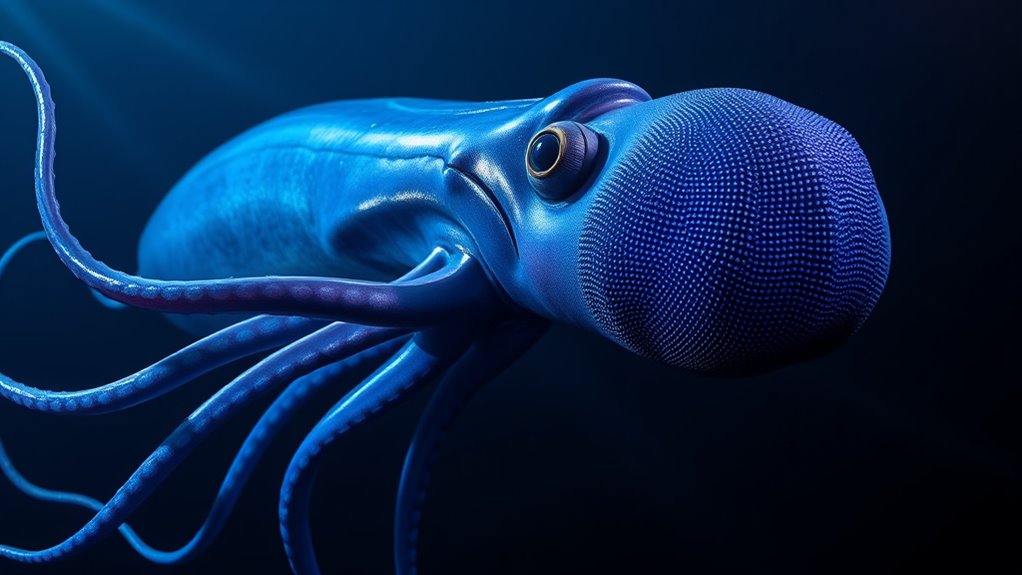
Capturing the colossal squid is a milestone in marine science. For the first time, scientists have captured live footage of this elusive creature in its natural deep-sea habitat. This achievement offers a rare glimpse into its world, revealing behaviors and adaptations previously only inferred from carcasses or remains. The footage was obtained at around 600 meters depth near the South Sandwich Islands using the remotely operated vehicle (ROV) SuBastian, part of a collaborative effort with the Ocean Census project. This discovery marks a significant breakthrough in understanding the biology and ecology of the largest invertebrate known to science.
First live footage of the colossal squid in its natural deep-sea habitat near South Sandwich Islands.
The footage shows juvenile colossal squids, approximately 30 centimeters long, which are translucent and exhibit remarkable deep sea adaptations. As they mature, they lose transparency and can grow up to seven meters long, weighing over 500 kilograms—about the size of a small car. The live observation helps scientists verify their natural behaviors at these extreme depths, where light barely penetrates. One of the most intriguing aspects revealed is their bioluminescent behavior. The squid’s photophores—light-producing organs—around their eyes and body likely serve roles in offense, defense, or communication. Understanding whether these bioluminescent signals attract prey or repel predators is a key research goal.
Scientists aim to uncover critical details about the colossal squid’s size range, habitat preferences, spawning locations, eye function, and hunting style. They’re especially interested in how bioluminescence influences interactions in the dark, high-pressure environment of the midnight zone. They also utilize advanced deep-sea exploration technology to improve observation capabilities and minimize disturbance. To prevent disturbing these fragile creatures, researchers use specialized deep-sea cameras with red light and deploy electronic jellyfish decoys, known as “Medusa,” to lure or avoid attracting bioluminescent species. Tracking the squid’s movements often involves following predators like sperm whales, which hunt these giants, providing indirect clues about their behaviors.
This first live footage confirms the colossal squid’s existence in its natural environment, a domain previously accessible only through rare carcasses and prey remains. The remote and extreme environment, with low visibility and marine snow, posed significant challenges. Yet, technological advances in deep-sea exploration have made this sighting possible. The discovery not only deepens our understanding of this mysterious animal but also highlights the importance of non-invasive research for conservation. As the species is currently classified as “least concern” by the IUCN, ongoing monitoring is essential to assess potential threats from climate change or fishing activities. This footage marks a new chapter in marine exploration, opening avenues to study one of Earth’s most enigmatic predators in their true environment. Recent technological advances in deep-sea exploration have significantly increased the likelihood of discovering and studying rare and elusive marine species like the colossal squid.
As an affiliate, we earn on qualifying purchases.
Frequently Asked Questions
What Is the Lifespan of a Colossal Squid?
You’ll find that the colossal squid’s lifespan is about 2 years, based on age estimation methods like beak growth rings. During this time, they grow rapidly and reach impressive sizes. Their short lifespan relates to their reproductive strategy, where they grow quickly to reproduce and then die. This quick cycle is common among deep-sea squid species, highlighting their adaptation to the harsh, predatory environment of the Southern Ocean.
How Does the Colossal Squid Hunt for Prey?
You observe that the colossal squid hunts primarily through bioluminescent hunting, using its large eyes to detect prey in the dark depths. It employs tentacle grasping, extending its arms with suckers and hooks to capture fish or smaller squids. Then, it manipulates its prey with precise tentacle movements, ensuring a firm hold before bringing it to its sharp beak for consumption.
Are Colossal Squids Dangerous to Humans?
Colossal squids aren’t dangerous to humans because they rarely, if ever, have human encounters. As deep sea predators, they live far from where people typically dive or explore. No verified incidents show these giant invertebrates attacking humans, and their habitat makes such encounters highly unlikely. Most aggressive squids, like Humboldt squid, are smaller and live in shallower waters, but even they rarely pose a serious threat.
What Is the Habitat Range of the Colossal Squid?
Imagine descending into the icy embrace of deep sea ecosystems, where the colossal squid roams. Its habitat range spans circumpolar waters around Antarctica, from depths of 1,000 to over 2,200 meters, following squid migration patterns. You’ll find it near predator hotspots like sperm whales and Antarctic toothfish, primarily in cold, turbulent waters. This remote zone keeps the colossal squid hidden, revealing only glimpses of its vast, mysterious world beneath the icy surface.
How Do Scientists Ensure the Squid’s Preservation for Study?
You guarantee the squid’s preservation for study by focusing on deep sea preservation and careful specimen handling. First, you handle the specimen gently to prevent damage. Then, you use methods like formalin solution or freezing to maintain its structure. During transportation, cooling measures are essential to slow decay. Proper storage conditions and detailed documentation help preserve the specimen’s integrity for detailed biological and isotopic analysis.
Conclusion
As you watch the footage, you realize this isn’t just a discovery—it’s a glimpse into a mysterious world few have seen. The colossal squid’s shadow flickers in the darkness, and you can’t help but wonder what secrets still lie beneath the surface. With each moment captured, the ocean’s deepest secrets inch closer to revelation. Will this be the beginning of more discoveries, or will the creature vanish into the abyss once again? The unknown awaits.
Halloween Picks
halloween
As an affiliate, we earn on qualifying purchases.