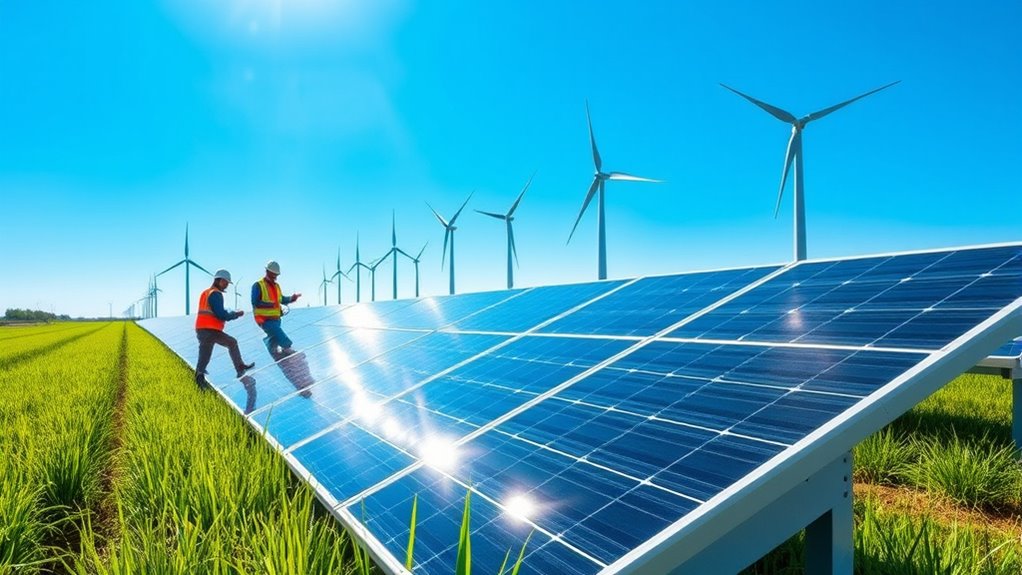

The clean energy sector is booming, creating hundreds of thousands of new jobs across the U.S. You’ll find opportunities in solar, wind, and battery tech, with jobs supporting local communities and offering higher wages and benefits. This growth is driven by technological advances and supportive policies, making the industry more inclusive and resilient. To discover how you can get involved and what’s next for this rising green economy, keep exploring.

Get the latest gadgets delivered free with Prime
- Fast, free delivery on millions of items
- Prime Video, Amazon Music and more included
- Member-only deals all year
Key Takeaways
- The clean energy sector added nearly 100,000 jobs in 2024, with over 520,000 new roles since 2020.
- Innovations in solar, wind, and storage technology drive efficiency, affordability, and faster deployment of clean energy.
- The industry emphasizes workforce diversity and provides opportunities in rural and underserved communities.
- Policy support and economic benefits boost job growth, with many roles offering higher wages and union support.
- Renewable energy now supplies over 40% of U.S. electricity, fueling environmental sustainability and economic expansion.
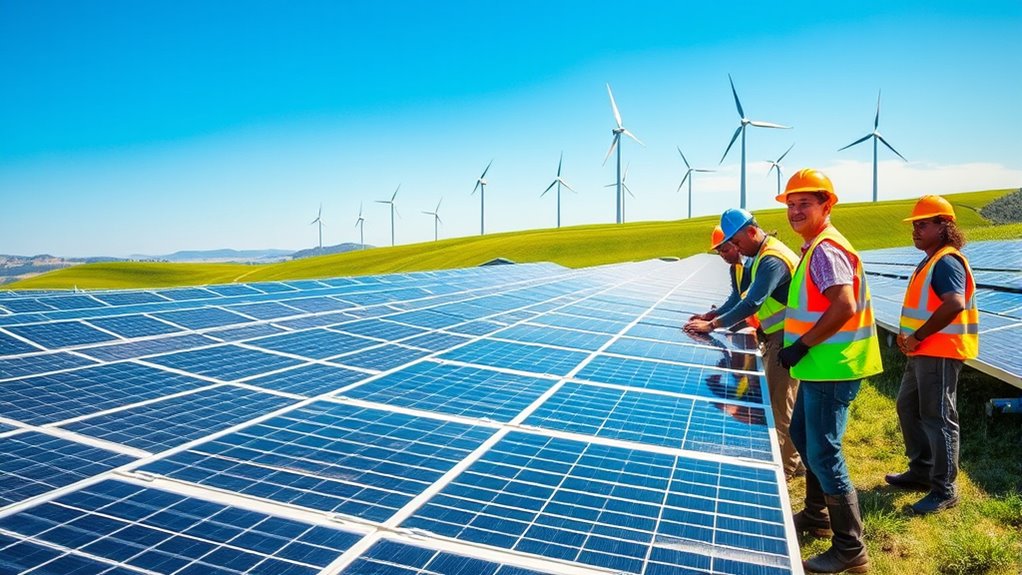
Have you noticed how clean energy jobs are rapidly expanding across the United States? This growth isn’t just a trend; it’s transforming the economy and creating new opportunities in ways you might not expect. At the heart of this surge are technological innovations that make clean energy solutions more efficient, affordable, and accessible. Advances in solar photovoltaics, wind turbines, and grid-connected battery storage are revolutionizing how energy is produced, stored, and distributed. These innovations mean that fewer labor hours are needed per megawatt, allowing faster deployment and opening the door for more jobs in manufacturing, installation, maintenance, and research. As technology evolves, it also fosters a more diverse workforce. Clean energy industries are increasingly recognizing the importance of workforce diversity, actively seeking to include people from different backgrounds, genders, and communities. This approach not only strengthens the industry but also ensures that economic benefits reach broader populations, especially in rural and underserved areas. You’re part of a sector that’s becoming more inclusive, providing opportunities for individuals who may not have traditional four-year degrees but possess the skills and passion for clean energy work.
The rapid growth is supported by policies that encourage innovation and workforce development, though recent policy shifts pose some risks to future expansion. Still, the current trend shows that clean energy employment is outpacing overall U.S. job growth—adding nearly 100,000 new roles in 2024 alone—and now employs more than three times the number of workers in fossil fuels. These jobs aren’t limited to large urban centers; many are located in rural communities and Republican-led states, contributing to local economic revitalization. When you work in clean energy, you’re part of a sector that supports 122,000 American jobs, with projections indicating this could grow to support over 575,000 jobs and contribute $86 billion to GDP by 2030. Moreover, the sector has expanded by over 520,000 jobs since 2020, reflecting its rapid and sustained growth. The sector’s technological innovations continue to drive down costs and improve efficiency, making clean energy more competitive. Beyond just employment figures, these jobs tend to offer higher wages and benefits, often supported by strong labor agreements and union membership. Many of these roles are accessible without a four-year degree, making clean energy a viable career path for many Americans seeking stable, well-paying work. As renewable energy sources now produce over 40% of U.S. electricity, your efforts contribute to a cleaner environment and a more resilient economy. The ongoing innovation and increasing diversity within this sector are shaping a future where clean energy isn’t just an industry but a powerful economic engine—one that you’re helping to drive forward.
As an affiliate, we earn on qualifying purchases.
Frequently Asked Questions
What Certifications Are Needed for Green Energy Jobs?
You need certifications like the Certified Renewable Energy Professional (REP) or Certified Energy Auditor (CEA) to qualify for green energy jobs. Certification pathways depend on your education and experience, with skill requirements covering renewable tech, energy efficiency, and sustainability. Completing approved training programs enhances your knowledge, while industry-specific credentials improve your employability. These certifications demonstrate your expertise, boost your career prospects, and meet the growing demand for skilled professionals in the green economy.
How Do Green Jobs Impact Local Economies Long-Term?
Have you considered how green jobs foster long-term local economic growth and community resilience? By investing in green infrastructure, you help stabilize economies, create sustainable employment, and improve community health. These jobs often lead to diversified economies, reducing reliance on polluting industries. As a result, your community becomes more resilient to climate impacts and economic fluctuations, ensuring a brighter, more sustainable future for everyone involved.
Are Green Energy Jobs Accessible to Underrepresented Communities?
Green energy jobs often remain inaccessible to underrepresented communities, but community outreach and diversity initiatives are changing that. These programs target barriers, provide training, and create pathways for women, Black workers, and Indigenous peoples, helping them enter the sector. You can support or participate in these efforts to promote equitable access, ensuring that green jobs benefit everyone and foster a more inclusive, innovative clean energy workforce that reflects diverse community needs.
What Are the Safety Risks in Renewable Energy Industries?
You should be aware that one in four renewable energy workers reports workplace injuries, highlighting serious safety risks. Hazard identification is vital to prevent incidents like falls, electrical shocks, and chemical exposure. Following safety protocols, such as proper fall protection and safety training, markedly reduces these dangers. Staying vigilant about environmental factors, like extreme heat, and advocating for thorough safety measures will keep you safer on the job.
How Can Students Prepare for Careers in Clean Energy?
To prepare for careers in clean energy, you should focus on gaining solar training and seeking out internship opportunities with clean energy firms. Developing technical skills in renewable system installation, maintenance, and energy management will make you more competitive. Additionally, hands-on experience through internships helps you build industry connections and practical knowledge. Stay adaptable, learn about evolving technologies, and consider certifications that boost your employability in this rapidly growing sector.
Conclusion
As you explore the booming green economy, it’s no coincidence that clean energy jobs are transforming communities and creating opportunities everywhere. By choosing to support and pursue these careers, you become part of a movement that’s shaping a sustainable future—one where innovation and responsibility go hand in hand. Remember, the momentum is building, and your involvement could be the key to opening a cleaner, greener world for generations to come.
Halloween Picks
halloween
As an affiliate, we earn on qualifying purchases.