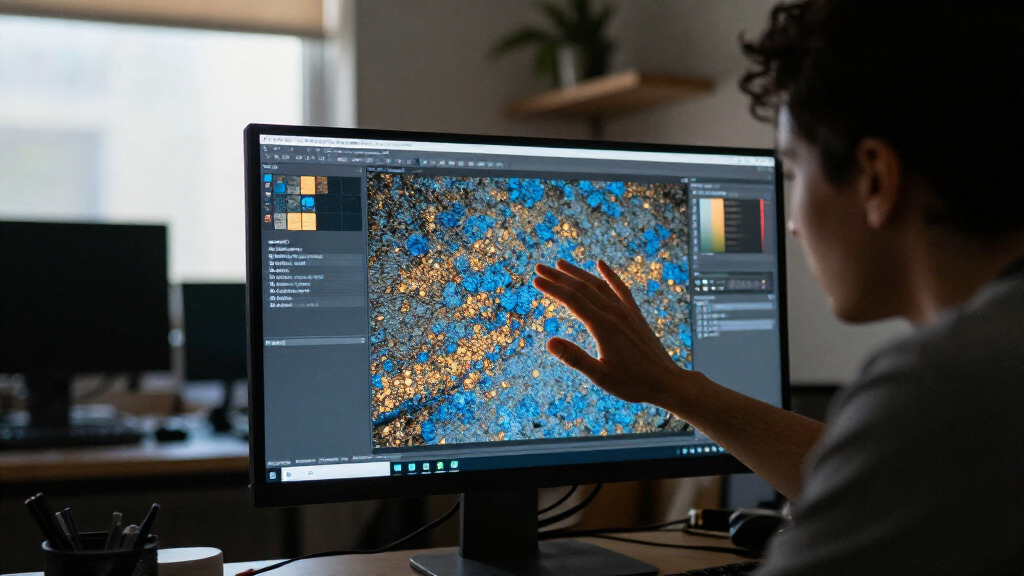
🔍 Read the full analysis: How Diffusion Models Generate Images: From Pure Noise To A Picture, Step By Step on ThorstenMeyerAI.com

Get the latest gadgets delivered free with Prime
- Fast, free delivery on millions of items
- Prime Video, Amazon Music and more included
- Member-only deals all year
TL;DR
Diffusion image generators are trained by adding noise to images and teaching a neural network to predict what was added. To make a picture, the model reverses that process, guided by a text prompt; the method also helps explain difficulties with lettering, object placement and possible reproduction of training images.
Diffusion models generate images by starting with random noise and repeatedly removing predicted noise until a picture takes shape, according to a November 23 explainer by Thorsten Meyer. The report follows the process from training through prompt guidance, and explains why the approach can struggle with text, object counts and spatial relationships.
During training, a model is shown real images that have been gradually mixed with noise. Because the noise is added deliberately, the training process can teach a neural network to estimate what was added at a particular step. The model is not simply instructed to reproduce a clean image: it learns to predict noise in increasingly corrupted examples. The 2020 paper “Denoising Diffusion Probabilistic Models,” by Jonathan Ho, Ajay Jain and Pieter Abbeel, used 1,000 noise steps in its experiments.
Image generation runs the process in reverse. The model begins with a field of random values, estimates the noise in that field and removes some of it, then repeats. The 2020 researchers wrote that large image features appear before fine details: broad layout and major objects take shape before edges and textures. Later systems can use fewer steps; Meyer’s explainer says a widely used open-source pipeline runs 50 steps by default, though settings and models vary.
Many systems do this work in a compressed representation called latent space rather than directly on every pixel. The explainer says Stable Diffusion v1 turns a 512-by-512 image into 48 times fewer numbers for this part of the process. A text encoder converts a prompt into numerical information, and guidance techniques steer the denoising steps toward it. The source cautions that stronger guidance can bring the result closer to the prompt while costing some image quality.
Why Noise Shapes Image Quality
The same process that makes image generation possible helps explain familiar errors. A model’s repeated predictions gradually form a plausible image, but that is not the same as reliably following a precise instruction about spelling, counting or where one object must sit relative to another. The explainer identifies lettering, object counts and spatial placement as persistent weaknesses.
Understanding the method also matters for discussions of training data and copyright. The source reports that researchers have extracted images resembling training examples from models, while noting that this does not by itself settle legal questions. These issues affect artists, users and developers because they concern both the behavior of generated images and the material used to train systems.
Products Worth Considering

Jackery Explorer 2000 v2 Portable Power Station, 2042Wh

Amazon Kindle Paperwhite (12th Generation, 2024), 16 GB, 7-inch Display, Black

LG UltraGear 32-inch QHD Curved Gaming Monitor, 180Hz, 1ms, AMD FreeSync
As an affiliate, we earn on qualifying purchases.
From Early Theory to Practical Models
The underlying idea predates today’s image generators. In a 2015 paper, Jascha Sohl-Dickstein and colleagues described gradually destroying structure in data and learning a reverse process to restore it. The approach became practical for image generation with the 2020 work by Ho, Jain and Abbeel, which formalized a training method based on adding noise in stages and predicting it.
Text-to-image systems add language components to that denoising process. A text encoder represents the prompt numerically, while attention and guidance help connect those words to the model’s image-making steps. The explainer uses Stable Diffusion v1 as an example, describing its training on subsets of the captioned LAION-2B(en) dataset. These details apply to that model family and should not be treated as identical across every image generator.
“The loss is a reconstruction objective between the noise that was added to the latent and the prediction made by the UNet.”
— Stable Diffusion v1-4 model card, as quoted by Thorsten Meyer
Open Questions on Copying and Control
The explainer says researchers have retrieved near-copies of training images from diffusion models, but it does not establish how often that happens across models or under what conditions. Nor does the possibility of reproducing an example alone determine whether a particular output infringes copyright.
Meyer reports that a UK court found in 2025 that Stable Diffusion itself was not an “infringing copy”, while other legal questions remain open. The source does not provide the case name or explain the scope of the ruling, so the statement should not be read as resolving every dispute over training data or generated images. Model settings also differ, meaning step counts and quality trade-offs described for one pipeline may not apply universally.
What Users and Researchers Watch
The explainer does not announce a new model, product release or research result; it is a guide to established techniques and open questions. The next developments to watch are further research into prompt control and training-image reproduction, alongside legal decisions that may clarify how copyright rules apply to training and outputs.
For readers using image generators, the practical takeaway is to treat a prompt as guidance rather than a guarantee of exact spelling, counts or placement. Results depend on the model and its settings, and the source gives no single timetable for when these limitations may change.
Key Questions
Does a diffusion model search for an existing picture?
Not as described in the explainer. It starts with random noise and repeatedly predicts and removes noise to form an image. Research on possible reproduction of training images is a separate issue.
How does training teach the model to remove noise?
Training adds known noise to real images at different stages. The neural network then learns to estimate the noise that was added, using that prediction as the basis for denoising.
How does a text prompt affect the picture?
A text encoder turns the prompt into numerical information. Guidance methods use that information to steer denoising toward the requested subject or style, but do not guarantee every detail will be followed.
Why do image generators make mistakes with words or object placement?
The model builds an image through repeated denoising rather than following a symbolic plan for every object and letter. The source identifies text, counting and spatial relationships as areas where these systems can struggle.
Has a court settled whether diffusion models violate copyright?
No broad resolution is established by the source. It reports a 2025 UK ruling that Stable Diffusion itself was not an “infringing copy,” but says other questions remain open and does not provide enough detail to generalize the ruling to all claims.
Source: ThorstenMeyerAI.com