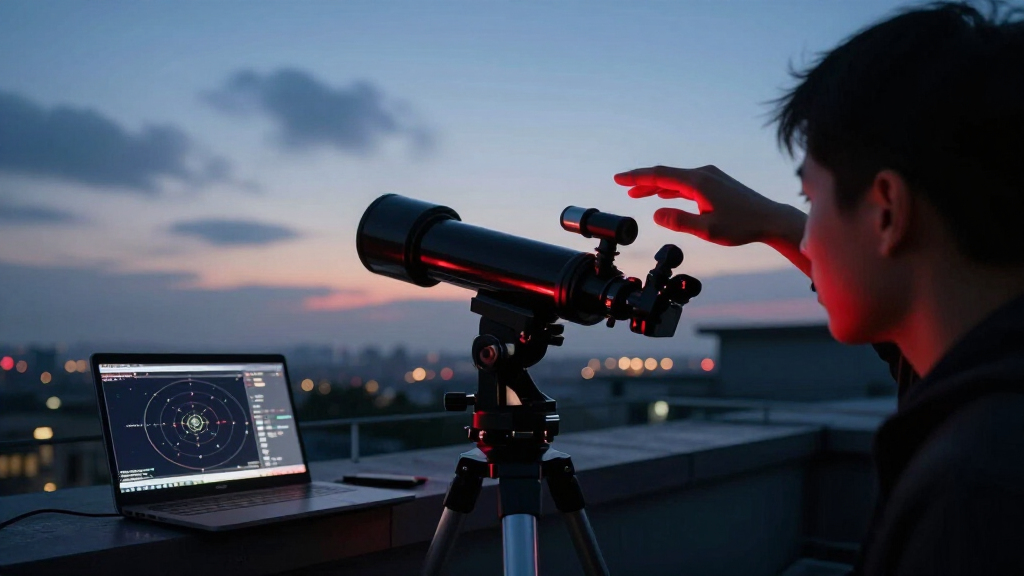

🔍 Read the full analysis: Steal This: The Held-Light Technique Behind “OORT — Comet Vigil For P/2043 K1 Vesper” on ThorstenMeyerAI.com

Get the latest gadgets delivered free with Prime
- Fast, free delivery on millions of items
- Prime Video, Amazon Music and more included
- Member-only deals all year
TL;DR
OORT is an AI-built web exhibition about a fictional observatory watching the fictional comet P/2043 K1 Vesper. Its central “held-light” technique lets star trails accumulate during a visit, turning elapsed time into part of the artwork rather than presenting the sky as a static backdrop.
OORT — Comet Vigil for P/2043 K1 Vesper, an AI-built online exhibition, turns time spent on a webpage into part of its artwork: a field of stars slowly traces curved paths while visitors remain in the room, as described in the original analysis. The observatory and comet are fictional; the project’s subject is how interface design can make waiting and attention visible.
The room’s signature effect is described as “held light”. Stars are drawn on a canvas in arcs that lengthen as time passes. A repeatable seed keeps the sky consistent on a visitor’s device, and local storage preserves elapsed time so the same local scene can resume on a later visit. The source presents the changing trails as a record of duration, not as an astronomical observation.
Other elements extend the observatory conceit. Scrolling moves a comet through an inline SVG illustration, with an ion tail pointed away from an imagined sun and a dust tail curved along an imagined orbit. A range control adjusts a simulated defocus view and related brightness estimate. Visitors can also hold a control to open a simulated shutter; the site records a timestamp but does not claim to show a real comet or a newly discovered object.
The exhibition uses a dark palette with cyan for the ion tail and readings, red-orange for actions, and pale, dust-toned text. Display lettering and monospaced coordinates give it the appearance of an instrument or logbook. The supplied description says the animation pauses when the page is hidden and that reduced-motion settings receive a still version. The room is identified as number 170 in a 175-room exhibition.
Interactive art · Room 170 of FABLE/175
Steal This: The Held-Light Technique Behind “OORT — Comet Vigil For P/2043 K1 Vesper”
OORT turns time spent on a webpage into part of the artwork. As visitors wait, star trails lengthen across a fictional observatory sky—making attention visible rather than treating the page as a static backdrop.
01 / Core idea
How the page makes waiting visible
The visitor’s time becomes an input to the scene. Remaining on the page changes what is seen; returning can resume a locally preserved impression of the vigil.
OORT’s signature “held-light” effect draws stars as arcs that lengthen over time. A repeatable seed keeps the sky consistent on a visitor’s device, while local storage preserves elapsed time so that scene can continue on a later visit.
The trails act as a record of duration within the artwork. They are not astronomical observations, and the fictional comet P/2043 K1 Vesper is not presented as a verified celestial body.
Make the time spent with an interface part of what the interface shows.Duration → visible change → a sense of continuing attention
Seed the sky
A repeatable seed gives the local scene a consistent star field.
Stay in the room
As time passes, stars trace increasingly long curved paths.
Resume later
Local storage can preserve elapsed time on that device.
See duration
The accumulated trails make waiting legible as part of the work.
02 / Inside the observatory
Instruments that extend the fiction
Scroll, adjust, and hold: each interaction lends the imagined observatory a different kind of motion or reading.
Comet in transit
Scrolling moves the comet through an SVG orbit. Its ion tail points away from an imagined sun; its dust tail follows a curved path.
Simulated defocus
A range control changes a defocused view and its related brightness estimate.
A timestamp, not a sighting
Holding the control opens a simulated shutter and records a timestamp as a gesture of attention.
Stillness options
The description says animation pauses when the page is hidden and reduced-motion settings receive a still version.
What the exhibition does not verify
The boundary between simulation and observation is part of the work’s framing. The supplied description explains the intent, but does not include independent technical verification.
P/2043 K1 Vesper is fictional. The material provides no evidence that it corresponds to a real object.
The timestamp records a simulated gesture of attention, not a real observation or discovery.
Storage is described as device-specific. The source does not say trails follow visitors across devices.
No source code, browser measurements, accessibility results, or cross-device audit are supplied.
04 / Art direction to experience
A brief translated into an observatory room
The supplied material describes the design intent and credits the work to an AI-assisted exhibition pipeline. These are stated requirements, not independent test results.
The room belongs to a series of 175 AI-built exhibition spaces, and is identified as room 170. Its accompanying design guide and “Prompt” link expose the art-direction brief behind the experience.
The brief called for a single-page observatory built with HTML, CSS, and JavaScript, with visuals made from code rather than image assets. It specified responsive layouts, visible keyboard focus, reduced-motion support, and pausing animation when a browser tab is hidden.
“The comet remains unseen and in transit.”ThorstenMeyerAI.com · describing the shutter interaction
“The page makes duration part of the artwork instead of treating it as time spent before the content.”
ThorstenMeyerAI.com · installation descriptionBuild an atmosphere from code, interaction, and the visitor’s time in the room.
OORT · the experience in one sentence05 / Trace the idea
From interface behavior to meaning
OORT connects a small set of page mechanics to a larger artistic idea about attention and duration.
06 / Key questions
What visitors should know
Quick answers to the questions raised by the observatory’s fictional instruments and story.
Is P/2043 K1 Vesper a real comet?
No. The source describes it as fictional; the observatory, readings, and observing history are part of the imagined setting.
What does “held light” mean?
It is the canvas effect in which star trails lengthen over time. A seeded sky and local storage are described as preserving the local scene across visits.
Does the shutter record a real observation?
No. It simulates opening a shutter and records a timestamp as a gesture of attention; the comet remains unseen and in transit.
Who created the exhibition?
The source calls OORT an AI-built exhibition and credits the original art-direction brief to Claude Fable 5, executed through the FABLE/175 pipeline.
07 / Explore further
Visit the room and design guide
Explore the live room, then compare its linked prompt or guide with the finished experience. No observing campaign or future release schedule is given.
Source: ThorstenMeyerAI.com. The exhibition is presented as an available online artwork, not a scientific observing program.
How the Page Makes Waiting Visible
OORT’s main idea is not a new astronomical result but a design approach: time becomes an input to the experience. Many webpages treat waiting as dead time before information appears. Here, remaining on the page changes the image, while returning can preserve the impression of a continuing vigil. That makes the visitor’s duration part of the work.
The distinction between simulation and observation matters. The fictional comet is not presented as a verified celestial body, and the timestamped shutter action is framed as a record of attention rather than evidence of a sighting. For readers interested in interactive art and AI-assisted web design, the room offers a concrete example of how code, visual direction and user behavior can work together without making a fictional premise look like a scientific report.
Products Worth Considering

Bose Portable Smart Speaker with Alexa and Google Assistant, Black

Bose Smart Dolby Atmos Soundbar with Alexa, A.I. Dialogue Mode, and Bluetooth, Black

Bose Smart Ultra Dolby Atmos Soundbar with Voice Control, HDMI eARC, Black
As an affiliate, we earn on qualifying purchases.
Inside the Fictional Observatory
The source places OORT within a series of 175 AI-built exhibition rooms, describing this installation as room 170. It also identifies an accompanying design guide and a “Prompt” link in the room’s footer, where the art-direction brief behind the work is exposed. The supplied material says the brief called for a single-page observatory experience built with HTML, CSS and JavaScript, with visuals made from code rather than image assets.
That brief set out a fictional decades-long watch for P/2043 K1 Vesper and specified the visual language: dark-adapted observatory lighting, cyan and amber accents, and typography intended to resemble display instruments and field notes. It also requested responsive layouts, keyboard-visible focus, reduced-motion support and animation that pauses when a browser tab is hidden. These are stated design requirements; the source material does not provide independent testing results or a technical audit confirming every requirement was met.
The page’s narrative details—including an imagined history of comet watching and references to a past sighting—belong to the exhibition’s fiction. They should not be read as a verified account of a real comet’s orbit or provenance.
“The page makes duration part of the artwork instead of treating it as time spent before the content.”
— ThorstenMeyerAI.com, describing the installation
What the Exhibition Does Not Verify
The source identifies P/2043 K1 Vesper as fictional, so its apparent orbit, readings, history and observing logs are elements of the artwork rather than confirmed astronomical data. The material does not provide evidence that the fictional comet corresponds to a real object.
Some implementation details are described but not independently documented in the supplied material. It does not include source code, browser measurements, accessibility test results, or confirmation that the page performs as intended across devices. The stated use of local storage also means the persistence described is device-specific; the source does not say that a visitor’s trails follow them between devices.
Visit the Room and Design Guide
The room can be visited at the FABLE/175 exhibition site, and the source points readers to a design guide explaining the seeded exposure, SVG orbit, palette and typography. The next step for readers is to explore the page and its linked prompt or guide to compare the stated design brief with the finished experience.
No release schedule, scientific observing campaign or further development milestone is given. The supplied material presents OORT as an available exhibition room, not as a work awaiting a comet event or a scheduled update.
Key Questions
Is P/2043 K1 Vesper a real comet?
No. The source describes P/2043 K1 Vesper as fictional, and the observatory, readings and observing history form part of the exhibition’s imagined setting.
What does “held light” mean in OORT?
It refers to the canvas effect in which star trails lengthen over time while the visitor stays on the page. The source says a seeded sky and local storage allow the local scene to resume on a later visit.
Does the shutter interaction record a real observation?
No. Holding the control opens a simulated shutter and records a timestamp as a gesture of attention. The exhibition says the comet remains unseen and in transit.
Who created the exhibition?
The source describes OORT as an AI-built exhibition piece and credits the original art-direction brief to Claude Fable 5, executed through the FABLE/175 pipeline.
Where can readers find the room and its design notes?
The source links to the live OORT room at fable-25-830.netlify.app/sites/oort/ and says a design guide is available from the room. It also points readers to the wider 175-room exhibition hub.
Source: ThorstenMeyerAI.com