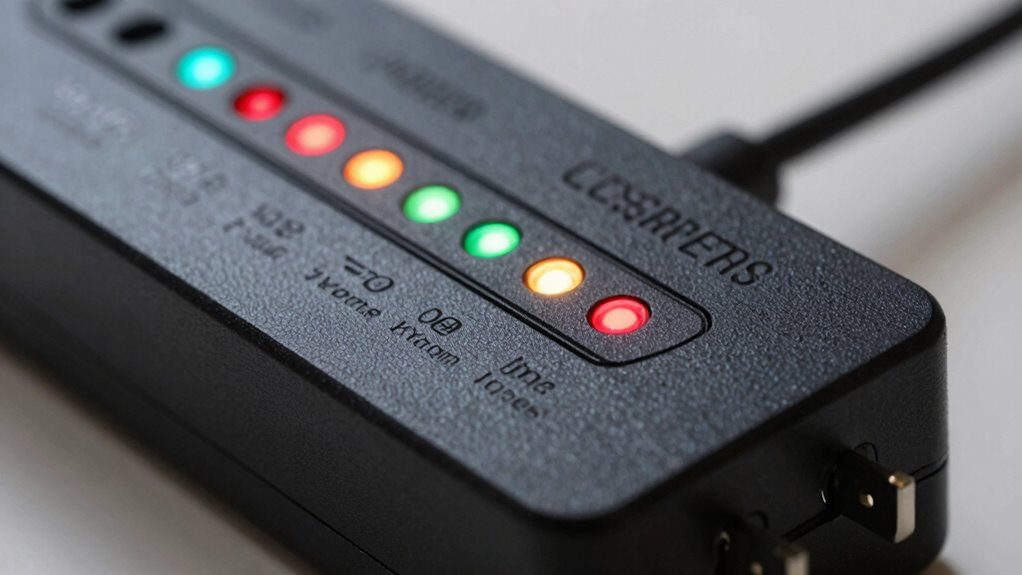
Surge protectors shield your electronics from power surges like lightning strikes or outages. Key features include joule ratings, which show how much energy they can absorb, and clamping voltage, the maximum voltage allowed before protection kicks in. Higher joules and lower clamping voltage mean better protection. To guarantee your devices stay safe, it’s important to understand these specs and their impact. Keep exploring to learn important details that help you choose the best surge protector.
Key Takeaways
- Joule rating measures a surge protector’s energy absorption capacity; higher values offer better protection.
- Clamping voltage is the maximum voltage allowed before the protector activates; lower values provide quicker response.
- Response time indicates how fast the device reacts to surges, with faster times offering better device safety.
- Regular replacement is essential as surge protectors degrade over time after absorbing energy.
- Compliance with safety standards like UL 1449 ensures reliable and effective surge protection performance.
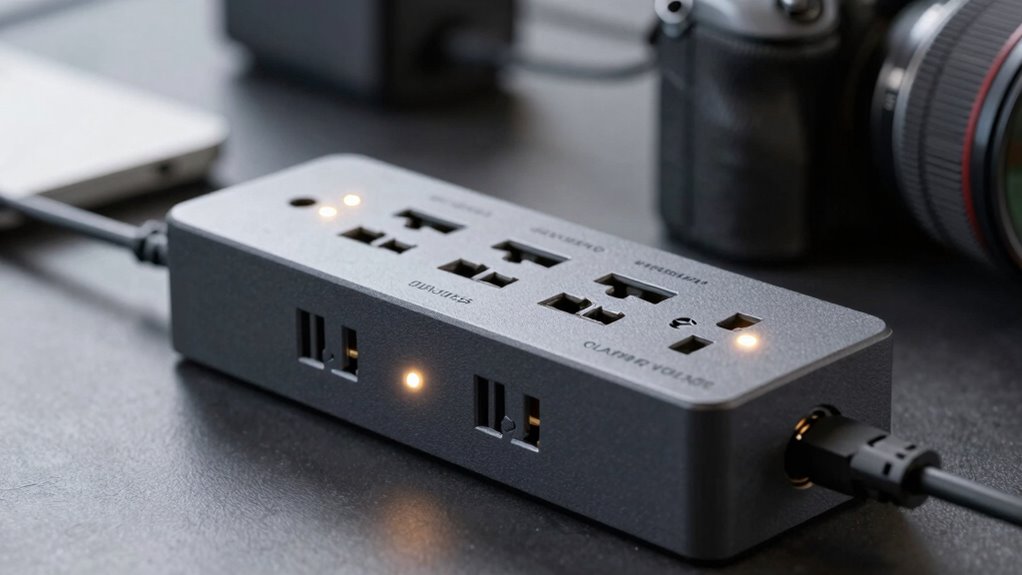
Surge protectors are vital devices that safeguard your electronic equipment from power surges and voltage spikes. Understanding their significance starts with a bit of power surge history. Over the years, electrical systems have evolved, and so have the risks associated with voltage fluctuations. Power surges can happen unexpectedly due to lightning strikes, power outages, or even when appliances turn on and off. These sudden surges can damage sensitive electronics, leading to costly repairs or replacements. As a result, electrical safety standards have been established to help manufacturers design more reliable surge protection devices. These standards set minimum performance levels, guaranteeing that your surge protector can effectively absorb and divert excess voltage, protecting your valuable devices.
When selecting a surge protector, it’s vital to pay attention to its joule rating. This measurement indicates how much energy the device can absorb before it fails. A higher joule rating generally means better protection, especially if you have multiple or high-powered electronics plugged in. Think of joules as the capacity of the surge protector’s “shock absorber” – the more it can absorb, the longer it will last in the face of repeated surges. Clamping voltage is another key factor. It refers to the maximum voltage the surge protector allows to reach your devices before kicking in to block or divert the excess. A lower clamping voltage usually provides better protection because it activates sooner, reducing the risk of damage. For example, a clamping voltage of 400 volts is preferable over 600 volts, as it responds more quickly to surges.
However, not all surge protectors are created equal, and understanding what matters most is essential. While joule ratings and clamping voltage are critical, don’t overlook other features like response time, number of outlets, and whether the device includes additional safety features like noise filtering or thermal fuses. Remember that surge protection isn’t a one-time setup; your device’s effectiveness diminishes over time as it absorbs energy. Many experts also recommend replacing surge protectors after significant electrical events or every few years to maintain ideal protection. Always check if your surge protector complies with current electrical safety standards, such as UL 1449, which ensures it meets rigorous safety and performance criteria. Staying informed about the power surge history and adhering to electrical safety standards can help you make better choices, guaranteeing your electronics stay safe and functional for years to come. Additionally, understanding the traits of effective surge protectors can guide you in selecting the right device for your needs.
Frequently Asked Questions
How Do I Determine the Right Joule Rating for My Needs?
To determine the right joule rating for your needs, consider your home’s electronics and risk level. Higher surge protector ratings, especially joule capacity, offer better protection for valuable devices. If you have many sensitive electronics or live in an area prone to storms, opt for a surge protector with a higher joule rating—around 1,000 to 2,000 joules or more. This guarantees your devices stay safe during power surges.
Can Surge Protectors Protect Against Lightning Strikes?
Lightning strikes can be unpredictable and powerful, but outdoor surge protectors are designed to offer some level of lightning protection. While they can divert some of the energy from a strike, they aren’t foolproof against a direct lightning hit. To truly safeguard your outdoor equipment, consider installing specialized lightning protection systems alongside outdoor surge protectors. Remember, staying cautious and prepared can make all the difference during a thunderstorm.
What Is the Lifespan of a Typical Surge Protector?
A typical surge protector’s lifespan depends on its power surge history and how often it encounters surges. Usually, it lasts about 3 to 5 years, but frequent or severe surges can shorten that. You should replace your surge protector once it shows signs of wear or after a major power surge. Regularly check its status and consider upgrading if it’s nearing the end of its surge protector lifespan.
Are Expensive Surge Protectors Always Better?
Expensive surge protectors often offer better quality and reliability, but that’s not always guaranteed. Did you know that the most costly models don’t necessarily have the highest joule ratings? You should consider cost versus quality and brand reputation before buying. A higher price usually means better components and durability, but some mid-range options also provide excellent protection. Always check reviews and specifications to find the best value for your needs.
How Do I Know When to Replace My Surge Protector?
You should replace your surge protector after a significant power surge or if it stops working properly. If it has a limited lifespan or shows signs of damage like cracks or burn marks, substitute it promptly. Regularly check its indicators and replace it every few years to ensure electrical safety. Remember, a worn-out surge protector can fail during a power surge, risking damage to your electronics and compromising your safety.
Conclusion
So, next time you’re shopping for a surge protector, remember those joules and clamping voltage aren’t just numbers—they’re your devices’ safety net. It’s funny how a quick glance at specs can make all the difference, like finding a lost sock in the laundry. Protecting your gear might seem small, but it’s those tiny details that keep your gadgets safe without you even realizing it’s happening. After all, a little knowledge can save a lot of trouble.