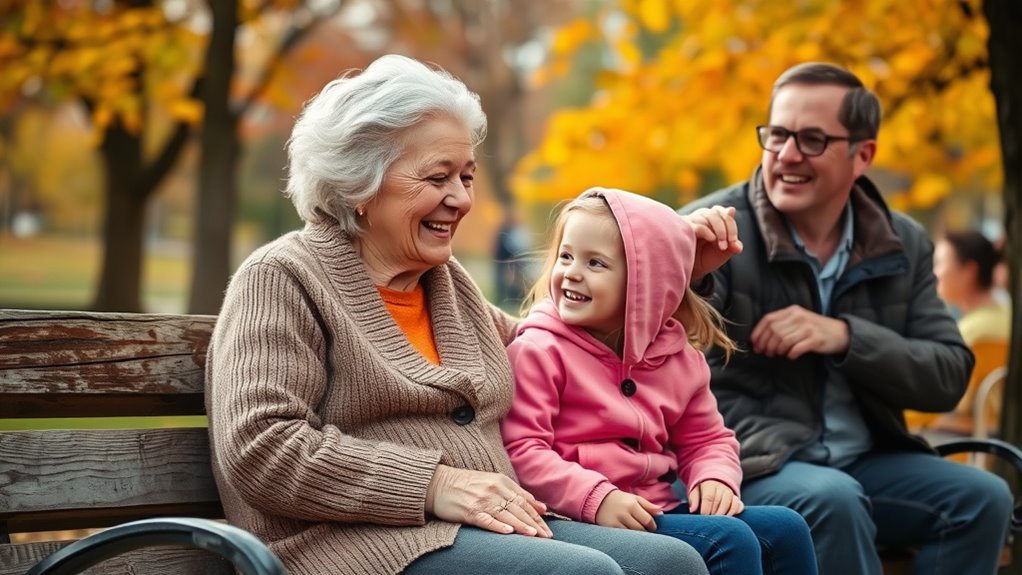

Intergenerational friendships are powerful bonds that help bridge age gaps, bringing fresh perspectives, emotional support, and social cohesion. You might face challenges like technology gaps or cultural differences, but patience and open-mindedness can overcome these barriers. Building these friendships can last years and positively impact well-being, reduce ageism, and foster mutual understanding. If you want to explore how to nurture these connections and make the most of them, there’s more to discover ahead.
Key Takeaways
- Intergenerational friendships foster meaningful connections, offering fresh perspectives, emotional support, and social cohesion across age groups.
- Overcoming barriers like technology gaps and cultural differences enhances communication and deepens understanding.
- Patience and guidance in digital literacy help sustain friendships in a digital age.
- Sharing cultural practices and traditions transforms differences into opportunities for learning and growth.
- Long-lasting friendships contribute to well-being, reduce ageism, and promote mutual empowerment.

Intergenerational friendships are more common and valuable than many realize, bridging age gaps to foster meaningful connections across different stages of life. These relationships often flourish outside traditional social circles, providing both parties with fresh perspectives and emotional support. Yet, forming and maintaining these bonds can sometimes be challenged by barriers like technology and cultural differences. Recognizing and overcoming these hurdles is key to building lasting, enriching intergenerational connections.
Intergenerational friendships bridge age gaps, offering mutual support and fresh perspectives despite challenges like technology and cultural differences.
One of the primary obstacles in fostering intergenerational friendships today involves technology barriers. Younger generations tend to be digital natives, seamlessly integrating social media, texting, and instant messaging into their daily lives. In contrast, older adults may find these tools unfamiliar or intimidating, which can hinder communication. If you’re trying to connect across ages, it’s *essential* to be patient and offer guidance, helping older friends navigate new platforms. Conversely, older adults might prefer traditional forms of contact, like phone calls or handwritten letters, which can be more meaningful and accessible for them. Balancing these preferences requires mutual understanding and flexibility, ensuring both parties feel comfortable staying in touch. Research shows that technology adaptation is crucial for sustaining these friendships over time.
Cultural differences also play a *pivotal* role in shaping intergenerational friendships. These differences can include varying beliefs, traditions, and social norms that influence how people communicate and relate. For example, some older adults might value formality and respect in conversations, while younger individuals may favor casual, open exchanges. If you’re building a cross-generational friendship, it’s essential to approach these differences with respect and curiosity. Engaging in open dialogue helps break down stereotypes and fosters empathy. Sharing cultural practices or family traditions can deepen understanding and create common ground, transforming potential barriers into opportunities for learning and growth. Societal shifts have also contributed to fewer traditional family and community ties, making these friendships even more essential for social support.
Despite these challenges, many intergenerational friendships last over a decade, often developing in workplaces, neighborhoods, or community settings. These relationships thrive because they’re rooted in genuine trust and ongoing communication, whether through digital means or traditional methods. Women tend to report more intergenerational friendships, especially with older peers, and these bonds contribute *considerably* to feelings of well-being and satisfaction with aging. They offer a judgment-free environment where vulnerability and wisdom can be exchanged freely, breaking down stereotypes about age and cultural differences.
In the end, the effort to bridge technology gaps and cultural divides enriches your social network and promotes societal cohesion. Intergenerational friendships help reduce ageism, foster mutual empowerment, and provide emotional support that enhances life satisfaction. Overcoming these barriers isn’t always easy, but the rewards—lasting connections, shared knowledge, and a deeper understanding of different life stages—make it well worth the effort.

Digital Literacy for Senior Adults
As an affiliate, we earn on qualifying purchases.
As an affiliate, we earn on qualifying purchases.
Frequently Asked Questions
How Do Intergenerational Friendships Influence Mental Health?
Intergenerational friendships boost your mental health by enhancing emotional resilience and promoting lifelong learning. You gain emotional support and wisdom from older friends, helping you navigate stress and anxiety more effectively. These bonds encourage mental agility through diverse conversations, fostering resilience. Engaging across generations keeps your mind active, stimulates growth, and offers new perspectives, ultimately improving your overall well-being and helping you build a stronger, more adaptable mindset for life’s challenges.
What Challenges Do Different Generations Face in Friendships?
You might not realize, but less than one-third of adults over 70 have friends under 30, showing a big gap. Generational stereotypes and communication barriers often stop friendships from forming. Younger people may struggle to connect due to different tech habits, while older adults face difficulties with digital tools. These challenges create misunderstandings, making it harder for diverse generations to build trust and meaningful bonds.
How Can Technology Help Bridge Age Gaps?
You can use technology to bridge age gaps through virtual mentorship and digital storytelling. Virtual mentorship connects younger and older generations, sharing skills and experiences regardless of distance. Digital storytelling allows both groups to exchange life stories and perspectives creatively, fostering understanding. By engaging in these activities, you promote meaningful interactions, reduce stereotypes, and strengthen bonds, making intergenerational friendships richer and more connected through accessible, engaging online platforms.
Are Intergenerational Friendships Common Across Cultures?
You might be surprised, but intergenerational friendships vary widely across cultures. In collectivist societies, strong cultural norms and tradition differences encourage close bonds between generations, especially in multigenerational households. Conversely, in individualistic cultures, age-segregated norms often limit these friendships. So, while they’re more common in some regions due to cultural influences, in others, tradition and social expectations create barriers that make such friendships less prevalent.
What Are Practical Ways to Meet Potential Friends of Different Ages?
You can meet potential friends of different ages by joining community events and engaging in shared hobbies. Attend local classes, clubs, or volunteer activities that attract diverse age groups. Participate actively and show genuine interest in others’ experiences. These settings foster natural conversations, helping you build meaningful intergenerational friendships. Keep an open mind, be consistent, and look for common interests to create lasting bonds across age differences.

BLU JOY – 2.4", Factory Unlocked Phone – Black
Unlocked Dual SIM senior phone
As an affiliate, we earn on qualifying purchases.
As an affiliate, we earn on qualifying purchases.
Conclusion
As you nurture these intergenerational friendships, you become a bridge connecting worlds, a tapestry woven with threads of wisdom and youthful energy. Embrace the dance of ages, where every shared moment paints a vibrant picture of understanding and growth. Remember, these bonds aren’t just bridges—they’re gateways to a richer, more colorful life. So step forward, open your heart, and watch as the age gap transforms into a garden of endless discovery.

KEENLUK Home Security Camera with 4.3" Screen, Two Way Video Call Function for Elderly, Baby and Pets, 1080P HD with Motion Detection
【HD Two-Way Video with 4.3" screen】 In this fast-paced era, close connections with family members are especially important….
As an affiliate, we earn on qualifying purchases.
As an affiliate, we earn on qualifying purchases.

Galaxy Smartphone Manual for Beginners: The Perfect Galaxy Smartphone Guide for Seniors, Beginners, & New Galaxy Users
As an affiliate, we earn on qualifying purchases.
As an affiliate, we earn on qualifying purchases.